Japanese experts help remediate soil for durian cultivation
Under a cooperation program with Japan, Dong Nai is piloting an oyster shell-based soil conditioner to enhance export durian quality.
Within the framework of the bilateral cooperation program between Dong Nai and Hiroshima Prefecture (Japan) convened on November 4, Urabe Sangyo Co., Ltd. and Queen Farm Ecological Agriculture Co., Ltd. signed a Memorandum of Understanding (MoU) to pilot an oyster shell-derived soil amendment in durian farming. This technical solution aims to balance soil pH, mitigate plant uptake of cadmium (Cd), and support rigorous quality compliance ahead of increasingly stringent export market mandates.
Under the operational plan, the pilot is structured into two phases. The initial phase deploys across 113 one-year-old durian saplings in Plot C6 to evaluate product safety. The subsequent phase involves 360 mature, fruit-bearing trees in Plot A2, concentrating on assessing soil condition enhancements, the suppression of cadmium bioavailability, and downstream impacts on crop yields and fruit quality.
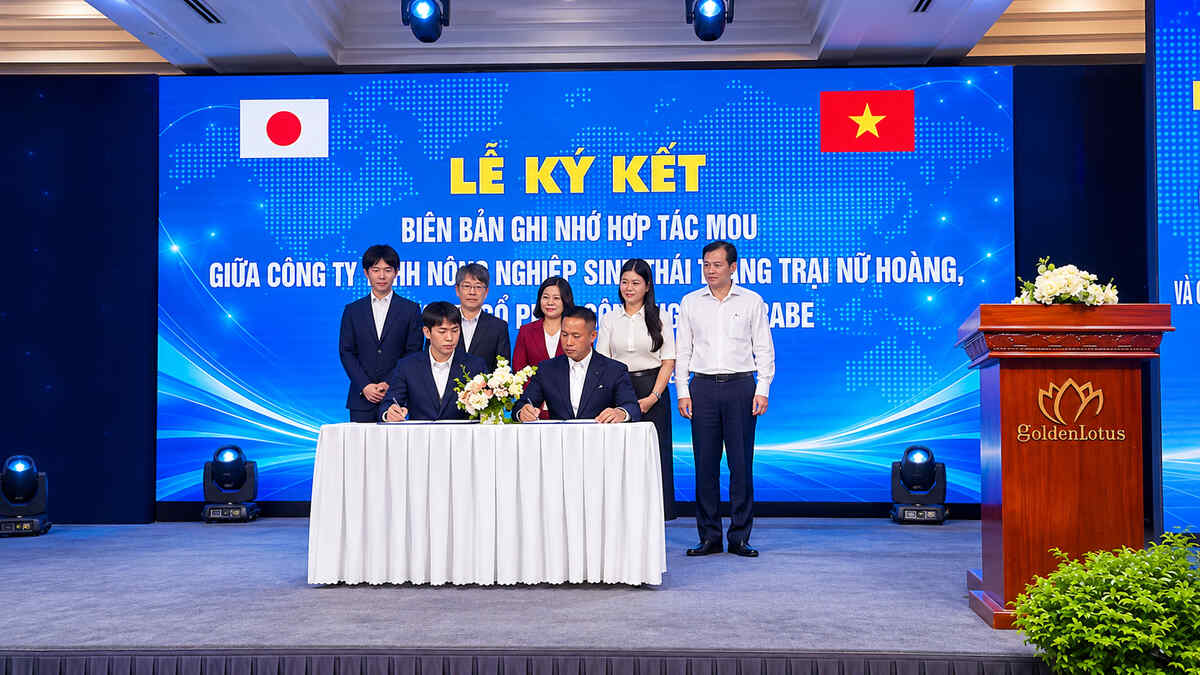
Mr. Urabe Shohei, General Director of Urabe Sangyo, stated that the company has manufactured organic fertilizers and poultry feed supplements from recycled oyster shells since 1948, widely utilized across Japanese agriculture for soil remediation. "We aim to valorize oyster shell resources to manufacture products delivering tangible dividends for both agriculture and fisheries in Vietnam," Mr. Urabe shared.
The designated trial site is Queen Farm, an agricultural estate spanning approximately 27 hectares, of which 20 hectares are dedicated to durian with nearly 10,000 trees certified under VietGAP and GlobalGAP standards. Mr. Nguyen The Tung, General Director of Queen Farm, noted that the farm will coordinate deployment, conduct sampling, and track agronomic parameters. "Our primary goal is to establish definitive, science-based findings on soil pH enhancement and the restriction of cadmium uptake by trees," Mr. Tung emphasized.
Ms. Le Thi Anh Tuyet, Deputy Director of the Dong Nai Department of Agriculture and Environment, assessed that the partnership aligns with green agriculture and circular economy orientations. However, she noted that the parties must implement rigorous control trials, conducting soil and post-harvest fruit assays to verify empirical field efficacy. Should the trial prove successful, this model could pave the way for valorizing aquaculture by-products, restoring arable land, and elevating the quality of Dong Nai durians for high-value export markets.
Tran Phi