VNUA bridges breeding cooperation with Hungary
The VNUA and Hungarian partners exchanged cooperation orientations in crop breeding research, fish genetics and sustainable development.
The Viet Nam National University of Agriculture (VNUA) recently convened a bilateral working session with a delegation from the Embassy of Hungary, specialists from the Hungarian University of Agriculture and Life Sciences (MATE), and representatives from the Federation of European Aquaculture Producers (FEAP). The parties discussed strategic orientations for collaboration across academic training, scientific research, and technology transfer, concentrating on areas of shared strengths and mutual priorities.
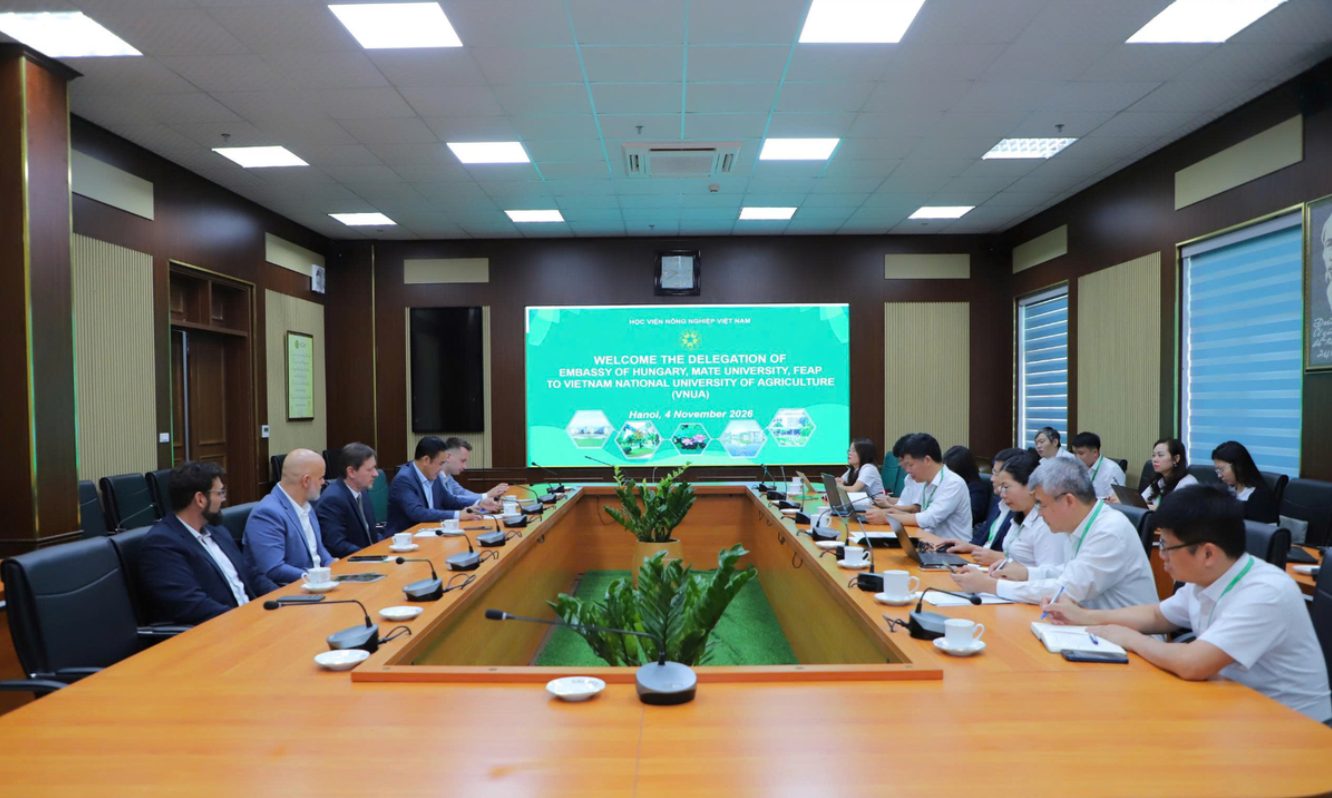
Addressing the working session, Assoc. Prof. Dr. Nguyen Viet Long, Vice President of VNUA, noted that the university possesses multidisciplinary training and research strengths spanning agriculture, economics, natural resources, and the environment. Expanding international partnerships with global universities, research institutes, and multilateral organizations remains a prioritized pathway for VNUA to enhance educational delivery, academic advancement, and practical science-technology application.
Commending the connective opportunity with MATE and European partners, Assoc. Prof. Dr. Nguyen Viet Long assessed that strategic alignments in training philosophies, applied research, and technology commercialization furnish a strong foundation to construct concrete cooperative initiatives.
The Vice President expressed the desire to promptly operationalize substantive programs, including academic exchanges, joint research consortia, and human resource upskilling. In particular, crop breeding development and fish hybridization were highlighted as core priorities, closely linking instructional collaboration with applied agricultural R&D demands.
His Excellency Tibor Baloghdi, Ambassador of Hungary to Vietnam, outlined the potentials and competencies of Hungarian agriculture, proposing key thematic areas for joint research and education. According to the Ambassador, MATE stands as a premier educational and scientific institution in Hungary and Central Europe specializing in agriculture and life sciences.
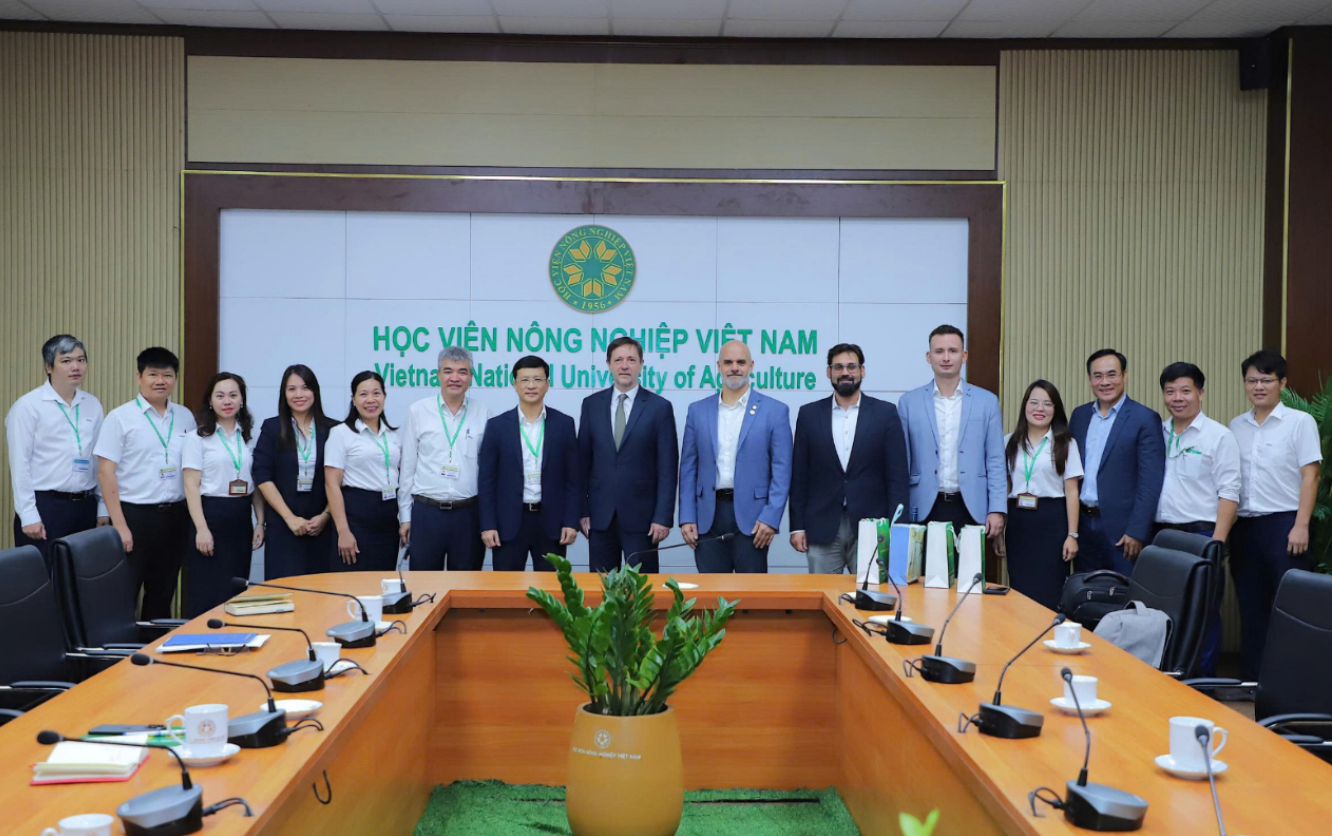
The Ambassador affirmed that the Hungarian Embassy is committed to serving as an institutional bridge connecting MATE and Hungarian organizations with VNUA. Through this conduit, the parties can identify actionable initiatives to deepen bilateral educational and agricultural ties with pragmatic efficacy.
According to the Ambassador, partnering with MATE and FEAP unlocks opportunities to exchange expertise in high-performing crop variety development, aquaculture technologies, specifically fish genetics and aquatic feed nutrition. The parties can also collaborate on livestock and aquaculture solutions resilient to climate change, advancing toward biosecurity and sustainability.
Within the framework of the working agenda, the delegation toured the Center of Excellence and Innovation and the Faculty of Fisheries at VNUA. This engagement enabled the partners to gain firsthand insights into VNUA’s research facilities, technical capabilities, and academic milestones across education, research, innovation, and technology transfer, serving as an operational baseline for future collaborative milestones.
Mai Dan