Defining Southeast Asian cooperation priorities in flash flood warning
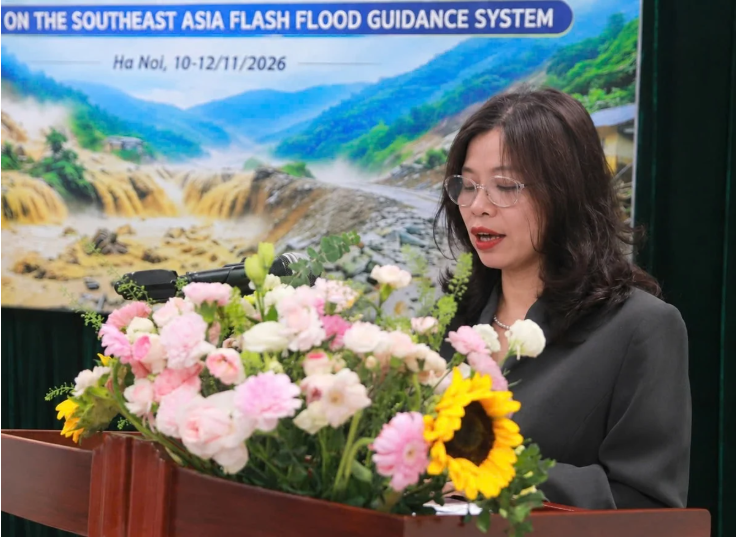
On November 10, the 2026 Southeast Asia Flash Flood Guidance System (SeAFFGS) Conference opened in Hanoi.
The event was hosted by the Viet Nam Meteorological and Hydrological Administration, with representatives from meteorological and hydrological agencies of Viet Nam, Laos, Cambodia, and Thailand, the Mekong River Commission (MRC) Secretariat, as well as experts, scientists, and relevant organizations.
Amid the impacts of climate change, Southeast Asian countries are increasingly facing extreme weather events, particularly widespread heavy rainfall, storms, and transboundary flooding. Severe flash floods and landslides have caused loss of life, damaged infrastructure, and significantly affected socio-economic development.
According to Dang Thanh Mai, Deputy Director General of the Viet Nam Meteorological and Hydrological Administration, these challenges highlight the need for comprehensive real-time data, high-resolution radar and satellite systems, advanced forecasting models, and mechanisms for cross-border information sharing among countries in the region.
Since 2022, the World Meteorological Organization (WMO) has entrusted Viet Nam with operating the Southeast Asia Flash Flood Guidance System (SeAFFGS) Regional Centre. The Centre is responsible for maintaining technical infrastructure, collecting and processing data, and providing daily flash flood guidance products for Viet Nam, Laos, Cambodia, and Thailand.
Over three days (November 10–12), the conference focuses on reviewing the Regional Centre's operations from 2022 to 2026, sharing national experiences, and identifying cooperation priorities to improve flash flood and landslide early warning systems across the region.
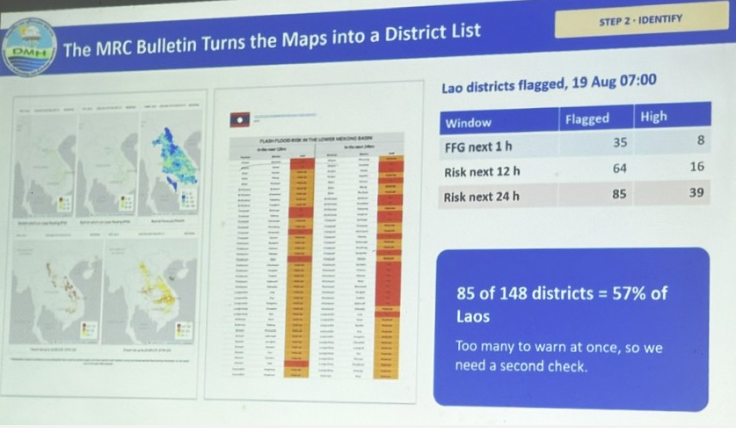
Looking ahead, leaders of the Viet Nam Meteorological and Hydrological Administration called for greater application of artificial intelligence, big data, remote sensing, and WebGIS in operational processes and quantitative precipitation forecasting. Priorities include automating early warning bulletins for transboundary river basins, optimizing SeAFFGS server infrastructure, and strengthening real-time hydrometeorological data sharing among member countries and the MRC Secretariat, contributing to the United Nations' Early Warnings for All initiative.
Speaking at the opening session, a representative of Cambodia's meteorological authority commended Viet Nam's role in coordinating and operating the SeAFFGS Regional Centre. Given Cambodia's exposure to heavy monsoon rainfall and flash floods in the Lower Mekong Basin, the representative highlighted three cooperation priorities: improving system accuracy by integrating high-resolution rainfall data, satellite observations, and advanced forecasting technologies; strengthening real-time data sharing and cross-border information exchange to refine warning thresholds; and maintaining regular training and capacity building for forecasters.
The Cambodian representative also reaffirmed the country's commitment to working closely with Viet Nam, Laos, Thailand, and other partners to strengthen the Mekong region's resilience to extreme hydrometeorological events. Sustained technical cooperation and regular training were identified as essential to ensuring the effective and sustainable operational use of SeAFFGS products.
On the first day, representatives of the Regional Centre, national meteorological and hydrological agencies, and the MRC Secretariat will review the operation and application of SeAFFGS in recent years, focusing on technical limitations, operational challenges, and lessons learned from recent floods. Over the following two days, discussions will focus on upgrading data integration models, digital transformation, automation, and case studies on SeAFFGS training and application in Viet Nam.
Khanh Ly