Eco-school applications must demonstrate multi-year results
Application dossiers must showcase a multi-year environmental protection journey across academic years, backed by concrete data and verifiable evidence of achieved outcomes.
On the afternoon of November 13, at the ASEAN Eco-Schools Network Conference in Viet Nam, Prof. Dr. Nguyen Thi Kim Cuc, a member of the Award Selection Council, provided guidance on preparing supporting evidence and application documents for the 2026 ASEAN Eco-Schools Viet Nam Award.
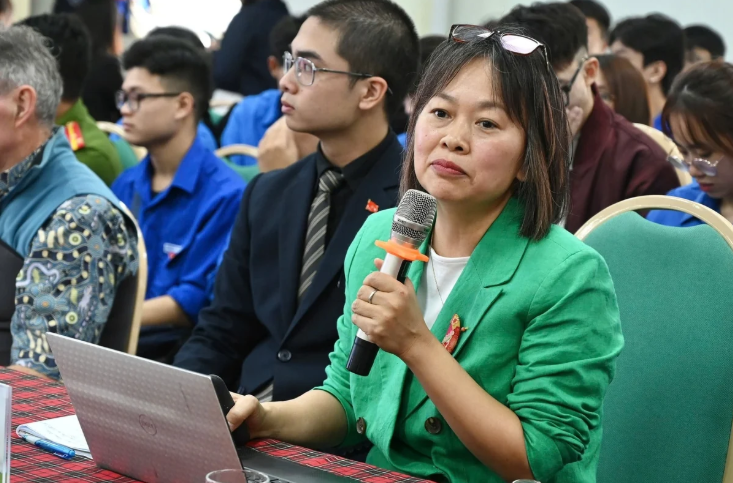
The workshop was organized by Viet Nam Agriculture and Nature Newspaper and the International Cooperation Department at West Hanoi Primary and Secondary School. According to Cuc, applications must accurately reflect schools' activities, sustainability, achievements, and engagement with students, families, and communities.
Assessing actions and continuity
The Award covers three themes: green schools, plastic waste reduction, and safe and efficient water use. Each carries 100 points, for a total of 300. Schools must submit evidence for all three themes while selecting one as their strongest.
Each theme is assessed against five criteria: planning and commitment; practical actions; education and student participation; monitoring, outcomes, and outreach; and community engagement.
Cuc explained that scoring considers the validity of evidence, implementation level, and timing. Applications must therefore demonstrate how activities have been sustained across school years.
Continuity and implementation timing account for 22 of the 100 points in each theme. Schools lacking evidence from previous years risk losing these points, regardless of their current activities.
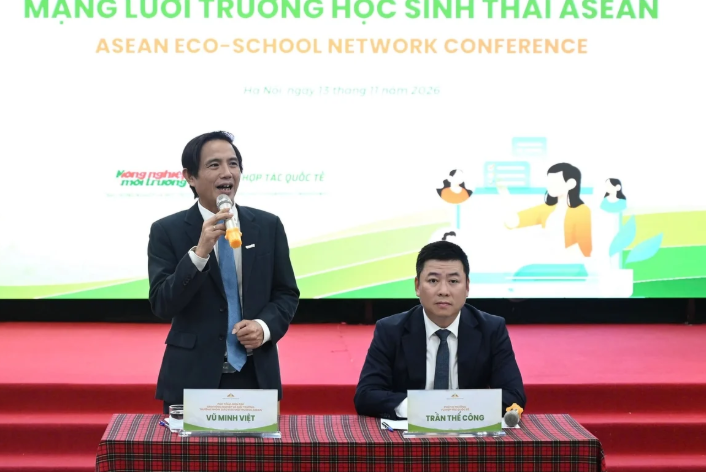
For example, integrating environmental knowledge into one or two subjects earns six points, three to four subjects seven points, and five or more subjects eight points, excluding timing-related points. Experiential learning and local education activities also count.
Award eligibility requires balanced performance across all themes. To win the ASEAN Eco-Schools Viet Nam Award, a school must achieve the highest total score, exceeding 210 points, with no theme scoring below 50.
For first prizes in individual themes, the selected theme must score above 60 points, with each sub-criterion earning at least 10 points. The other two themes must each score at least 30 points. Missing evidence in any theme or criterion may reduce a school's chances of winning.
Evidence must connect plans to results
Prof. Dr. Nguyen Thi Kim Cuc emphasized three principles for preparing applications: sustainability, verifiable evidence, and wider impact. A single photograph or document cannot fully demonstrate an activity's implementation.
Each initiative should be supported by a clear evidence trail covering planning, budgeting, implementation, educational activities, monitoring, and results reporting. Documents must allow judges to verify achievements against planned actions.
For safe and efficient water use, Cuc cited an example involving a dated water-saving plan, a budget for automatic shut-off taps, financial reports, and photographs of installed equipment.
Educational evidence may include lessons integrated into Science, Ethics, and Experiential Learning. Student clubs can monitor monthly water consumption, while semester reports compare utility bills to demonstrate savings.
Data on electricity and water consumption, waste collection, and tree planting should be tracked over time. Cooperation with parents, communities, and other schools must also be documented.
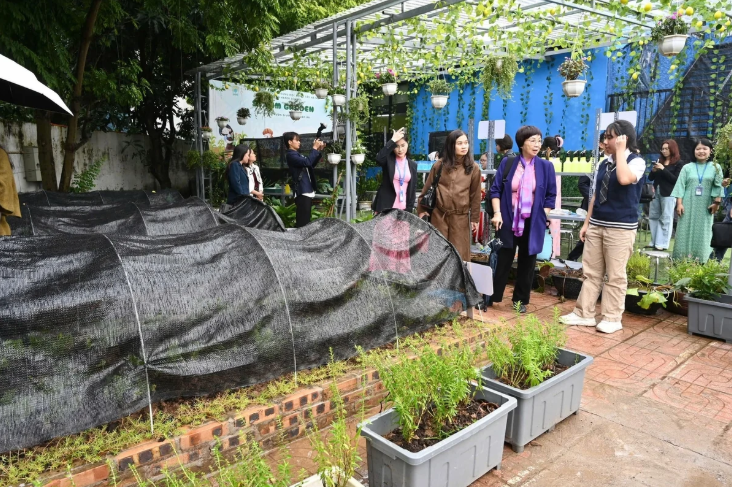
Each evidence group may include up to 10 photos, with captions specifying the activity, date, and location. AI or software edits that misrepresent the content are prohibited, as is using photos from other schools.
The application narrative must not exceed 2,000 words and should follow the assessment criteria, supported by data and evidence references. Each school may submit only one application and cannot change its selected theme afterward.
Prof. Dr. Nguyen Thi Kim Cuc confirmed that applications must be submitted through ecoschool.vn by December 10, 2026. “A strong application tells the authentic story of a school's journey,” she emphasized.
Mai Dan