Singapore builds eco-schools through 4Cs model
Singapore builds eco-schools through the 4Cs model, connecting Curriculum, Campus, Culture, and Community.
On the afternoon of November 13, Viet Nam Agriculture and Nature Newspaper, in coordination with the International Cooperation Department under the Ministry of Agriculture and Environment, organized the ASEAN Eco-Schools Network Conference in Hanoi.
Sharing Singapore's experience in developing and operating its eco-schools network, Gerlyn Phua, Deputy Director of the 3P Network Division at Singapore's National Environment Agency (NEA), said the country is shifting from knowledge-based environmental education toward encouraging students to actively participate in, experience, and lead environmental initiatives.
According to Phua, the goal is not only to help students understand environmental challenges but also to foster sustainable habits, a sense of responsibility, and the ability to drive positive change in schools and communities.
Integrating environmental education into all school activities
Phua explained that Singapore's Ministry of Education launched the Eco Stewardship Programme (ESP) in 2021 as a key sustainability education initiative under the Singapore Green Plan 2030.
The programme aims to nurture environmentally conscious and responsible young people while encouraging students to translate classroom knowledge into practical actions.
Notably, Singapore does not treat environmental education as a standalone subject. Instead, it adopts a whole-school approach built around the 4Cs: Curriculum, Campus, Culture, and Community.
Sustainability concepts are integrated into lessons and experiential activities. Alongside developing green school infrastructure, schools encourage students to adopt environmentally friendly practices and gradually build sustainable daily habits.
Community engagement also extends learning beyond the classroom, giving students opportunities to apply their knowledge, propose initiatives, and witness the impact of their own actions.
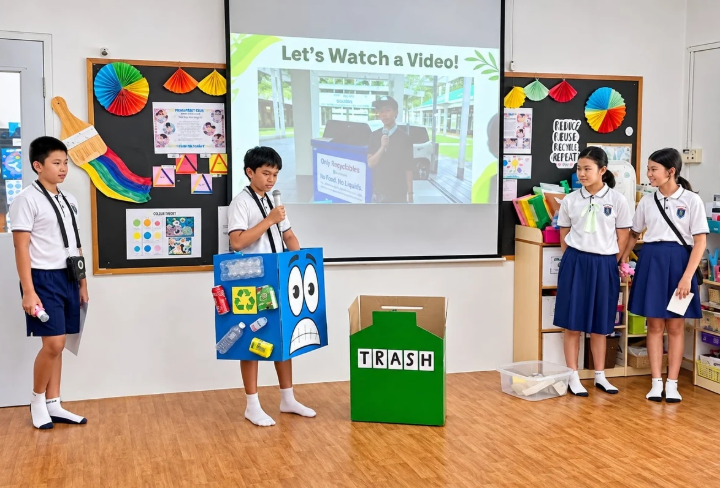
Building on this approach, Singapore structures environmental education around three pillars: Awareness, Action, and Advocacy. Awareness helps students understand environmental challenges, action encourages practical engagement, while advocacy empowers them to become environmental champions who inspire their peers and communities.
This reflects Singapore's shift from one-way knowledge transfer toward experiential learning, creative interaction, and student-led action.
Empowering students and connecting schools with communities
To achieve these goals, Gerlyn Phua said Singapore's National Environment Agency (NEA) organizes activities that give students firsthand exposure to environmental issues.
Through field trips, teachers and students explore meteorological operations, air-conditioner recycling processes, and energy-efficiency solutions. These activities also strengthen connections between schools, government agencies, and business partners.
Annual inter-school competitions also encourage students to create games, comics, videos, and communication materials promoting waste reduction, recycling, and environmental protection.
One notable initiative highlighted by Gerlyn Phua is the E.C.O. (Educate - Challenge - Organize) project, a year-long program designed to empower students to lead sustainability initiatives. Rather than simply joining existing activities, students are encouraged to organize programs, mobilize their peers, and engage local communities.
"These activities demonstrate that environmental education can make an impact beyond school boundaries when students are trusted and given opportunities to turn their ideas into action," Phua emphasized.
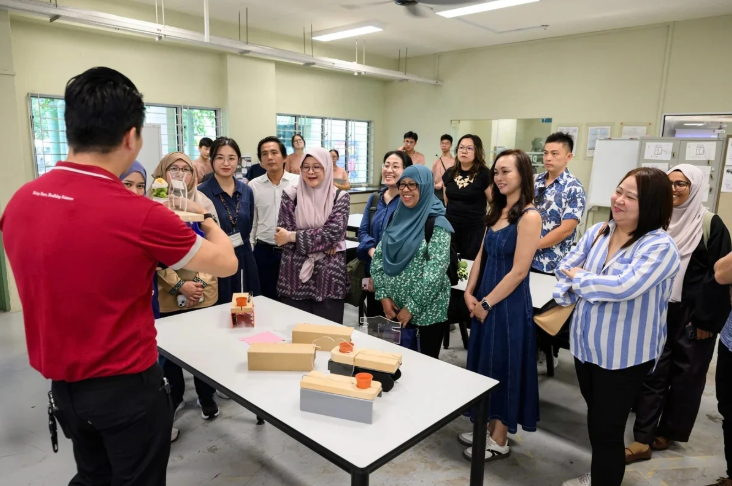
Alongside student empowerment, Singapore prioritizes partnerships among schools, government agencies, businesses, and non-governmental organizations. These stakeholders jointly develop programs, share expertise, organize practical activities, and provide resources.
Partner support extends beyond educational materials and awareness campaigns to include technical guidance, funding, and business connections, helping students put their initiatives into practice.
Under this approach, an eco-school is more than a green, clean, and attractive campus. It becomes a place that nurtures environmental awareness, responsibility, and practical skills among young people, helping spread sustainable lifestyles throughout society.
The ASEAN Eco-Schools Award, first held in Malaysia in 2012, is an ASEAN environmental cooperation initiative recognizing outstanding schools in environmental education and protection.
The 2026 edition marks the Award's third season in Viet Nam, led by the Ministry of Agriculture and Environment and implemented in coordination with Viet Nam Agriculture and Nature Newspaper, with support and sponsorship from Vingroup's For Green Future Foundation.
The launch ceremony took place on November 13 at West Hanoi Primary and Secondary School in Xuan Phuong Ward, Hanoi, attracting 25,000 participants in person and online.
Nguyen Thuy