Eco-school gardens doesn't require large investments
NIFAM project unlocks a practice-based educational approach, helping students cultivate sustainable lifestyles.
On the afternoon of November 13 in Hanoi, VAN News, in coordination with the International Cooperation Department (Ministry of Agriculture and Environment), organized the ASEAN Eco-Schools Network Conference in Vietnam.
At the workshop, Ms. Nguyen Le Thu Ha, ESG Specialist at the Center for Children and Development (CCD), shared insights on the ecological school garden model, lessons learned from the NIFAM project.
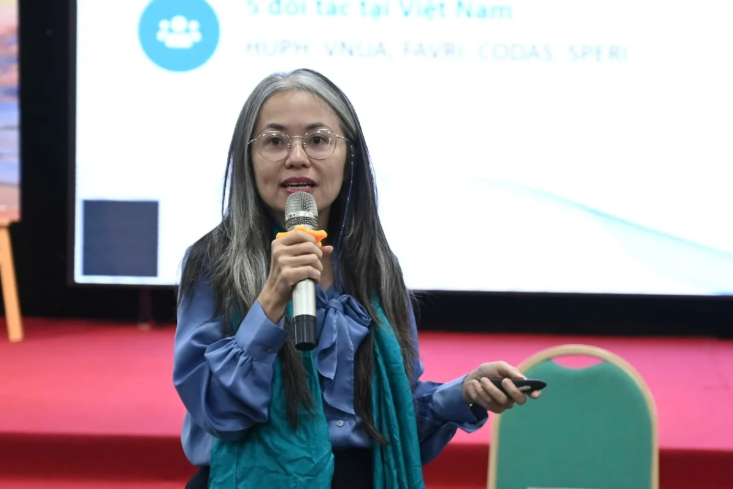
According to Ms. Nguyen Le Thu Ha, NIFAM is an interdisciplinary research initiative on Nutritional Intervention Forecasting and Monitoring, implemented from July 2022 to March 2026, spearheaded by the University of Bonn (Germany) and funded by the German Federal Ministry of Food and Agriculture (BMEL).
The research focused on identifying cost-effective interventions to improve nutrition across four core pillars: school gardens, school meals, safe vegetables for factory workers, and peri-urban land use. Among these, the ecological school garden model received particular emphasis because it can integrate pedagogy, nutrition, and environmental protection directly within school campuses.
Since November 2023, the project has progressively rolled out school garden construction, accompanied by teacher training workshops, student club formations, and experiential learning sessions. To date, two school gardens are fully operational, and one school is proactively constructing its garden with partner support. Concurrently, the project has trained 45 teachers across 22 schools, engaged 28 students in the gardening club at Genesis School, and conducted nutrition workshops for 303 consumers.
A prominent showcase is Genesis School in Hanoi. Following its plan launch in November 2023, the school finalized designs in March 2024 and brought the garden into operation in May 2024.
Spanning an initial footprint of approximately 200 m² and subsequently expanding to 300 m², the garden has become a living laboratory where students practice sowing, tending crops, and exploring nutrition and ecology.
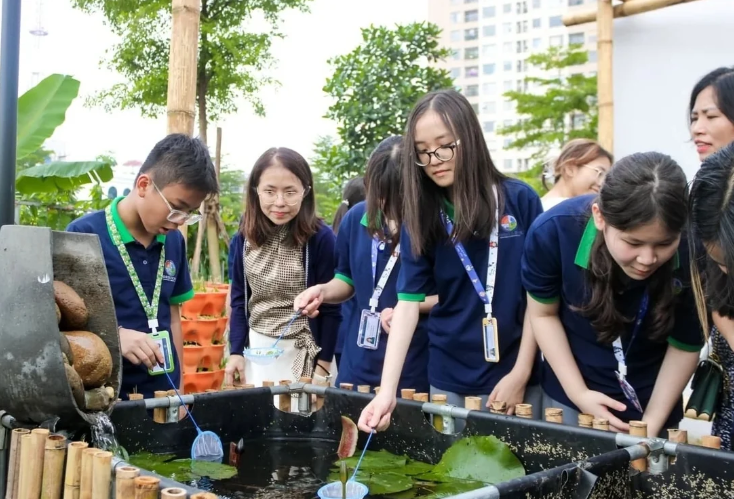
By tightly coupling gardening with experiential education, Genesis School won First Prize at the ASEAN Eco-Schools Award Viet Nam on December 27, 2024. This achievement demonstrates that the efficacy of the model relies not merely on physical acreage or capital outlays, but on how the garden is structured and leveraged for pedagogy.
Drawing from the NIFAM rollout, Ms. Nguyen Le Thu Ha emphasized that establishing an ecological school garden does not necessitate heavy capital expenditure; rather, the priority lies in selecting an appropriate model, leveraging available resources, and sustaining long-term operations.
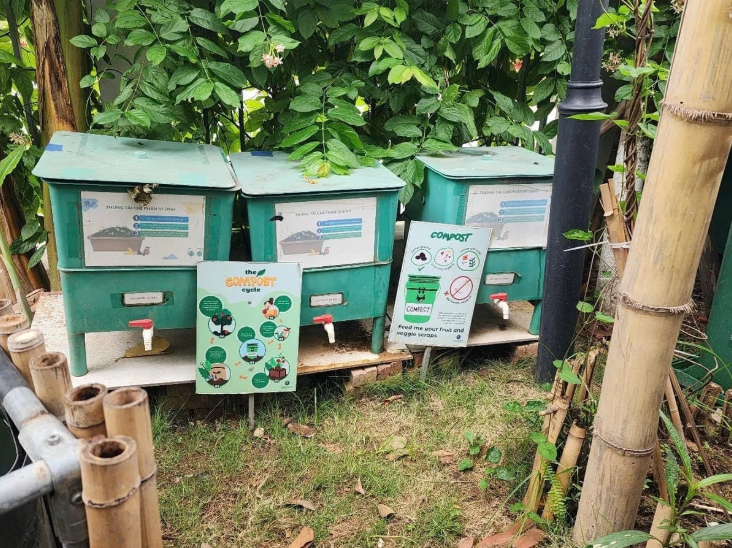
Connecting this to the 2026 ASEAN Eco-Schools Award Viet Nam, Ms. Ha noted that school gardens are directly referenced in 6 out of 15 evaluation criteria under two categories: green school campuses and safe, economical water use. Accordingly, cultivating vegetable and medicinal herb gardens, formulating water-use plans, rainwater harvesting, and irrigation conservation all serve as concrete evidence for fulfilling eco-school benchmarks.
To scale the model, NIFAM proposed establishing a dedicated thematic working group on school gardens and school nutrition within the Eco-Schools network, encouraging experienced schools to mentor newcomers, share teaching aids, and utilize standardized verification templates.
According to Ms. Nguyen Le Thu Ha, building a school garden is a long-term journey requiring the companionship of teachers, students, parents, and the community. Each academic year, schools can progressively upgrade physical spaces, introduce new activities, and elevate educational quality.
"What matters most is not how vast the garden is or how much capital is invested, but what students learn, and what skills and habits they cultivate through participation. This is the true bedrock enabling ecological school gardens to thrive sustainably and scale across educational institutions," Ms. Ha emphasized.
Nguyen Thuy - Kieu Chi