Technology and finance pave the way for energy transition: COP 31
Viet Nam mobilizes financial and technological resources to accelerate the energy transition and realize its Net Zero 2050 target.
On November 14, at the Viet Nam Pavilion within the framework of the COP31 Climate Summit, the Department of Climate Change (Ministry of Agriculture and Environment) coordinated with the World Wide Fund for Nature (WWF) and HSBC Bank to host a side event themed: "Energy Transition in Viet Nam: Opportunities for Sustainable Development."
Carbon pricing grounded in transparent data
"Clean Energy Transition" stands as one of the ten core thematic pillars of COP31, underscoring its status as a central priority driving the global renewable energy roadmap.
Mr. Bui Duc Hieu, Deputy Director General of the Department of Climate Change (Ministry of Agriculture and Environment), emphasized that to fulfill its net-zero emissions commitment by 2050, Viet Nam has finalized a synchronized legal framework. Moving forward, Viet Nam will continue refining its institutional architecture to foster a transparent investment environment in the energy sector, accelerate technological innovation, and intensify international climate finance mobilization, specifically designing tailored capital-raising mechanisms for small and medium-sized enterprises (SMEs).

According to Mr. Hoang Van Tam, Head of the General Affairs Division at the Agency for Innovation, Green Transition and Industry Promotion (Ministry of Industry and Trade), Viet Nam’s industrial and energy sectors face a "dual challenge": simultaneously meeting rapidly surging energy demand while decarbonizing production to clear emerging green trade barriers. Prominent examples include the Carbon Border Adjustment Mechanism (CBAM) and the Ecodesign for Sustainable Products Regulation (ESPR) enforced by key export markets, which directly dictate enterprise competitiveness.
From a global financial perspective, Mr. Justin Wu, Senior Director of Sustainability for Asia and the Middle East at HSBC, noted that between now and 2035, electricity demand growth will outpace overall energy demand by sixfold, driven primarily by the boom in electric vehicles (EVs), data centers, artificial intelligence (AI), and industrial manufacturing. Concurrently, global energy transition investment reached a record 2.3 trillion USD in 2025, helping slash the manufacturing costs of solar photovoltaic modules and battery storage systems by up to 99% over recent decades.
Diverse technological solutions ready for deployment
Transitioning from the macroeconomic landscape, the panel delved into practical technological solutions in Viet Nam. Within the textile and garment sector, an international WWF representative noted that deploying steam-generating heat pumps achieves nearly 100% thermal efficiency and eliminates emissions when powered by renewable electricity.
However, primary barriers today remain high upfront capital expenditures, a six-to-eight-year payback period, and the persistent price spread between grid electricity and combustible fuels.
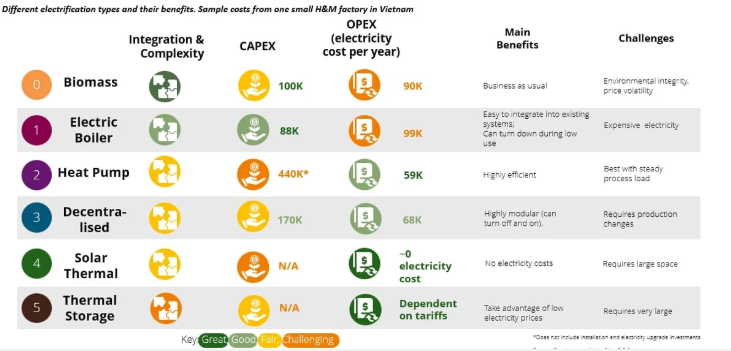
Sharing insights at the event, Ms. Tran Thi Phuong Thao, Viet Nam Country Director at New Energy Nexus, pointed out that a financing gap in the 350,000 USD to 1 million USD bracket is stalling Vietnamese climate-tech startups from scaling commercially. In 2025, zero deals closed within this range, and female founders captured less than 2% of aggregate venture funding.
Ms. Thao introduced the X-celerate startup accelerator program, which is standardizing blended finance models to attract regional venture funds. The program backs domestic innovations including VOX Cool’s zero-capex cold batteries, VIIS smart irrigation systems, ARC-V black soldier fly bio-waste plants, VolNexus AI-integrated EV charging stations, and Lemit Foods’ young jackfruit food ingredients.
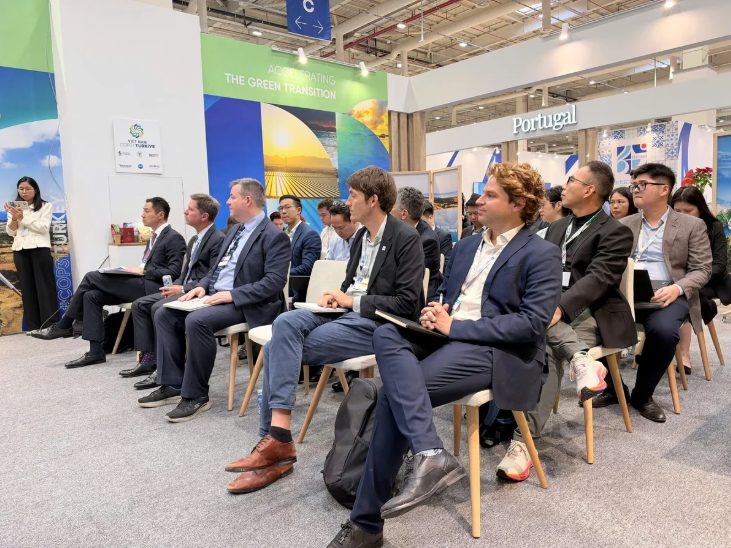
The side event forged a practical bridge linking regulatory authorities, financial institutions, and the business community, reaffirming Viet Nam’s resolve to mobilize all technological resources and green capital flows to realize its Net Zero 2050 goal.
Chu Huong - Khanh Ly