Digitizing refrigerant management, moving toward carbon credits
At COP31, Viet Nam and international partners introduced a sustainable cooling roadmap, unlocking the carbon credit market.
On November 14, within the framework of the 31st Conference of the Parties to the United Nations Framework Convention on Climate Change (COP31) in Antalya, Türkiye, the Department of Climate Change (Ministry of Agriculture and Environment of Viet Nam), in coordination with international partners, convened a side event themed "Advancing Climate Action Through Sustainable Cooling: Digital Innovation, Partnerships, and Implementation."
Representatives from the Southeast Asia Energy Transition Partnership (ETP/UNOPS), the UNEP Cool Coalition, the Climate and Clean Air Coalition (CCAC), and the Overseas Environmental Cooperation Center, Japan (OECC), along with international delegates, attended the event.
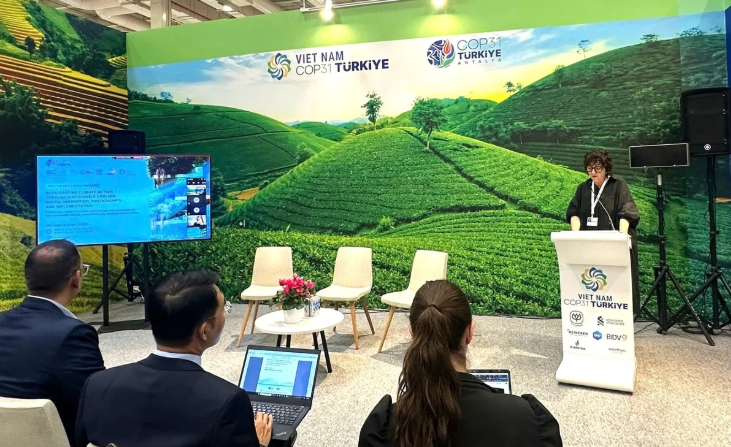
According to Mr. Bui Duc Hieu, Deputy Director General of the Department of Climate Change, Viet Nam has progressively perfected its legal corridor to fulfill international commitments under the Paris Agreement, the Montreal Protocol, the Kigali Amendment, and its pledge to achieve net-zero emissions by 2050. Notably, in 2024, the Prime Minister approved the National Plan on the Management and Phase-out of Controlled Ozone-Depleting Substances and Greenhouse Gases, establishing a vital framework for lifecycle refrigerant management and transitioning toward climate-friendly technologies.
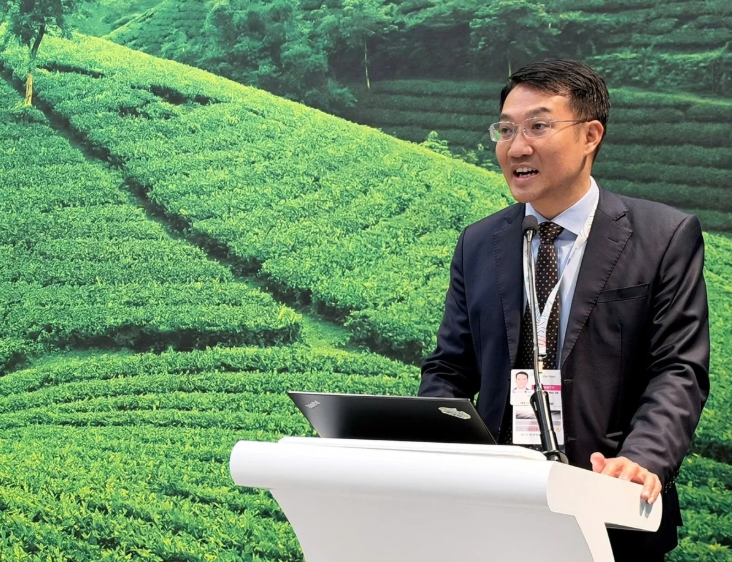
Mr. Bui Duc Hieu affirmed that the primary focus today lies in shifting from policy commitments to broad-scale field execution, wherein digital tools play a pivotal role in tracing refrigerant origins and monitoring compliance progress.
Ms. Martina Otto, Head of the Climate and Clean Air Coalition (CCAC) Secretariat and representative of the United Nations Environment Programme (UNEP), commended Viet Nam for its pioneering role and strong commitment. She emphasized that reducing HFCs and other climate pollutants is one of the fastest and most effective ways to curb global warming in the short term. A particularly effective approach is the implementation of refrigerant lifecycle management (LRM), which has the potential to reduce approximately 39 billion tonnes of CO2 equivalent (CO2e) globally between 2025 and 2050.
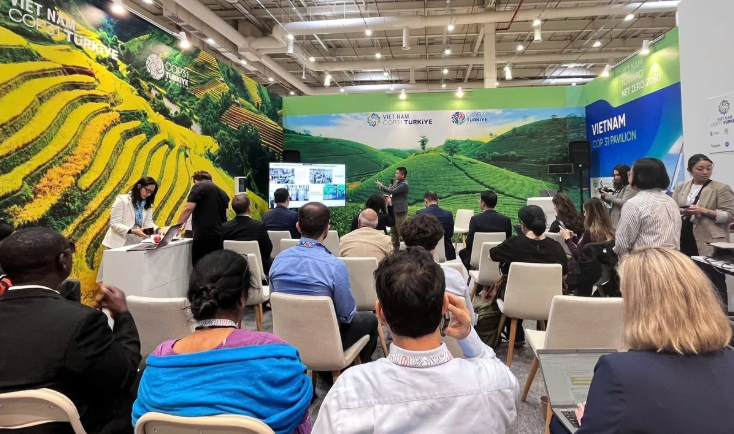
Digitizing Refrigerant Lifecycle Management to Unlock Carbon Credits
Regarding refrigerant tracking tools, Mr. Makoto Kato, Principal Researcher at the Overseas Environmental Cooperation Center, Japan (OECC), presented outcomes from a pilot project constructing a Measurement, Reporting, and Verification (MRV) framework integrated with the RefNEXT electronic tracking system in Viet Nam. By scanning QR codes affixed to individual refrigerant cylinders and syncing data directly with the Public Service Portal of the Ministry of Agriculture and Environment, this digital platform enables transparent lifecycle monitoring, from recovery and aggregation at collection centers through to reclamation or destruction.
Representatives from ETP/UNOPS and Ms. Dang Hong Hanh, Managing Director of Energy and Environment Consultancy Joint Stock Company (VNEEC), underscored the indispensable role of carbon finance in lifecycle refrigerant management. The installed bank of refrigerants in equipment across Viet Nam was estimated at 49,200 tons in 2024 and is projected to expand to nearly 68,700 tons by 2033, whereas financial mechanisms to offset collection and destruction costs remain absent and domestic processing infrastructure is constrained.
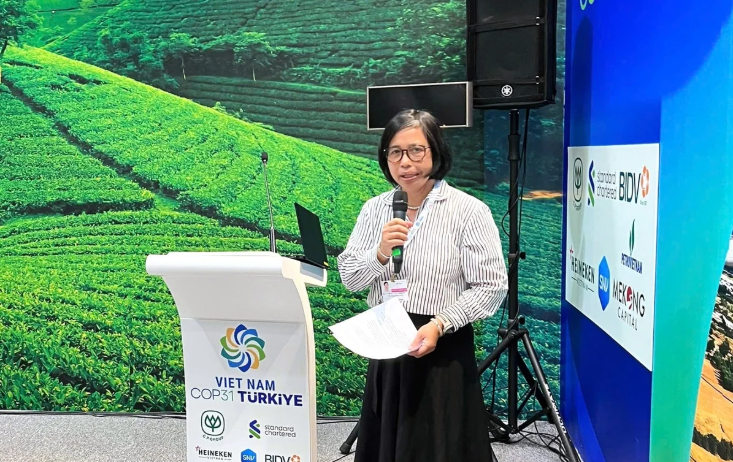
At the event, domestic and international experts shared experiences deploying Japan’s RefNEXT digital platform for refrigerant traceability, implementation lessons for sustainable cooling across Viet Nam and Southeast Asia, and mechanisms to mobilize green finance and leverage Article 6 of the Paris Agreement to turn energy-efficiency interventions into bankable investment projects.
Backed by a robust policy foundation, digital tracking instruments, and emerging carbon finance mechanisms, Viet Nam is steadily operationalizing its sustainable cooling commitments, making substantive contributions toward its Net Zero 2050 goal.
Chu Huong - Khanh Ly