Advancing nature-based solutions to deliver on climate commitments
At COP31, Viet Nam promoted nature-based solutions to reduce greenhouse gas emissions, adapt to climate change, and conserve biodiversity.
On the afternoon of November 16, during COP31 in Antalya, Türkiye, the Department of Climate Change under Viet Nam's Ministry of Agriculture and Environment, in collaboration with the World Wide Fund for Nature (WWF-Viet Nam) and HSBC, organized an event titled "Nature-Based Solutions (NbS) - Delivering Climate Commitments at Scale."
Speaking at the event, Mai Kim Lien, Deputy Director General of the Department of Climate Change, emphasized the role of nature-based solutions in addressing climate change, conserving biodiversity, and promoting sustainable development.
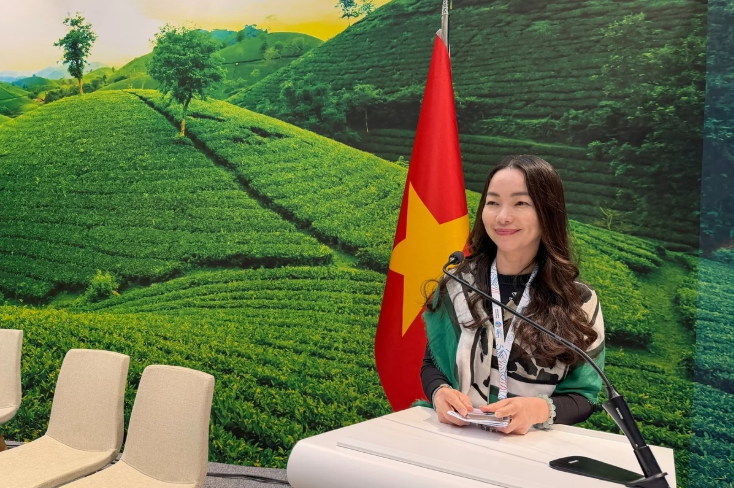
According to Lien, climate change is becoming increasingly complex, with far-reaching impacts on socioeconomic development, food security, water resources, and people's livelihoods.
In 2025, the global average temperature was approximately 1.43°C above pre-industrial levels. Meanwhile, developing countries' climate adaptation finance needs could reach USD 310-365 billion annually by 2035.
Against this backdrop, nature-based solutions are becoming increasingly important, offering multiple benefits in reducing greenhouse gas emissions, adapting to climate change, conserving biodiversity, and improving community livelihoods.
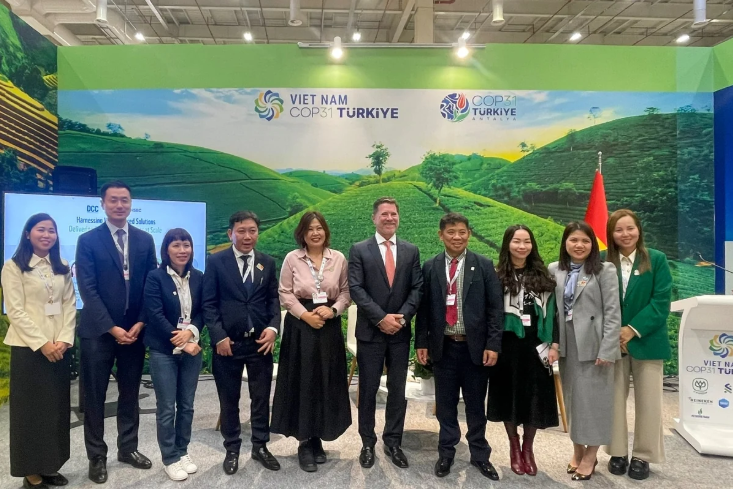
Viet Nam has committed to achieving net-zero emissions by 2050 and is implementing various strategies and plans to meet this target. Nature-based solutions have been identified as a key approach under the National Climate Change Strategy to 2050, the National Biodiversity Strategy to 2030 with a vision to 2050, and the updated National Climate Change Adaptation Plan for 2021-2030, with a vision to 2050.
In recent years, Viet Nam has implemented numerous initiatives to protect and restore forests and coastal ecosystems, while developing climate-resilient production and livelihood models. Notably, a program implemented in cooperation with the United Nations Development Program (UNDP) and the Green Climate Fund (GCF) has restored more than 4,000 hectares of mangrove forests, contributing to the absorption of over 1.1 million tonnes of CO₂ equivalent. The program has also strengthened coastal communities' resilience to natural disasters and supported local livelihoods.
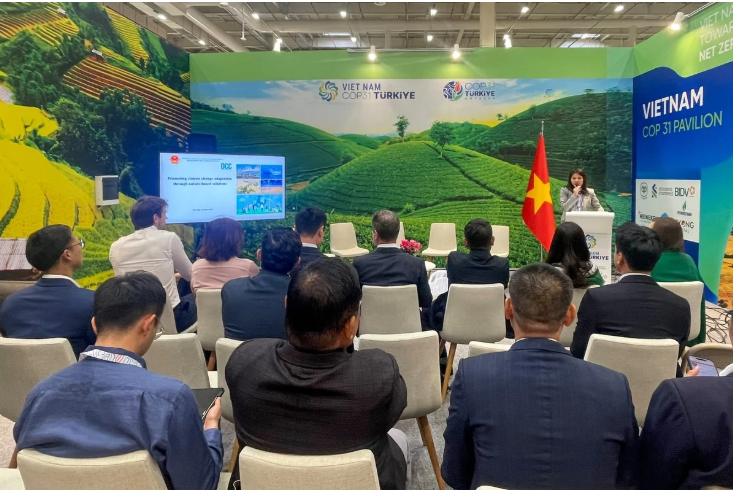
However, according to Mai Kim Lien, the current challenge is to transform individual models into large-scale programs and projects capable of attracting investment and delivering lasting impacts.
To achieve this, Viet Nam needs to further integrate nature-based solutions into its climate and biodiversity conservation objectives, promote the protection and restoration of natural ecosystems, and diversify financial resources, particularly through international cooperation and private-sector investment.
"Investing in nature is not only an investment in climate action and biodiversity conservation, but also an investment in strengthening resilience, creating sustainable livelihoods, and promoting sustainable development," Lien stressed.
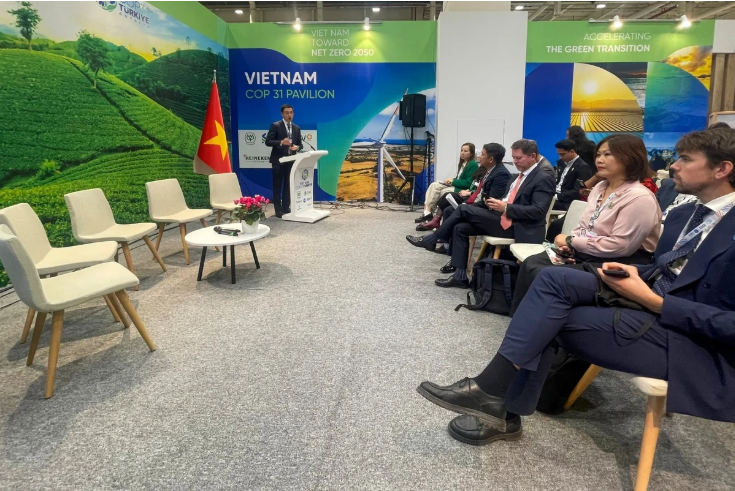
The Deputy Director General also expressed hope that the event would create practical opportunities for cooperation among governments, international organizations, businesses, and financial institutions, helping translate climate commitments into concrete, measurable actions.
During the event, Tran Thi Thanh Nga, Head of the Climate Change Adaptation Division at the Department of Climate Change, presented on advancing climate change adaptation through nature-based solutions.
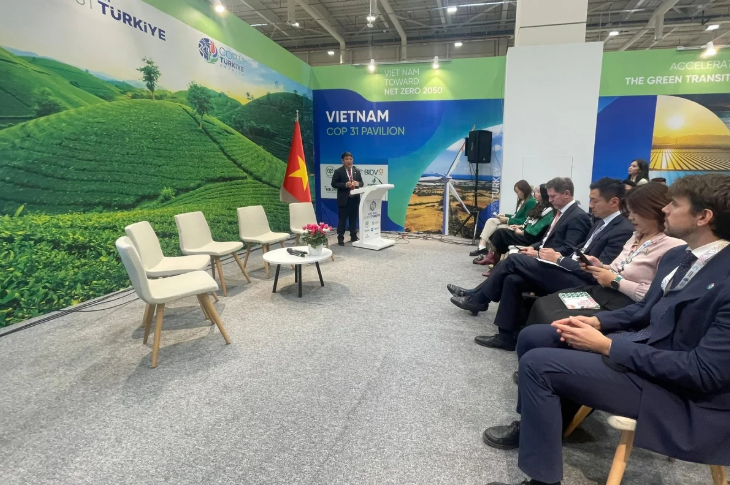
Justin Wu, representing HSBC, discussed financing for nature, highlighting how business challenges can become financial opportunities. Meanwhile, Van Ngoc Thinh, CEO of WWF-Viet Nam, presented results and lessons learned from several nature-based solutions initiatives in Viet Nam, including the NbS OP Program and WWF's Green Climate for People and Nature Program.
The presentations and discussions focused on sharing practical experiences, identifying policy and financial barriers, and encouraging greater private-sector participation. The event aimed to scale up effective models and accelerate the large-scale implementation of nature-based solutions, turning climate commitments into tangible results.
Khuong Trung