Viet Nam, China strengthen cross-border emergency flood information sharing
Representatives of Viet Nam and China have signed a cooperation agreement on the provision of emergency hydrological information for transboundary river basins.
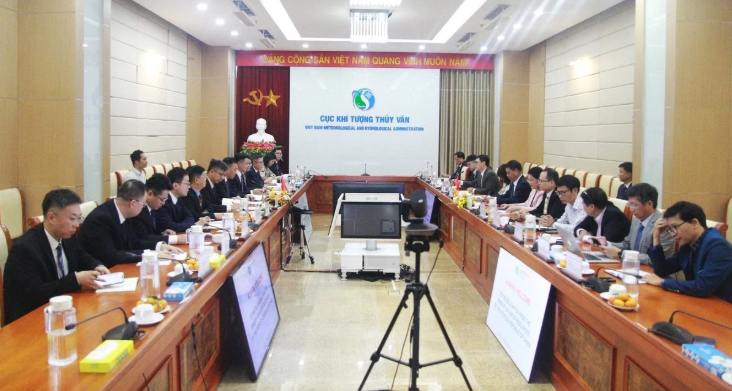
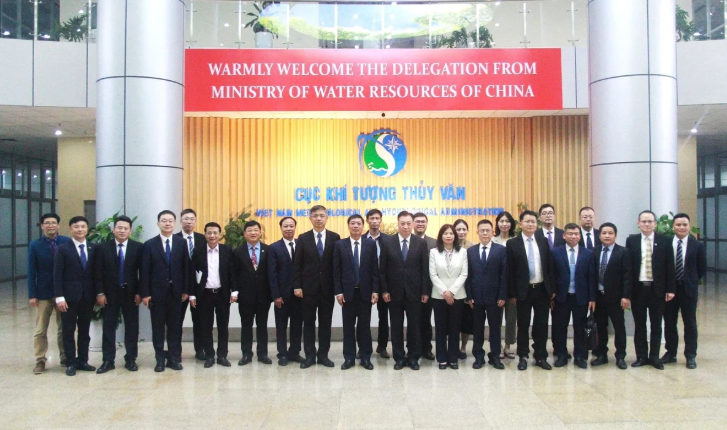
The signing ceremony took place during a working session between the Viet Nam Meteorological and Hydrological Administration and a high-level delegation from China's Ministry of Water Resources on the afternoon of November 16, on the sidelines of the 2nd Mekong-Lancang Water Resources Ministers' Meeting.
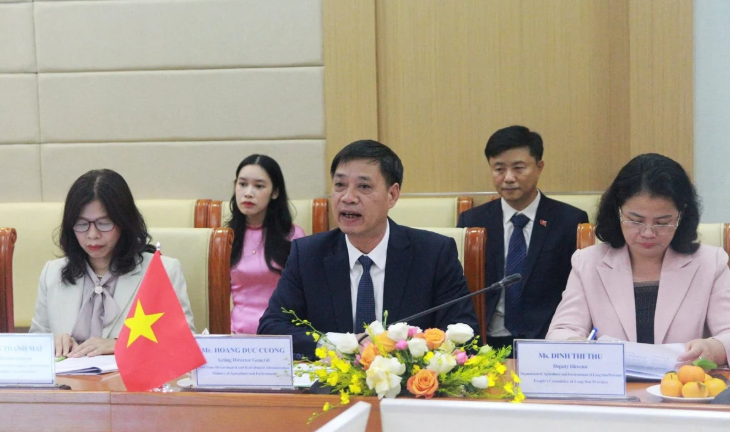
Attendees included Mr. Hoang Duc Cuong, Acting Deputy Director General of the Viet Nam Meteorological and Hydrological Administration; Mr. Liu Dongshun, Vice Minister of China's Ministry of Water Resources; representatives of the Lang Son Provincial People's Committee; and officials from relevant agencies under Viet Nam's Ministry of Agriculture and Environment and China's Ministry of Water Resources.
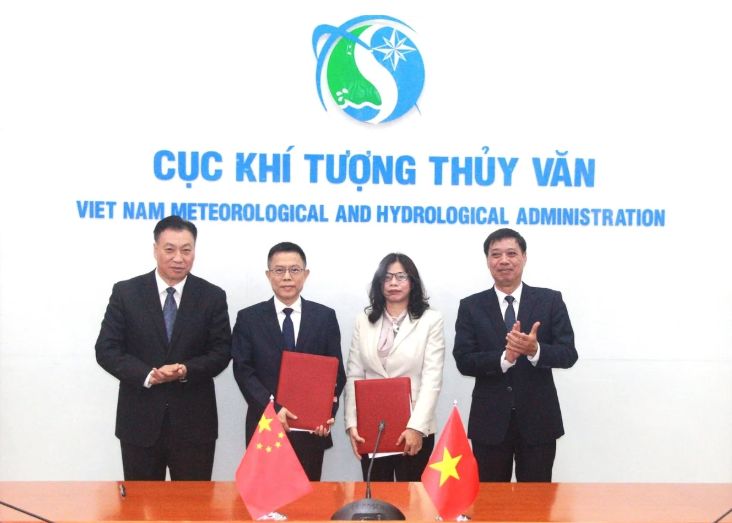
Activating an emergency information-sharing mechanism
Speaking at the ceremony, Deputy Director General Hoang Duc Cuong said Viet Nam and China are neighbouring countries connected by major transboundary river basins, including the Red River (known as the Yuan River in China) and the Bang Giang-Ky Cung River (known as the Zuo River in China).
Building on their Comprehensive Strategic Cooperative Partnership and the orientation towards building a Viet Nam-China community with a shared future, cooperation between the two countries in water resources management and disaster prevention and control has become increasingly substantive and in-depth. The timely exchange of hydrological information under the Memorandum of Understanding signed in December 2023 and the 2024 implementation plan has demonstrated the spirit of mutual support, directly contributing to the protection of lives and property among communities in border areas.
The two agencies are actively working to establish an emergency notification mechanism for transboundary rivers, in line with the shared understanding reached by the senior leaders of the two Parties and States in the joint statement issued during General Secretary and President To Lam's visit to China in April 2026. The two sides held a consultation meeting on the proposed mechanism on August 11, 2026, and have since reached an in-principle agreement on its implementation.
The two sides signed the minutes of their online consultation meeting on August 11, 2026, setting out key technical parameters for the emergency hydrological information-sharing mechanism on transboundary rivers. Under the agreement, the Viet Nam Meteorological and Hydrological Administration and the Pearl River Water Resources Commission have agreed on the conditions for activating the emergency information-sharing mechanism at two key locations within their shared river basins. The selection of specific technical indicators will enable forecasting agencies in both countries to monitor flood developments at an early stage and shorten response times when extreme weather events occur.
According to Mr. General Hoang Duc Cuong, Viet Nam is actively coordinating with relevant ministries, sectors and local authorities to complete the procedures for the draft implementation plan, with a view to bringing the emergency notification mechanism into operation in a coordinated and sustainable manner as soon as possible.
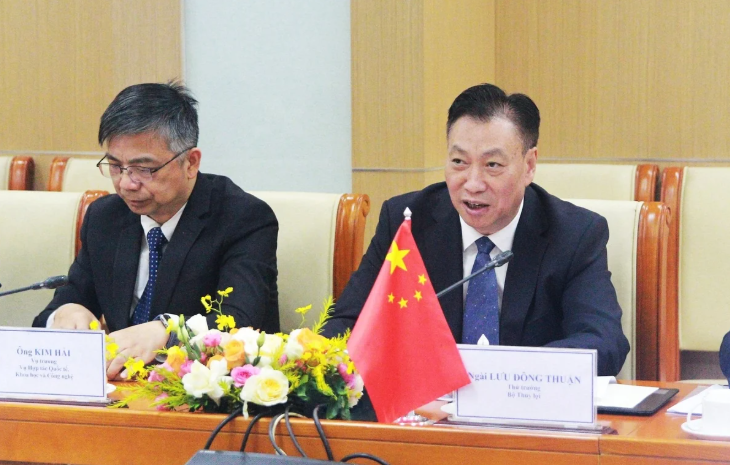
On this occasion, Vice Minister Liu Dongshun expressed his sincere appreciation to his Vietnamese counterparts for their positive contributions to flood prevention, control and disaster risk reduction in transboundary river basins shared by China and Viet Nam. A notable example occurred in late August 2026, when China's Zuo River basin experienced major flooding due to the impact of Typhoon Narra. Viet Nam immediately activated its emergency response mechanism and promptly increased the frequency of upstream hydrological monitoring data sharing.
Vice Minister Liu affirmed that hydrological information sharing has the longest history of cooperation and has delivered some of the most practical results among water resources management agencies in China and Viet Nam.
He also praised the effective coordination between the two countries' working groups in advancing the emergency notification mechanism in line with the April 2026 joint statement. Following the in-principle agreement and the signing of the consultation meeting minutes, he expressed his hope that both sides would maintain close exchanges to reach agreement on the implementation arrangements and officially sign them as soon as possible.
Enhancing the effectiveness of hydrological information-sharing cooperation
Highlighting the results of cross-border flood warning cooperation in recent years, Deputy Director General Dang Thanh Mai of the Viet Nam Meteorological and Hydrological Administration said that, since 2023, the two countries' technical agencies have maintained regular exchanges of monitoring data four times a day at designated stations throughout the annual flood season, from May 15 to October 31.
Notably, during the severe floods that occurred between October 12 and 14, 2025, and August 23 and 25, 2026, Viet Nam promptly responded to China's requests by increasing the frequency of data sharing to eight times a day throughout each flooding period. This close and responsible coordination has strengthened substantive cooperation between the two agencies and significantly helped reduce disaster risks for communities in border areas.
Mr. He Lijin, Deputy Director of the Pearl River Water Resources Commission, said the valuable data provided by Viet Nam had helped China extend its flood forecasting lead time for the Zuo River, thereby supporting more accurate decision-making in flood prevention and control and improving safety for downstream areas.
Alongside traditional data transmission methods, technical teams from both sides have also made effective use of direct communication channels. China has established a three-tier manual verification mechanism, combined with an internal WeChat channel, while Viet Nam maintains communication through telephone calls, email and Zalo chat groups.
This flexible approach enables technical officials from both countries to verify data immediately when weather conditions develop abnormally, ensuring that information flows remain uninterrupted and accurate.
Building on the proven effectiveness of their cooperation, technical agencies from both countries discussed technical solutions to strengthen monitoring and forecasting capacity across shared river basins. Viet Nam proposed learning from China's experience in protecting monitoring station infrastructure against landslides and rapidly rising floodwaters in steep terrain. It also suggested joint research into non-contact flow measurement technologies using surface-water radar and cameras capable of analysing surface flow velocity.
In response, representatives of the Pearl River Water Resources Commission shared their experience in operating fixed radar-based flow velocity measurement equipment. They also introduced a three-tier flood defence system integrating satellite data, weather radars, ground-based stations and artificial intelligence (AI), which enables flood forecasts of up to seven days.
Following the discussions, the agencies agreed to promote joint scientific research proposals. They also committed to completing the formal procedures for signing the implementation arrangements for the emergency notification mechanism, paving the way for its coordinated and sustainable operation.
Khanh Ly