Viet Nam, Indonesia, and the Philippines cooperate on blue carbon
MAE and UNDP co-chaired a regional cooperation dialogue on blue carbon on the sidelines of the COP31 Climate Summit.
On November 16 in Antalya (Türkiye), the Ministry of Agriculture and Environment, in coordination with the United Nations Development Programme (UNDP) in Viet Nam, convened a side event themed "From Climate Commitments to Blue Carbon Action: Strengthening National Partnerships for Implementation" on the margins of COP31.
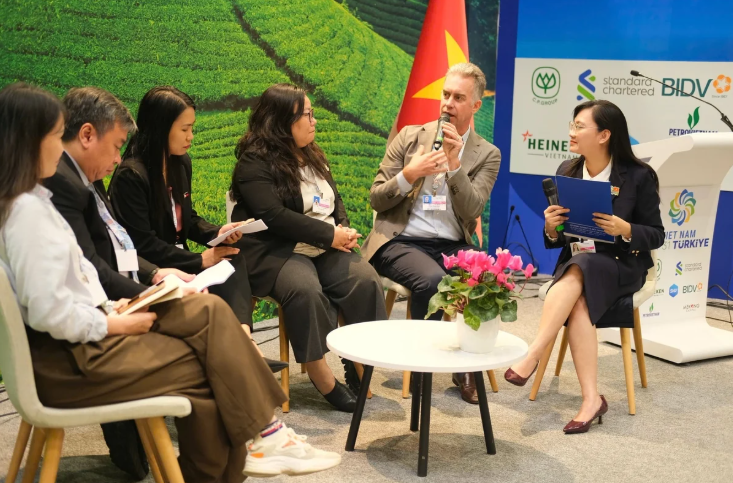
The event brought together representatives from Viet Nam, Indonesia, and the Philippines, three nations actively implementing the National Blue Carbon Action Partnership (NBCAP), to share practical experiences, foster regional collaboration, and mobilize resources for conserving and restoring marine and coastal ecosystems.
Chaired by Dr. Nguyen Do Anh Tuan, Director General of the International Cooperation Department (Ministry of Agriculture and Environment), the dialogue featured representatives from Indonesia’s Coordinating Ministry for Food Affairs, the Philippines’ Department of Environment and Natural Resources (DENR), Mekong Capital, alongside state regulatory agencies, international organizations, research institutes, financial institutions, and the private sector. The Viet Namese delegation updated participants on NBCAP implementation progress, introduced key orientations in the draft National Blue Carbon Action Roadmap, and explored regional investment and cooperation opportunities.
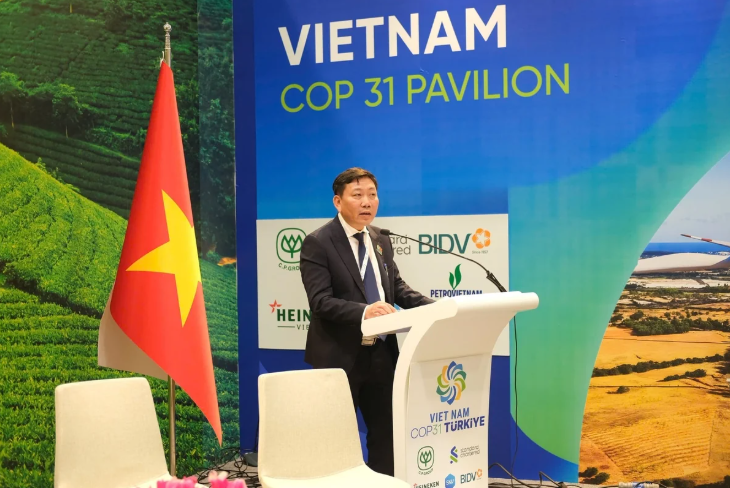
Perfecting the legal framework for the national action roadmap
Possessing an extensive coastline and rich coastal ecosystems, Viet Nam holds vast potential to leverage blue carbon for climate change mitigation, adaptation, and sustainable development. However, ecosystems such as mangroves, seagrass meadows, and tidal marshes face mounting pressures from economic development and climate impacts, necessitating accelerated conservation and restoration efforts to fulfill national climate pledges.
In 2026, Viet Nam continued perfecting its policy framework to advance sustainable marine economic development and the domestic carbon market through pivotal legislative instruments, including Politburo Resolution No. 20-NQ/TW on building and developing Viet Nam into a strong maritime nation; Government Resolution No. 218/NQ-CP on the Action Program implementing this Resolution; and Decree No. 180/2026/ND-CP on forest carbon sequestration and storage services. Furthermore, the formulation of Viet Nam’s Nationally Determined Contribution for the 2026-2035 period (NDC 3.0) places markedly stronger emphasis on the role of marine and coastal ecosystems.
To operationalize these orientations, the Ministry of Agriculture and Environment established NBCAP Viet Nam—a multi-stakeholder collaborative platform designed to strengthen inter-sectoral coordination, mobilize scientific knowledge and capital, and scale blue carbon solutions. To date, the partnership has connected over 500 organizations and specialists spanning regulatory bodies, research institutes, financial institutions, private enterprises, and development partners.
A centerpiece output of the program is the draft National Blue Carbon Action Roadmap. By 2030, Viet Nam aims to finalize its legal framework and establish a unified database to govern these ecosystems; integrate them into the national greenhouse gas inventory and NDC; and mobilize sustainable finance coupled with equitable benefit-sharing mechanisms for coastal communities.
Expanding regional cooperation on policy, science, and investment
During the panel discussion, regulatory representatives from Indonesia and the Philippines shared practical insights in formulating blue carbon policies.
Specifically, since February 2026, Indonesia has enacted its National Action Plan on Blue Carbon Ecosystems (RENAKSI) for the 2025-2030 period, tightly linking ecosystem conservation with food security, capture fisheries, aquaculture, seaweed production, and coastal livelihoods. Meanwhile, the Philippines has integrated blue carbon into its climate policy framework via NDC 3.0 as a core emissions mitigation lever. As the focal agency governing the carbon market, the Philippine Department of Environment and Natural Resources (DENR) prioritizes aligning its NDC with the National Adaptation Plan and the Biodiversity Strategy and Action Plan, thereby restoring ecosystems to simultaneously serve mitigation, adaptation, and biodiversity conservation goals.
These experiences underscore substantial complementarities among the three nations. The dialogue reached consensus on three strategic cooperation directions: leveraging national partnerships to drive inter-sectoral coordination; refining policy corridors, benefit-sharing mechanisms, and investment readiness; and intensifying knowledge exchange and regional collaboration to unlock finance for blue carbon solutions.
For Viet Nam, the immediate priority centers on conserving and restoring existing ecosystems in tandem with compatible economic sectors such as sustainable forestry and aquaculture. This approach generates supplemental livelihoods and economic incentives for local residents to safeguard ecosystems while unlocking future access to carbon finance mechanisms.
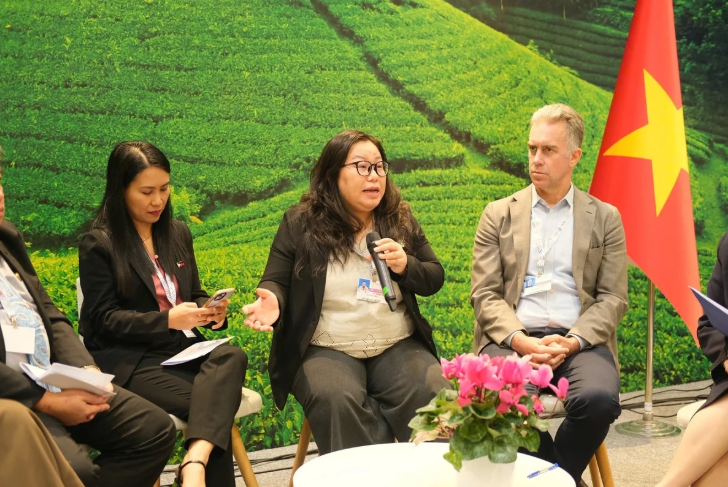
Addressing the event, Dr. Nguyen Do Anh Tuan emphasized that Viet Nam defines blue carbon development as an integrated solution uniting emissions mitigation, climate adaptation, and sustainable blue economy growth. According to him, while policy lays the foundation, on-the-ground ecosystem restoration demands concerted collaboration among the State, scientists, local communities, and private enterprises, a role NBCAP is actively championing to align ministries, localities, and international partners.
Sharing this view, Ms. Catherine Diam Valla, Deputy Team Leader of the NDC Support Team at UNDP’s Bureau for Policy and Programme Support (BPPS), noted that backed by vast coastlines and globally significant mangrove ecosystems, Viet Nam, Indonesia, and the Philippines possess the potential to emerge as blue carbon pioneers across the Asia-Pacific region. With national partnership platforms now established, the next step involves engineering bankable financial models to catalyze investment, build resilient ecosystems, and lay the groundwork for socio-economic prosperity.
Following COP31, Viet Nam will focus on finalizing its National Action Roadmap, progressing toward a Blue Carbon Finance Roadmap, and intensifying technical and financial cooperation with Indonesia, the Philippines, and regional partners to translate climate pledges into tangible ecosystem protection and sustainable livelihoods for coastal communities.
Blue carbon is sequestered and stored within marine and coastal ecosystems such as mangrove forests, seagrass meadows, and coastal tidal marshes. A defining characteristic of these ecosystems is their capacity to accumulate vast quantities of carbon within living biomass (trunks and foliage) and deep underlying muddy and seabed sediments. Scientific studies indicate that these ecosystems can sequester carbon at rates averaging two to four times higher, and possess total carbon storage capacities up to ten times greater than terrestrial forests, helping mitigate climate impacts, protect coastlines, conserve biodiversity, and sustain coastal livelihoods (Source: IPCC).
Ha Chi