According to the announcement from the Vietnam Meteorological and Hydrological Administration (VNMHA) under the Ministry of Agriculture and Environment, Vietnam possesses outstanding offshore wind resources in the region, with a total technical potential estimated at 1,068 GW (measured at 100 meters above sea level).
Massive potential
The “Vietnam Offshore Wind Energy Technical Potential Report 2025” findings reveal that the average annual wind energy density modeled by the WRF-3 km system is around 500–900 W/m² in the central Gulf of Tonkin and 400–600 W/m² off the coast from Ninh Thuan to Ba Ria–Vung Tau, measured at a height of 100 meters. This exceeds the results of the Ministry of Natural Resources and Environment in 2022, which estimated 500–700 W/m² and 300–500 W/m², respectively.
For nearshore areas (within 6 nautical miles), the total technical potential reaches 57.8 GW. Some provinces demonstrate notably high nearshore potential: Bac Lieu – Ca Mau, accounting for nearly 30% of the nearshore total (over 16 GW); Ninh Thuan – Binh Thuan, with more than 24 GW, concentrated around Ninh Phuoc and Tuy Phong districts; Quang Tri – Thua Thien Hue: showing more modest potential but with stable wind speeds during the winter season.
Compared with the "Assessment Report on the Potential of Solar Radiation, Wind, and Wave Energy in Vietnam" released in September 2022 by the Ministry of Natural Resources and Environment (now the Ministry of Agriculture and Environment), the spatial and temporal distribution of offshore wind potential is largely consistent. However, the newly released figures are equal to or higher in value.
Unlike previous studies such as the World Bank's 2021 Offshore Wind Roadmap or assessments by the Global Wind Atlas (GWA), this latest report offers higher spatial and temporal resolution, down to 3x3 km grids and 30-year data series.
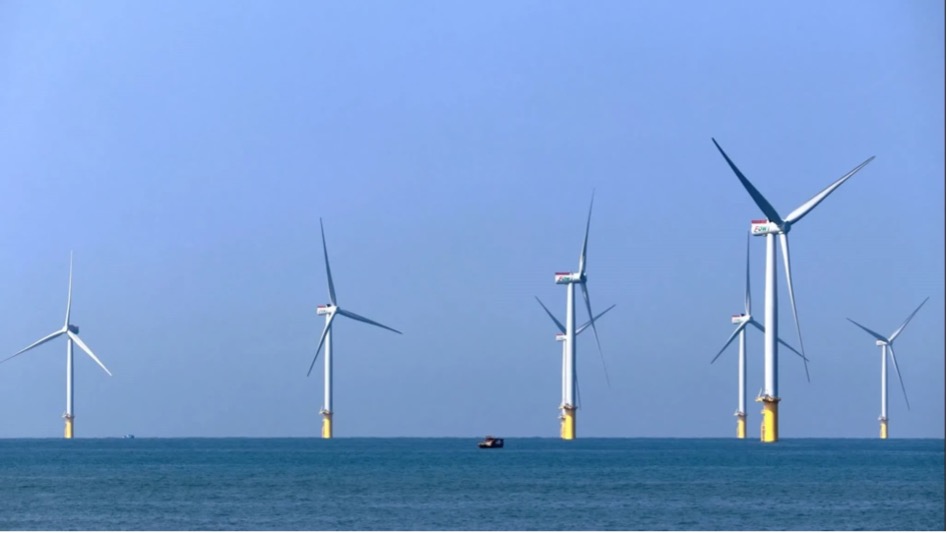 Numerous foreign investors are interested in offshore wind projects in Vietnam.
Most notably, the report estimates Vietnam's technical potential at 1,068 GW, significantly higher than the 599 GW estimated by the World Bank. This increase is attributed to broader survey coverage and improved climate modeling, which is calibrated with extensive domestic observational data.
The report also assesses marine meteorological risks, such as typhoons, strong winds, large waves, and ocean currents—factors that could impact the stability and safety of offshore wind projects. This risk analysis supports the development of a marine hazard map, helping to guide planners on which areas are suitable or unsuitable for development.
Unlocking new opportunities
Experts consider this the most detailed, up-to-date, and comprehensive report on Vietnam’s offshore wind potential and development conditions.
The report confirms that Vietnam possesses exceptional regional offshore wind resources, laying a solid foundation for the development of a large-scale offshore wind industry. This, in turn, will contribute to energy security, green economic growth, and the fulfillment of Vietnam’s Net Zero commitment.
It also serves as a critical scientific foundation for policy making, identifying priority areas, attracting investment, developing infrastructure, and training a skilled workforce for the future offshore wind sector.
Based on these advantages, the report recommends increasing investment in offshore wind measurement stations above 100 meters to improve model calibration and ensure long-term monitoring. It also proposes integrating research findings into national offshore wind development plans and marine spatial planning while expanding assessments to include other marine energy sources such as wave energy, tidal energy, and ocean thermal gradients.
A key highlight of the report is the creation of the Vietnam Offshore Wind Energy Atlas, featuring 204 detailed maps by month, season, and year, at elevations ranging from 10 to 250 meters. The Atlas illustrates wind speed, power density, and wind variability across each 3x3 km grid cell throughout Vietnam’s maritime zone. It can be integrated into GIS systems and directly supports national and local wind energy planning, as well as individual investment projects. This makes it an indispensable tool for investors and government agencies to identify priority development zones, optimize turbine design, and forecast electricity output.
Experts believe the Atlas is a highly practical resource supporting marine spatial planning and offshore wind development in Vietnam.