Khanh Hoa province is implementing a green port project to gradually realize the goal of net zero emissions.
The People's Committee of Khanh Hoa Province recently issued Decision No. 3848/QD-UBND approving the Scheme for "Transformation and Development of Green Ports in Khanh Hoa," aiming to deploy green port operational models tailored to local conditions.
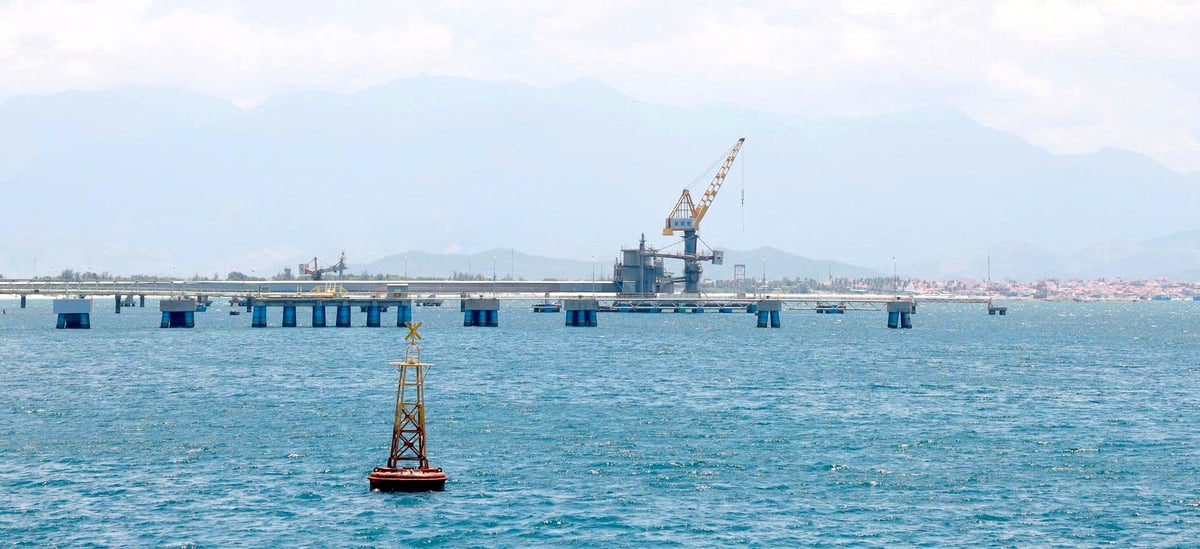 Khanh Hoa Province is steering toward green port development. Photo: KS.
Under the direct steering of the Khanh Hoa Provincial People's Committee, the Department of Construction acts as the focal executing agency, collaborating with relevant line agencies and port enterprises operating across the province. Implementation adopts a systems-thinking approach, synchronously integrating policy, engineering, finance, and data, positioning port terminal operators at the core to attain Net-Zero emissions by 2050.
The study scope focuses on port terminal zones across the post-consolidation Khanh Hoa seaport cluster, including: North Van Phong terminal zone, South Van Phong terminal zone, Nha Trang terminal zone, Cam Ranh terminal zone, Ca Na terminal zone, and Ninh Chu terminal zone over the 2026–2030 period, with a strategic vision toward 2050. Regarding the Truong Sa maritime region, the scheme outlines broad greening orientations integrated with dual civil-defense requirements.
The green port evaluation framework adheres to Grassroots Standard TCCS 02:2022/CHHVN (issued by the Viet Nam Maritime Administration), comprising three primary criteria: commitment and readiness; action and implementation; and efficacy and performance, with a green certification qualification threshold set at 3.5 out of 5.0 points. Preliminary scoring across 18 operational terminal facilities indicates a cluster-wide average score of 2.499/5.0 points, with four terminal facilities qualifying at 3.5 points or above: Hyundai Viet Nam Shipyard Terminal, K662 Petroleum Terminal, Cam Ranh International Port Terminal, and South Van Phong General Terminal.
To ensure effective implementation, the scheme sets forth core tasks and interventions centering on green awareness and management, green energy adoption, resource efficiency, environmental protection, emissions control, digital transformation, and functional repurposing of terminal zones.
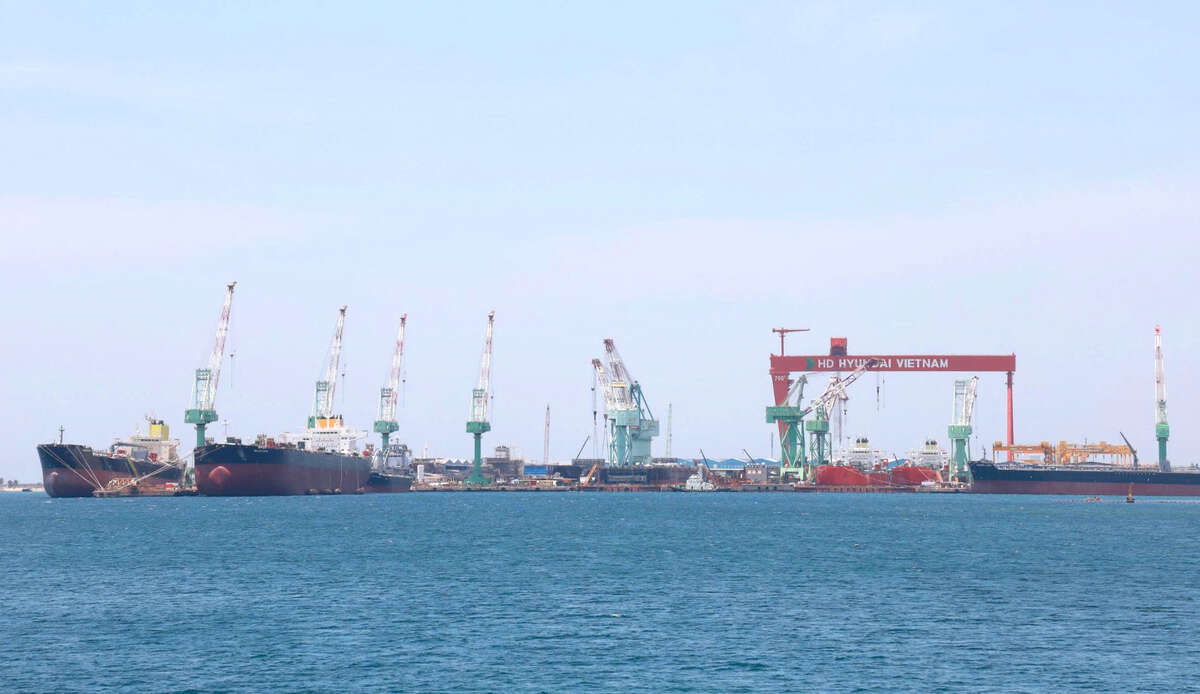 Hyundai Vietnam Shipyard Terminal. Photo: KS.
Specifically, the province plans to repurpose Nha Trang Port Terminal into a dedicated, green-oriented international passenger terminal; relocate Mui Chut Offshore Petroleum Mooring Buoy away from Nha Trang's urban center; transition Ninh Chu Terminal to serve tourism and localized cargo; and embed green port criteria into early-stage engineering designs for master-planned new terminal zones in North Van Phong and Ca Na.
Alongside low-hanging energy conservation measures, the scheme prioritizes medium-term technical solutions, including electrifying cargo-handling equipment and internal transport fleets, such as electric rubber-tired gantry cranes (e-RTGs), electric vehicles, charging infrastructure, and continuous automated environmental monitoring stations. The roadmap also calls for major infrastructure upgrades, including cold ironing (onshore power supply - OPS) systems at the repurposed Nha Trang Terminal, Ca Na General Terminal, and South Van Phong General Terminal.
The strategic roadmap establishes targets by 2027 to finalize baseline databases across the seaport cluster, ensure 100% of terminal facilities complete internal self-assessments, and have at least four terminals self-declare compliance with statutory green port criteria.
By 2030, the province aims to consolidate a pilot group of terminals that self-declare green port compliance and pilot onshore power supply investments, establishing an operational pathway toward net-zero greenhouse gas emissions by 2050.
The master plan also emphasizes financial support mechanisms, green credit, public–private partnerships (PPP), statutory land rental exemptions and tax incentives, coupled with hands-on guidance for terminal enterprises to execute greenhouse gas inventories and participate in carbon markets.