After numerous trials of new management models, but with supply chain bottlenecks still unresolved, Ho Chi Minh City launched a collaborative program to control product quality - the “Responsibility Green Tick” program. This program is a collaboration with the Ho Chi Minh City Department of Industry and Trade and the Steering Committee of the “Vietnamese People Prioritize Using Vietnamese Goods” campaign.
The "Responsible Green Tick" program operates on a voluntary basis but sets clear responsibilities. Suppliers proactively accept monitoring, ensure transparency in their production processes, and commit to preventing defective products from reaching the market. As a result, businesses awarded the "Responsible Green Tick" not only gain consumer trust but are also recognized by retailers as compliant with quality standards.
Furthermore, participating retailers have signed agreements on cross-monitoring mechanisms, coordinating efforts to prevent substandard goods and establishing a comprehensive control system. Simultaneously, various specific support policies are applied to suppliers that meet standards, encouraging the maintenance of consistent quality. This is not only a commitment to social responsibility but also a step forward in modern market governance.
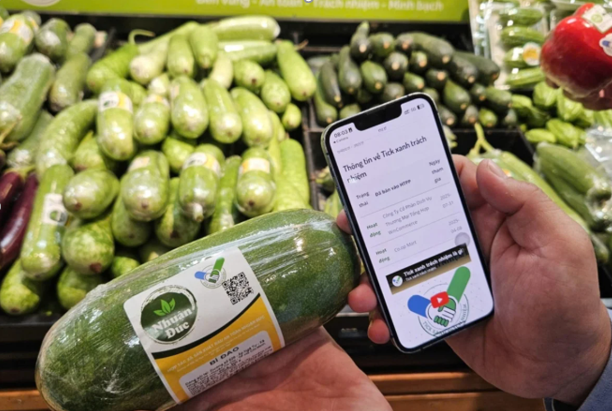 The participation of all parties in the "Responsible Green Tick" program will help consumers easily choose reputable, standard-compliant food products.
For suppliers, the most important requirements are strict adherence to food safety regulations, transparency in control data, proactive recall of defective products, and full information sharing with all parties involved. Violations by one retailer are considered violations by the entire system and are reported to regulatory authorities and consumers. This mechanism creates a strong deterrent, protects legitimate businesses, and enhances market discipline.
The core of the "Responsible Green Tick" lies in a market-based screening mechanism. Through the filtering of the retail system and the increasingly high demands of consumers, the program forms a safe and sustainable supply chain based on a commitment to responsibility throughout the entire process, from cultivation and processing to circulation and distribution. Consumers have a tool to identify safe products, compliant businesses have the opportunity to grow, while those that prioritize profit over quality will gradually be eliminated from the market.
To date, the program has attracted 12 major retail systems, 389 suppliers, and nearly 5,000 certified products. Sales of Tick-labeled products have increased by over 20%, gradually becoming the preferred choice for consumers. These figures reflect a significant shift: safety and transparency are no longer a "compliance burden" but have become essential conditions for businesses to survive in the new competitive environment.
After more than a year and a half of implementation, the program has achieved its goal of enhancing the self-awareness and responsibility of manufacturers and suppliers, becoming an effective binding tool in maintaining quality commitments.
Currently, major supermarket chains in Ho Chi Minh City consider the "Responsible Verification" sticker as the new quality standard. All participating products are tagged with QR codes that publicly display information ranging from certification and production logs to storage and distribution, helping consumers quickly and reliably trace the origin of their products.
Despite being voluntary, the program has proven effective and strengthened market confidence. As of November 7, 2025, 481 suppliers had registered with 3,925 confirmed products. Many leading retail systems in terms of product quantity include Bach Hoa Xanh (1,558), Co.opmart (1,179), Central Retail (393), Satra (105) and GS25 (38)...