A project implemented by UNESCO with funding from the Government of Japan will upgrade early warning systems and strengthen disaster preparedness and response capacity in Nghe An Province.
On July 24, UNESCO in Viet Nam, in collaboration with the Nghe An Provincial People's Committee, officially launched the project "Strengthening Viet Nam's national capacity for early warning, preparedness, response, recovery from disasters, and ensuring safe learning environments for the populations most at risk following Typhoons Wipha, Bualoi and Matmo". Funded by the Government of Japan, the project aims to enhance early warning capacity, reduce disaster risks, and improve school safety in the province.
As Viet Nam continues to face increasingly frequent typhoons and extreme weather events that cause significant losses of life, damage to infrastructure, and disruptions to livelihoods, strengthening early warning systems and disaster preparedness has become a key priority, particularly in mountainous areas that are highly vulnerable to flash floods and landslides.
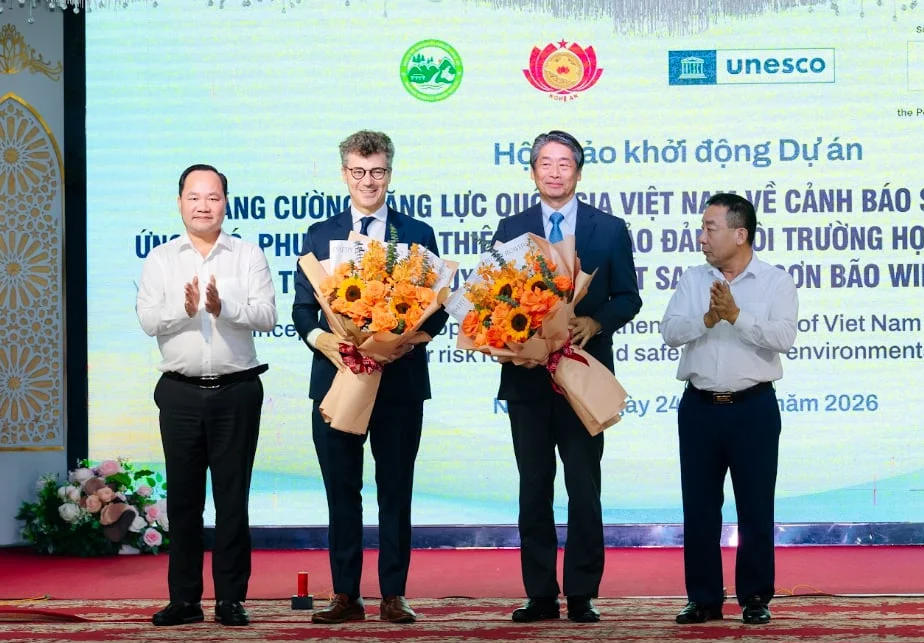 Representatives attend the project launch ceremony. Photo: Embassy of Japan.
The project will focus on the Western Nghe An Biosphere Reserve, with implementation concentrated in Tuong Duong and Muong Xen communes. It consists of two main components: upgrading early warning systems for flash floods and landslides, and strengthening disaster preparedness in schools.
Under the project, UNESCO will work with relevant agencies to review disaster risk management plans, assess existing early warning systems and hazard maps, and support the development and updating of flash flood and landslide hazard maps for the two pilot communes. The project will also explore improvements to real-time early warning infrastructure at the provincial level and in high-risk areas, helping shorten warning transmission times and enabling local authorities to make faster and more informed emergency response decisions.
Drawing on Japan's experience shared during the launch event, an effective early warning system should integrate four essential elements: understanding disaster risks, monitoring and forecasting hazards, disseminating timely warnings, and ensuring communities are prepared to respond. Early warnings are only effective when people clearly understand the risks, know when evacuation is necessary, and have practical response plans in place.
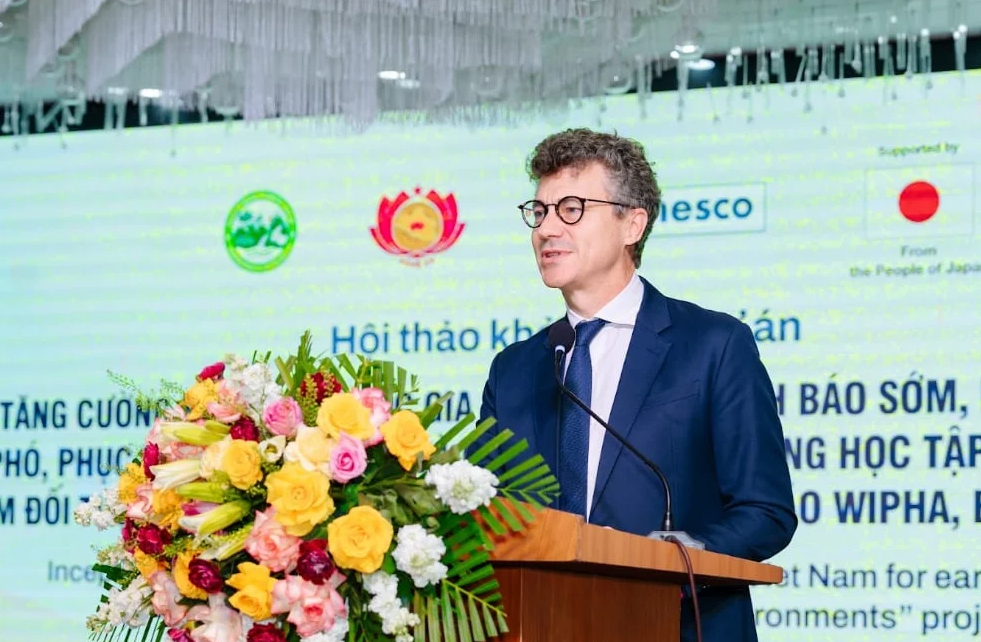 Mr. Jonathan Wallace Baker, UNESCO Representative to Viet Nam, speaks at the launch event. Photo: Embassy of Japan.
Mr. Jonathan Wallace Baker, UNESCO Representative to Viet Nam, emphasized that early warning systems must be people-centered, well understood by local communities, and closely linked to concrete actions. Through the project, UNESCO hopes that every warning will trigger a timely response, reducing losses and protecting communities, particularly children and other vulnerable groups. The initiative will also draw on Japan's extensive experience in early warning and disaster education while adapting those lessons to the local context in Nghe An.
In addition to upgrading warning systems, the project places strong emphasis on creating safer schools. UNESCO will work with the education sector to develop participatory school disaster preparedness planning tools involving teachers, students, and local communities. It will also train core teachers and support selected schools in piloting disaster response plans. The objective is to help schools identify potential hazards, establish clear emergency procedures, and ensure learning can continue during emergencies.
Nguyen Van De, Vice Chairman of the Nghe An Provincial People's Committee, said the project provides an important opportunity for the province to learn from Japan's advanced experience in disaster risk management, apply science and technology to early warning, and build safer learning environments, thereby strengthening resilience to climate change.
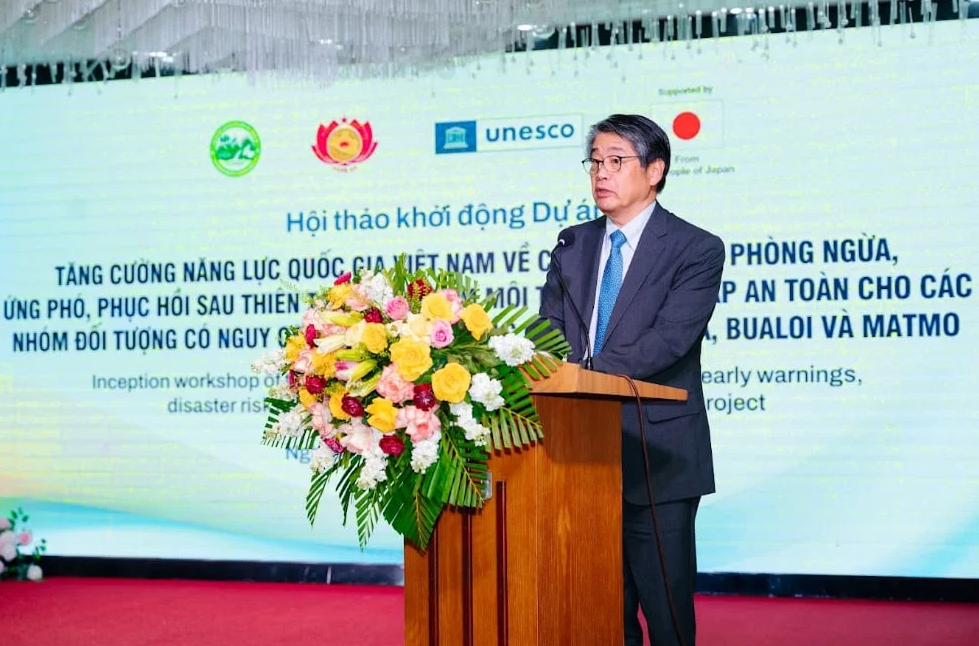 Japanese Ambassador to Viet Nam Ito Naoki reaffirms Japan's commitment to sharing its disaster management experience with Viet Nam. Photo: Embassy of Japan.
Japanese Ambassador to Viet Nam Ito Naoki reaffirmed Japan's willingness to share the knowledge and expertise it has gained through decades of disaster management to help Viet Nam strengthen its early warning systems, enhance disaster risk management capacity, and build more resilient communities.
With financial support from the Government of Japan, the project is expected to directly benefit around 15,000 people, including disaster management officials, meteorological and forecasting agencies, local authorities, teachers, students, and residents in the project area. Lessons learned from its implementation in Nghe An will serve as a reference for scaling up similar initiatives in other provinces, contributing to the implementation of Viet Nam's National Strategy for Natural Disaster Prevention and Control to 2030 with a vision to 2050, the Sendai Framework for Disaster Risk Reduction, and the United Nations Sustainable Development Goals.