China has approved a large number of additional growing area codes and packing facility codes for Vietnamese agricultural products, particularly durians.
On August 20, during a working visit to China, a delegation from the Ministry of Agriculture and Environment, led by Deputy Minister Nguyen Hoang Hiep, held talks with the General Administration of Customs of China (GACC), headed by Deputy Commissioner Zhang Baofeng, in Dalian.
The meeting aimed to promote agricultural trade, address technical issues and strengthen coordination between the two sides.
 The delegation from the Ministry of Agriculture and Environment met with the General Administration of Customs of China (GACC) on August 20. Photo: CT.
More room for Vietnamese durian exports to China
One positive development during the visit was China's approval of a large number of additional growing area and packing facility codes for Vietnamese agricultural products, particularly durians.
The GACC has completed its assessment of 736 Vietnamese durian applications, including 487 growing areas and 249 packing facilities. Of these, 401 growing areas and 166 packing facilities met the requirements and were approved, representing 82.3% and 66.7% of the applications assessed, respectively.
A further 283 durian growing area codes and 160 packing facility codes are still awaiting review and feedback from the GACC.
Approving a large number of additional growing areas and packing facilities will expand Viet Nam's capacity to supply durians to China through official channels. It will also create more opportunities for localities and businesses to organize production, collection, packing and exports, particularly as the harvest season reaches its peak in the Central Highlands.
In addition to durians, China has also approved six more growing area codes for coconuts and chilies, as well as 70 packing facility codes for other Vietnamese agricultural products.
At the meeting, the Ministry of Agriculture and Environment praised the GACC for its close cooperation, particularly its efforts to quickly assess the large number of durian applications and strengthen technical exchanges between the two sides.
The Vietnamese side asked the GACC to speed up the assessment process, especially for products entering their main harvest and export seasons. It also proposed increasing the frequency of list and application submissions to reduce waiting times and better meet seasonal production schedules and the trading needs of businesses in both countries.
The Chinese side noted the proposal for consideration, but said the current three-month submission cycle should remain in place. The GACC said it needs sufficient time to prepare the personnel and other resources required to review applications submitted by Viet Nam.
Improving growing areas and packing facilities to raise approval rates
Alongside the positive results, this round of assessments also provided important information to help Viet Nam further improve the quality of growing areas, packing facilities and application dossiers.
Among the durian applications assessed this time, 86 growing areas and 83 packing facilities still need to address outstanding issues and make further improvements before the GACC can consider them at the next stage.
The Ministry of Agriculture and Environment has noted the GACC's assessment and considers it an important basis for standardizing the quality of growing areas and packing facilities and improving the quality of application dossiers from the outset in Viet Nam. This is expected to help raise the approval rate in importing markets.
Accordingly, local authorities, growing area owners and packing facilities need to pay particular attention to several requirements. Applications must be complete, consistent with actual conditions and meet the requirements of the importing country. Technical requirements must be implemented and maintained regularly, rather than being addressed only when an application is submitted.
For cases requiring corrective action, the relevant parties should identify the actual causes, make substantive improvements and provide sufficient evidence before resubmitting their applications.
Local authorities need to strengthen oversight, conduct on-site inspections and require applicants to complete their dossiers in line with GACC requirements, ensuring the quality of growing areas and packing facilities seeking approval.
Improving quality from the outset will not only shorten the assessment process and increase approval rates, but also reduce compliance costs for businesses and regulators. It will also help minimize the risk of warnings or suspension of codes after approval.
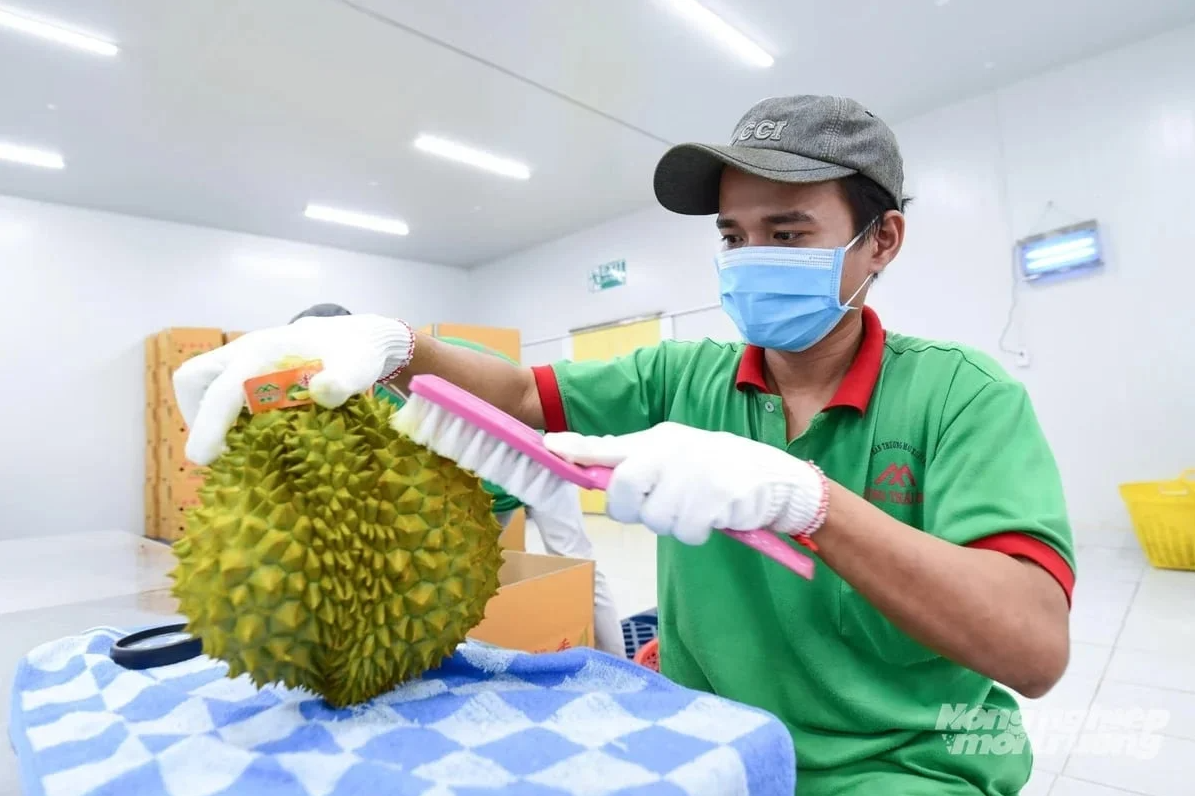 More Vietnamese durian growing areas and packing facilities have been approved by China. Photo: Tung Dinh.
Moving toward transparent, traceable and risk-based management of codes
At the meeting, the Ministry of Agriculture and Environment briefed the GACC on changes to Viet Nam's system for managing growing area and packing facility codes under Resolution No. 36/2026/NQ-CP, dated July 31, 2026.
Viet Nam is moving toward a more data-driven approach based on traceability, risk classification and the responsibilities of individual stakeholders. The country is also digitizing the management process and centralizing data on registered codes.
The agricultural traceability system is being developed to gradually connect information from production areas and packing facilities to individual consignments and markets.
The Vietnamese side stressed that domestic administrative reforms would not reduce technical requirements for growing areas and packing facilities exporting to China. All operators must continue to fully comply with the relevant protocols, technical requirements and GACC regulations.
The new system aims to improve transparency, traceability, accountability, and the effectiveness of monitoring and post-approval inspections.
As the new system could result in a larger number of codes being submitted to the GACC for approval, the Ministry of Agriculture and Environment asked the Chinese side to coordinate with and support Viet Nam in the coming period, helping speed up the approval of growing area and packing facility codes and facilitate bilateral agricultural trade.
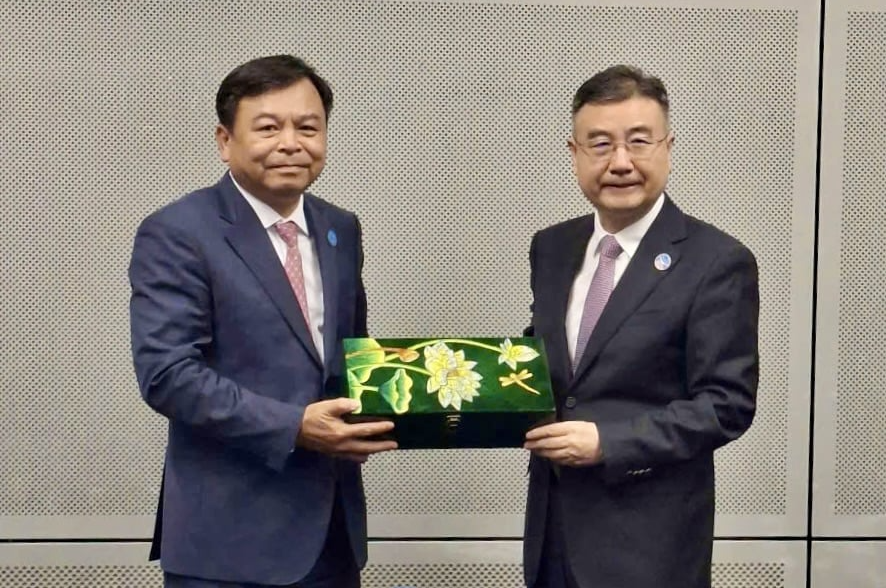 Deputy Minister Nguyen Hoang Hiep and GACC Deputy Commissioner Zhang Baofeng pose for a commemorative photo. Photo: CT.
Strengthening technical cooperation to facilitate agricultural trade
The two sides also discussed stronger cooperation on technical standards and food safety testing.
Viet Nam proposed that the two sides develop a roadmap for mutual recognition of the capacity of testing laboratories, as well as testing methods and results for agreed parameters. In the initial stage, priority would be given to agricultural products with high trade value.
The two sides also discussed strengthening exchanges on standards and plant quarantine methods in line with each country's laws and international practices.
They agreed to maintain a technical exchange mechanism three times a year, either in person or online, and to communicate proactively whenever urgent issues arise. The mechanism is expected to help both sides promptly update regulations, address non-compliance at an early stage and minimize disruptions to trade.
Regarding the suspension of codes, Viet Nam asked the GACC to consider providing a longer advance notice period so that businesses and other stakeholders have more time to adjust harvesting, purchasing, packing and transportation plans.
The GACC said it applies the current practice of notifying exporters about a suspension about 48 hours after a decision is made, uniformly to all countries. The timeframe is based on a careful assessment of relevant factors. For now, the GACC said there is no basis for changing the 48-hour period.
The Ministry of Agriculture and Environment stressed that expanding the number of approved codes must go hand in hand with improving the quality and transparency of each individual code. Every approved growing area and packing facility not only creates new opportunities for farmers and businesses, but also contributes to the overall reputation of Viet Nam's agricultural products and industries.
Therefore, alongside continued discussions with the GACC to speed up the review of pending applications, the Ministry of Agriculture and Environment called on local authorities to strengthen guidance, monitoring, and post-approval inspections; improve the quality of growing areas, packing facilities, and traceability systems; and promote transparent, compliant, and responsible production.
These efforts are expected to provide a stronger foundation for stable and sustainable growth in Viet Nam's agricultural exports to China.