The project 'Promoting Wildlife Conservation and Responsible Nature-Based Tourism for Sustainable Development in Viet Nam' (WTP) has been launched in Hanoi.
On 27 August 2026, the Ministry of Agriculture and Environment and the United Nations Development Program (UNDP) in Viet Nam officially launched the project “Promoting Wildlife Conservation and Responsible Nature-based Tourism for Sustainable Development in Viet Nam” (WTP), with US$7.15 million in funding from the Global Environment Facility (GEF).
Bui Chinh Nghia, Director General of the Nature and Biodiversity Conservation Agency and Deputy Head of the WTP Project Steering Committee, chaired the event, with Francesca Nardini, UNDP Deputy Resident Representative in Viet Nam, also participating.
 The launch of the “Promoting Wildlife Conservation and Responsible Nature-Based Tourism for Sustainable Development in Viet Nam” Project (WTP) took place on the morning of August 27. Photo: Tung Dinh.
Funded by a US$7.15 million grant from the Global Environment Facility (GEF) and scheduled for implementation from 2026 to 2030, the project aims to unlock the economic value of nature and tourism without degrading the ecosystems, wildlife and landscapes that make Viet Nam an attractive destination.
At the same time, the project seeks to channel part of the economic value generated by nature and tourism back into conservation efforts and create additional livelihood opportunities for local communities.
Communities at the heart of conservation
Speaking at the event, Bui Chinh Nghia said Viet Nam is one of 16 countries recognized as having high levels of biodiversity, home to more than 62,600 animal and plant species. Many of these are endemic and rare species that play an important role in shaping distinctive ecosystems and habitats.
However, Viet Nam’s biodiversity has faced growing negative pressures in recent years. Population growth and economic development have pushed many ecosystems toward critical thresholds, with nearly 1,400 species threatened with extinction, according to the 2024 Viet Nam Red Data Book.
Against this backdrop, Viet Nam has undertaken numerous efforts to protect and maintain ecosystems and implement solutions for nature conservation and biodiversity protection.
“Practical experience shows that nature conservation cannot succeed without the participation of all stakeholders, particularly the central role of local communities,” affirmed Bui Chinh Nghia, Director General of the Nature and Biodiversity Conservation Agency.
Therefore, nature conservation and environmental protection objectives must be closely linked to ensuring sustainable livelihoods through specific, practical support for people whose lives depend on natural resources.
 Bui Chinh Nghia, Director General of the Nature and Biodiversity Conservation Agency, speaks at the event. Photo: Tung Dinh.
According to Bui Chinh Nghia, the WTP Project has been designed and implemented with highly practical objectives. Ecotourism and nature-based tourism are identified as a breakthrough and appropriate approach to balancing conservation and development.
This approach aims to maximize the value of natural resources and create new livelihood opportunities, thereby generating financial resources that can be reinvested in ecosystem conservation and community development.
At the two pilot sites, Nui Chua National Park and Phong Nha-Ke Bang National Park, the Project will introduce management, partnership, financing and support models to develop nature-based tourism while conserving wildlife and rare and endangered species.
 A tiger is conserved at Phong Nha-Ke Bang National Park. Photo: Tung Dinh.
As the national focal agency and Project Owner, the Nature and Biodiversity Conservation Agency affirmed its strong commitment to implementing the Project, ensuring it stays on schedule and fully achieves its objectives.
UNDP pledges continued support
On behalf of UNDP, Francesca Nardini said nature-positive tourism is expected to create a practical link between conservation and development, supporting sound ecosystem planning and management while generating employment and income opportunities for local communities.
To maintain ecological balance, tourism development must stay within ecosystems' capacity and limits. Local communities need to see tangible, long-term benefits, while tourism must also contribute to nature conservation.
According to Nardini, UNDP’s role goes beyond supporting conservation efforts on the ground. It also seeks to facilitate the wider application of successful approaches and help mobilize additional resources.
“UNDP is committed to working alongside Viet Nam, and the Ministry of Agriculture and Environment in particular, to turn environmental and biodiversity goals into concrete action,” Francesca Nardini affirmed.
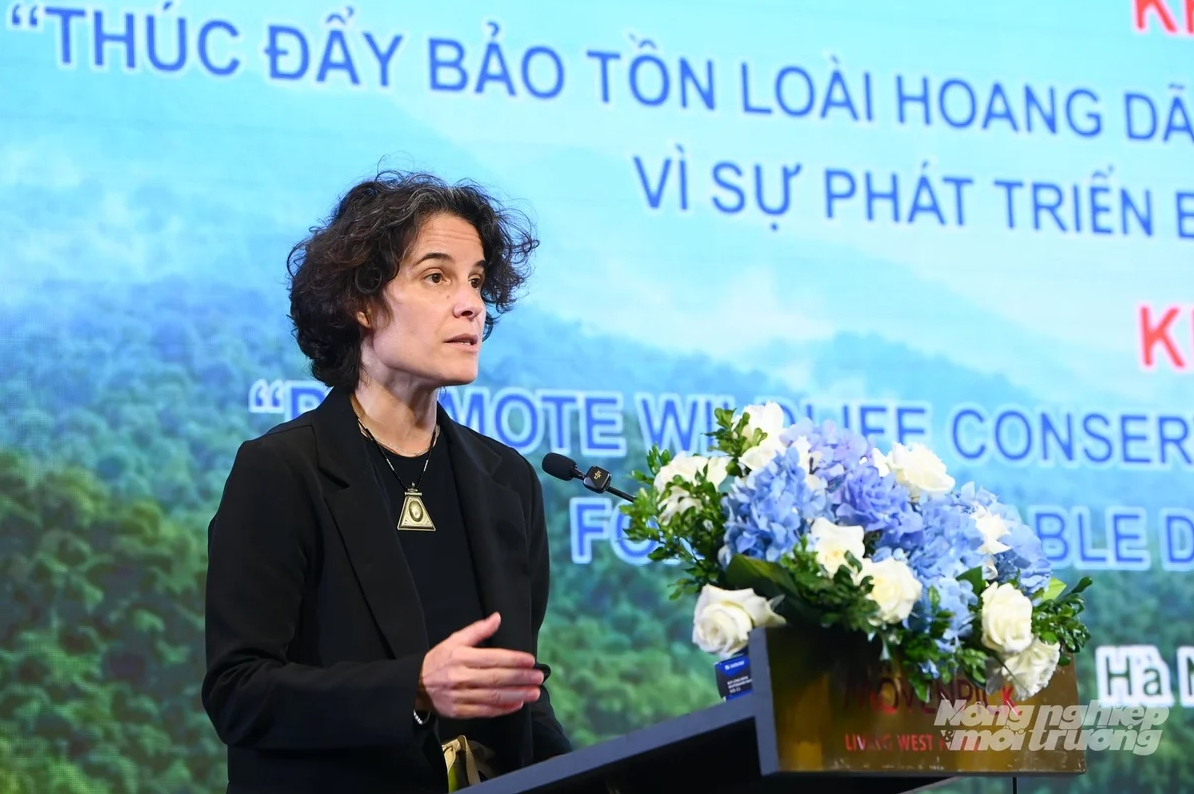 Francesca Nardini, UNDP Deputy Resident Representative in Viet Nam. Photo: Tung Dinh.