The event affirms Viet Nam's increasingly active role in sci-tech, investment and livestock development cooperation, while expanding global ties.
Hosted the 13th AAAP Congress in 2008
On the afternoon of September 14 in Ha Noi, the Animal Husbandry Association of Viet Nam (AHAV) and the VAN News held a press conference to introduce the 21st Asian-Australasian Animal Science Congress (AAAP 2026).
AAAP 2026 will take place from October 28 to 31, 2026, at the National Convention Center in Ha Noi, under the theme "Sustainable Animal Production", hosted by AHAV.
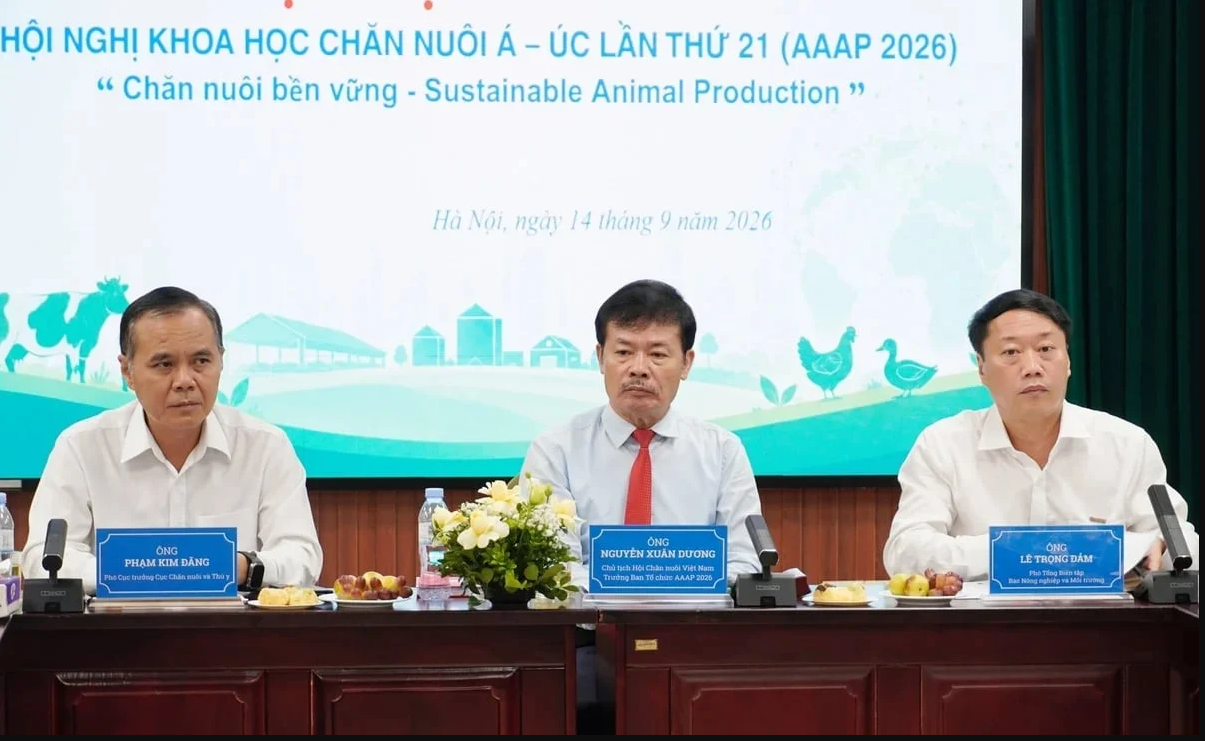 Mr. Pham Kim Dang, Deputy Director of the Department of Livestock Production and Animal Health; Mr. Nguyen Xuan Duong, Chairman of AHAV; and Mr. Le Trong Dam, Deputy Editor-in-Chief of the Agriculture and Environment Newspaper co-chaired the press conference. Photo: Hong Tham.
So far, approximately 1,400 delegates have registered, including about 600 international delegates from 42 countries and territories. These include scientists, experts, managers, businesses, associations, and international organizations involved in livestock, veterinary medicine, environment, and food processing. Additionally, the Congress Organizing Committee has received over 994 scientific papers.
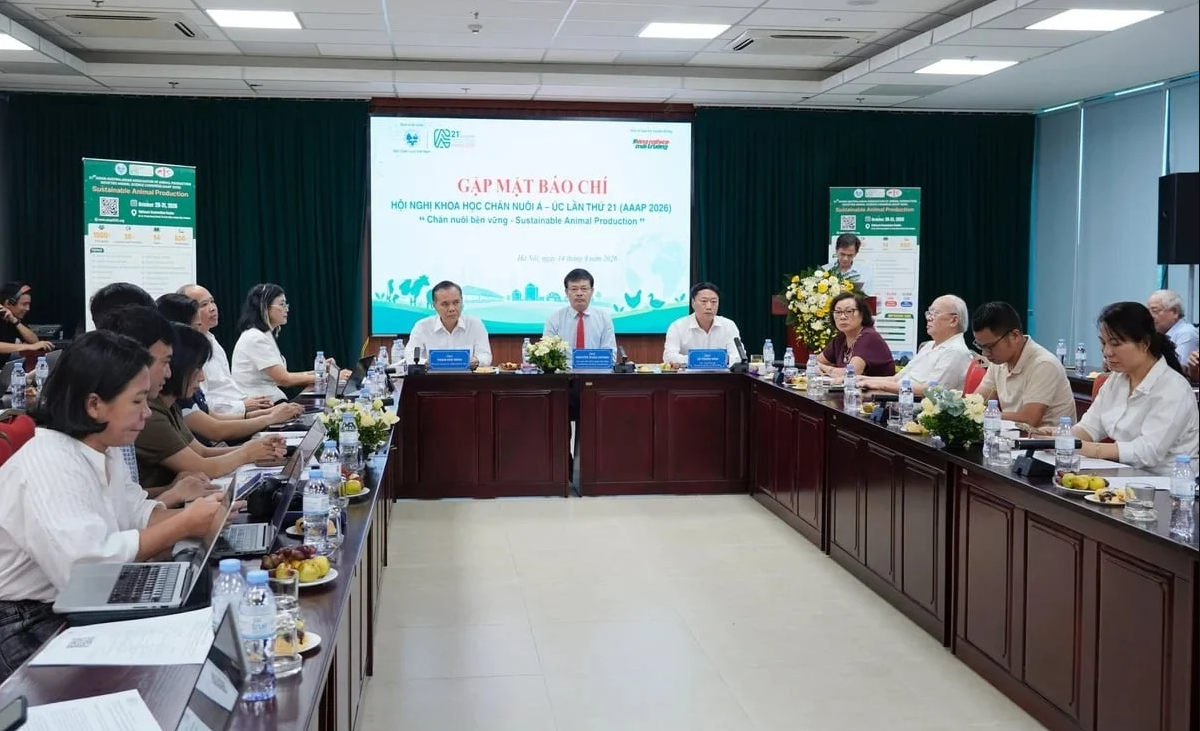 The press conference introducing the 21st Asian-Australasian Animal Science Congress (AAAP 2026) took place on the afternoon of September 14 in Ha Noi. Photo: Hong Tham.
Viet Nam previously hosted the 13th AAAP Congress in 2008 with 1,270 delegates from 32 countries and territories. After this event, Viet Nam's livestock industry entered a period of innovation, development, and deeper regional and international integration, achieving numerous milestones in scale, productivity, quality, and production capacity.
Sustainable livestock production needs a comprehensive view across 4 pillars
Mr. Le Trong Dam, VAN News Deputy Editor-in-Chief, said the Asia-Australasia region has great potential, with large production scale and strong consumption of livestock products. For AAAP 2026, the organizing committee initially expected to welcome about 1,200 delegates, but so far 1,400 have registered, and the projected number could reach 1,500. This demonstrates that AAAP 2026 has attracted significant interest from domestic and international delegates, experts, and organizations.
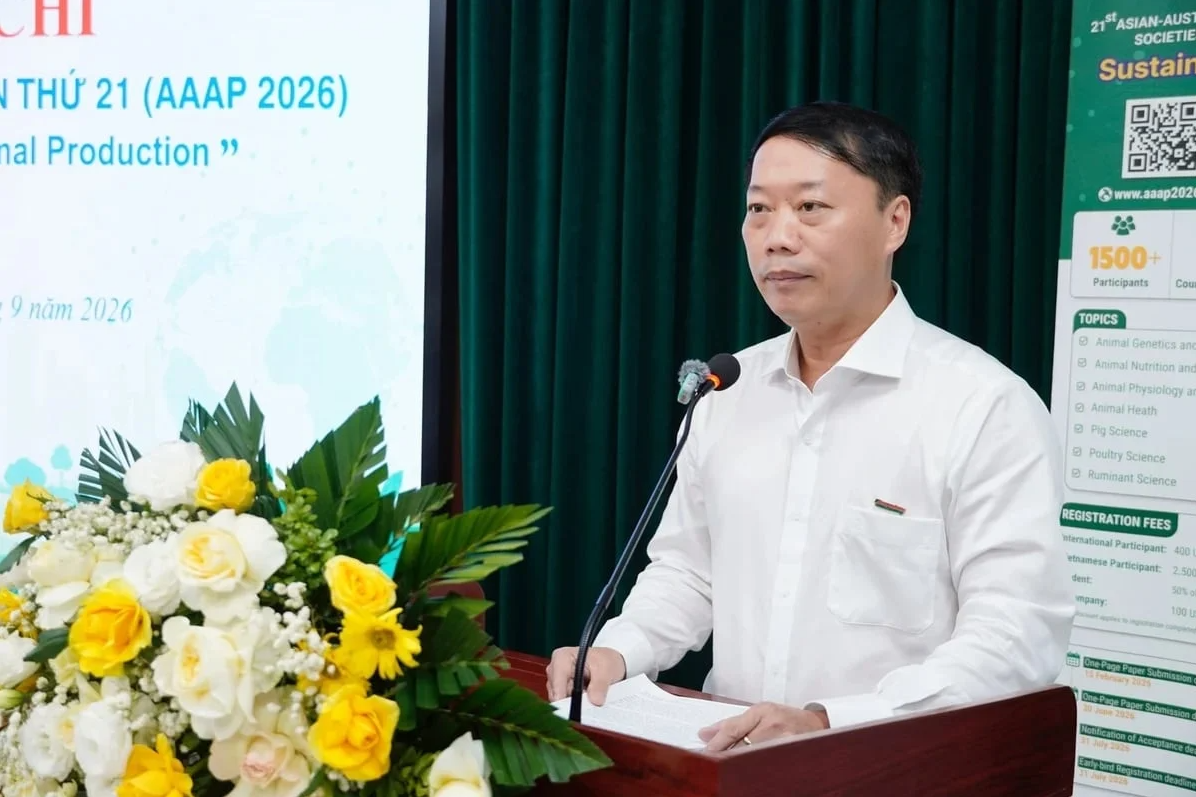 Mr. Le Trong Dam, Deputy Editor-in-Chief of the Agriculture and Environment Newspaper, said that "Sustainable Animal Production" was chosen as the theme for AAAP 2026 amid sustainable development becoming an urgent requirement for the livestock industry. Photo: Hong Tham.
Mr. Nguyen Xuan Duong, Chairman of AHAV and Head of the AAAP 2026 Organizing Committee, shared that AAAP 2026 takes place as Viet Nam enters an era of surging development, and the livestock industry is facing demands for strong transformation.
However, Mr. Duong emphasized that livestock farming not only produces meat, eggs, and milk but is also directly tied to people's livelihoods. Therefore, sustainable livestock development must be viewed comprehensively across four pillars: economy, environment, society, and animal welfare, thereby forming a sustainably developed livestock ecosystem.
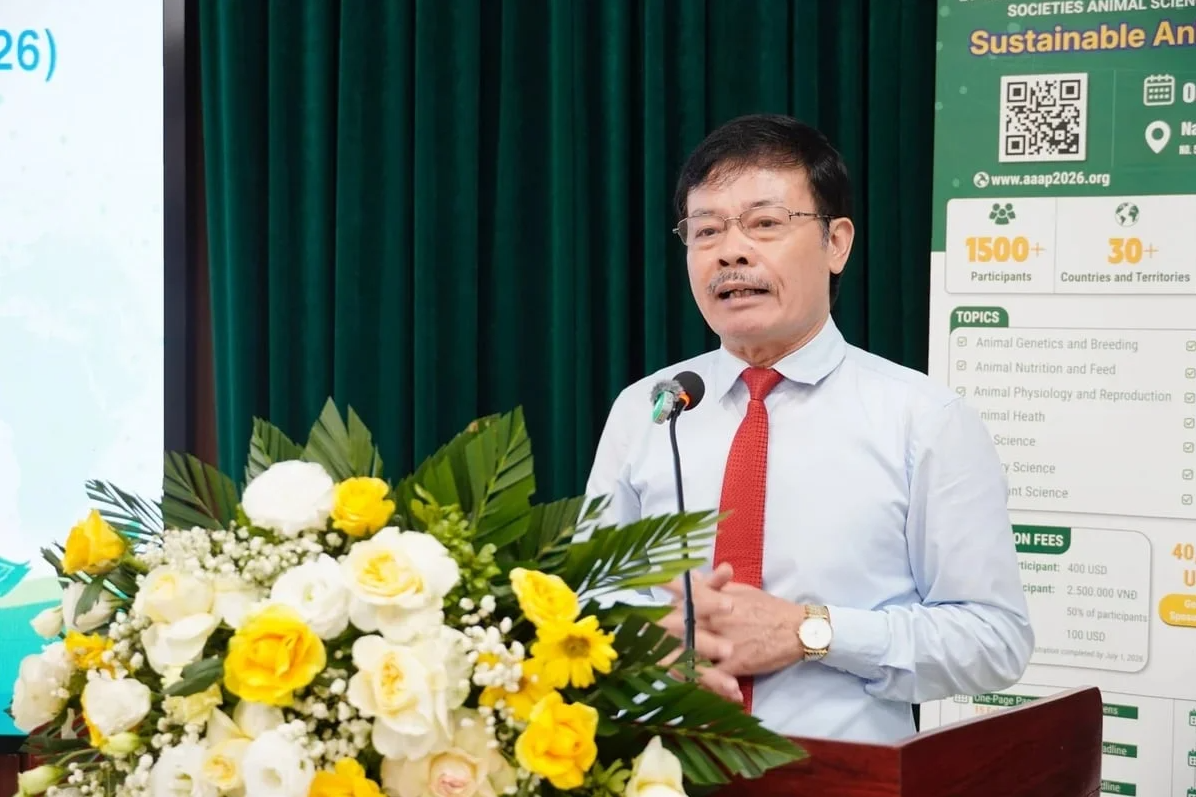 Mr. Nguyen Xuan Duong, Chairman of AHAV and Head of the AAAP 2026 Organizing Committee, shared that AAAP 2026 takes place as Viet Nam enters an era of surging development and the livestock industry is facing demands for strong transformation. Photo: Hong Tham.
A forum to access international knowledge, technology and experience
AAAP 2026 not only creates conditions for domestic scientists, businesses, and organizations to access international knowledge, technology, and experience but also opens opportunities to introduce the international community to the research results, training capacity, technology, products, and development potential of the livestock sector.
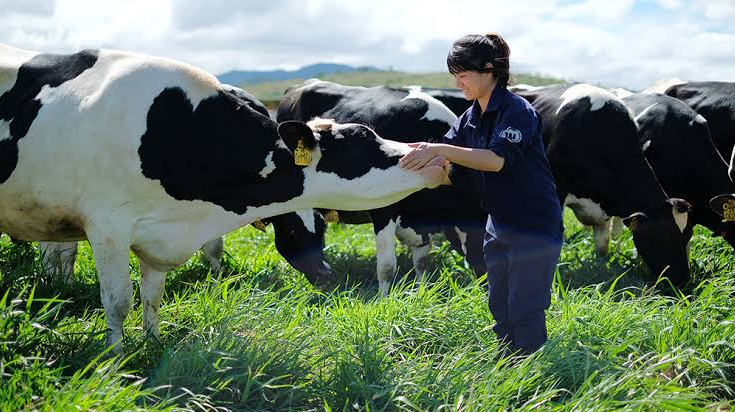 The AAAP 2026 program is built in an interdisciplinary direction, covering 14 thematic groups. Illustrative image.
The AAAP 2026 program is built in an interdisciplinary direction, covering 14 thematic groups, including: Animal genetics and breeding; animal nutrition and feed; animal physiology and reproduction; animal health; pig science; poultry science; ruminant science; other animal production; animal product science; livestock environment; digital governance and smart farming; smallholder farming; pets and companion animals; and animal welfare.