Authorities and citizens want exact details on disaster occurrences and timelines, but forecasting is inherently probabilistic.
This issue was raised at an in-depth discussion and experience-sharing session between domestic and international hydro-meteorological (hydromet) experts on the afternoon of September 24. The event was part of the World Meteorological Organization (WMO) Severe Weather Forecasting Steering Group Meeting, held in Ha Noi from September 21-24.
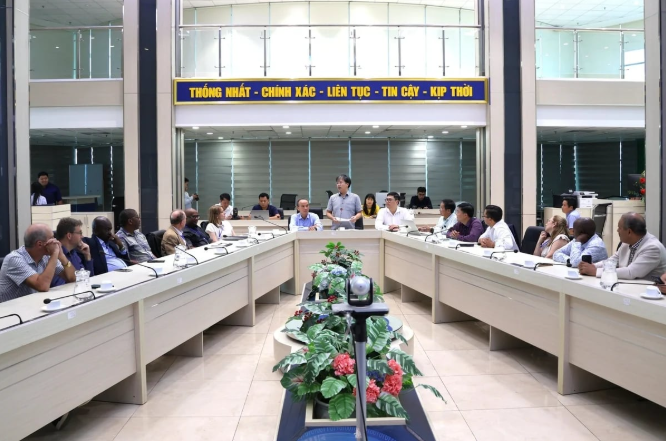 The discussion took place on the afternoon of September 24 at the headquarters of the Viet Nam Meteorological and Hydrological Administration (VNMHA), Ministry of Agriculture and Environment. Photo: Trung Nguyen.
Despite being in different geographical regions, national hydromet agencies face a common problem: Natural disasters are increasing in intensity, with changing frequencies and areas of occurrence. In particular, forecasting extreme rainfall remains the biggest challenge. Hydromet agencies can fairly accurately forecast the risk of heavy rain in an area, but predicting exactly how much rain will fall, where it will concentrate, and when it will peak remains very difficult.
Mr. Vikash Raven, Pacific region forecasting manager at the Meteorological Service of New Zealand, shared: New Zealand faces its biggest challenge in forecasting heavy rain caused by strong convection and the complex combined effects of topography and atmospheric circulation. Thunderstorms often have a small spatial scale, which, when combined with rugged terrain, makes it very difficult for numerical models to accurately simulate potential severe phenomena.
For phenomena like thunderstorms, localized heavy rain, or flash floods that have a small scale and develop in just a few dozen minutes, experts stated that pinpointing the absolute location and time is impossible for any forecasting model in the world.
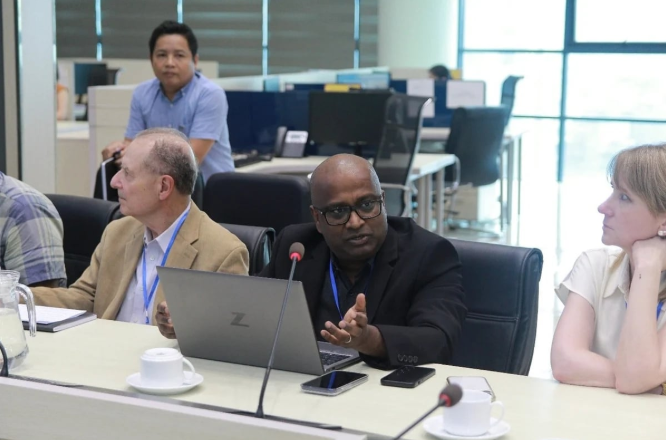 Mr. Vikash Raven, Pacific region forecasting manager at the Meteorological Service of New Zealand Limited, shares practical experiences in forecasting heavy rain. Photo: Tien Duc.
Mr. Puseletso Mofokeng, the South African representative, shared that over the past 16 years, South Africa has successfully issued a tornado warning only once (40 minutes in advance) in 2017. Closely monitoring atmospheric developments and keeping pace with the formation speed of extreme weather is extremely arduous.
Mr. Dmitry Kiktev, Deputy Director of the Hydrometeorological Centre of Russia, pointed out that the biggest challenge comes from human perception. Policymakers and citizens always want absolutely precise disaster forecast information, such as whether it will happen or not, when it will start, and when it will end. He emphasized that the inherent uncertainty in disaster forecasting needs to be fully communicated to the community, especially to those responsible for making final decisions in disaster prevention and control.
Mr. Emmanuel Clopet, in charge of the Caribbean region at Météo-France, raised the issue that even a perfect forecast bulletin would be useless if it is not understood by the public and translated into action.
Sharing the same view, Mr. Agie Putra, the Indonesian representative, clearly stated: In the face of constant hydro-meteorological disaster risks, severe weather forecasting in the ASEAN region currently needs to turn forecast information into "early action". The focus is on disseminating and providing information to the right people and the exact target groups affected.
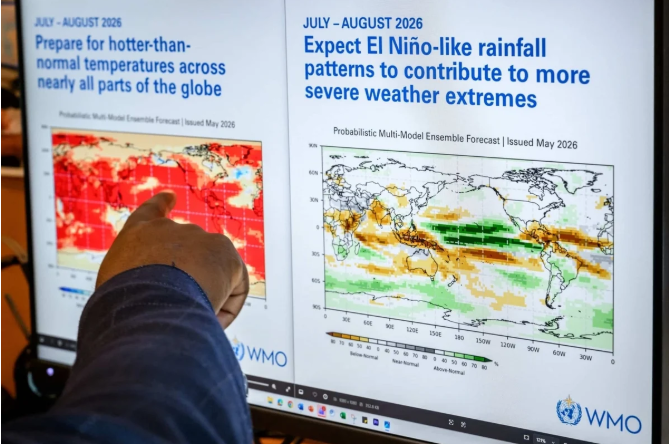 WMO: Disaster forecasts are probabilistic, proactive response is vital.
The representative of the US National Oceanic and Atmospheric Administration (NOAA), Mr. William Bolhofer, said the agency is deploying an integrated, continuous forecasting model system (water, weather, climate, space weather, tsunamis) and providing it for free to federal agencies. States can also request NOAA's support to issue localized forecasts in certain emergency disaster situations.
From Viet Nam's reality, Mr. Mai Van Khiem, Deputy Director of the Viet Nam Meteorological and Hydrological Administration (Ministry of Agriculture and Environment), stated: Viet Nam is stepping up community education and maintaining close relationships with various sectors and fields. Relevant units in disaster prevention and control are strengthening regular and continuous information dissemination on online platforms as well as through mass media to raise people's awareness, turning forecast information into effective response actions.
The discussion opened up many opportunities for cooperation and sharing of experiences and information among countries, aiming towards mitigating global disaster risks.