Multi-party cooperation is a key direction for Da Nang to apply green and circular economies in practice, linking livelihoods with biodiversity conservation.
On the morning of September 24, Da Nang hosted the 7th international conference on "Biodiversity Conservation and Sustainable Development in the Central and Central Highlands Regions", themed "Multi-stakeholder cooperation in developing green and circular economies linked with biodiversity conservation".
Co-organized by the Da Nang Union of Science and Technology Associations, the University of Education (under the University of Da Nang), and the GreenViet Biodiversity Conservation Center, the conference took place on September 24 and 25 and drew nearly 160 domestic and international delegates.
Speaking at the workshop, Vice Chairman of the Da Nang City People's Committee Ho Quang Buu stated that in 2026, the city approved the adjusted Master Plan for Da Nang City for the 2021 - 2030 period, with a vision to 2050.
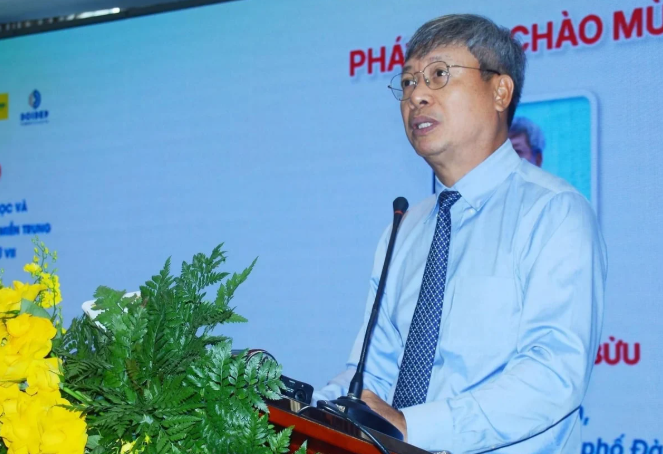 Vice Chairman of the Da Nang City People's Committee Ho Quang Buu emphasizes the importance of multi-stakeholder cooperation in solving the city's new development issues. Photo: Lan Anh.
Accordingly, developing a green economy, a circular economy, science and technology, innovation, environmental protection, and efficient resource utilization are increasingly becoming vital parts of the city's development orientation.
However, according to Mr. Ho Quang Buu, turning these orientations into practice requires the participation of multiple subjects. The government creates policies and a favorable environment; universities, research institutes, and experts provide knowledge, technology, and evidence-based scientific solutions.
Meanwhile, businesses bring technologies, resources, and green, circular business models into practice. Social and international organizations connect resources, share experiences, and promote initiatives; the community directly participates in, benefits from, and determines the sustainability of many local development models.
The leader of the Da Nang City People's Committee emphasized that multi-stakeholder cooperation must become a crucial method for solving the city's development issues in the new phase.
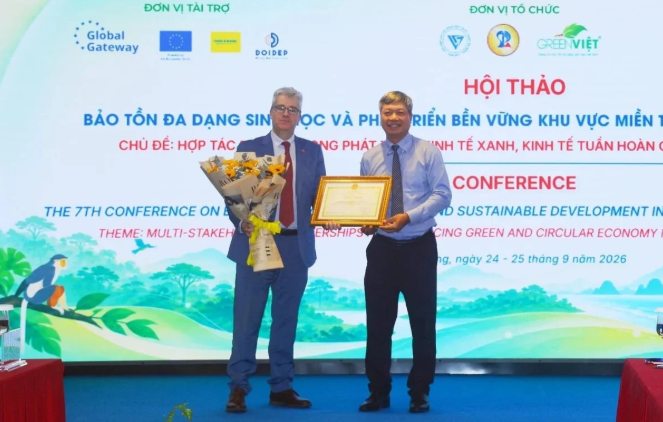 A Da Nang City leader awards the Certificate of Merit from the Chairman of the City People's Committee to a representative of the European Union Delegation to Viet Nam for their contributions to the city's socio-economic development. Photo: Lan Anh.
At the conference, delegates discussed global trends in green and circular economic development; policies and practical implementation in Viet Nam; and opportunities to strengthen multi-stakeholder cooperation to promote the green transition in the Central and Central Highlands regions.
Presentations introduced experiences and models in areas such as diversifying coffee production linked to climate change adaptation; green industrial parks and circular industrial ecosystems; the circular economy in large-scale agriculture and aquaculture; and nature-based solutions in forest management and protection, as well as community livelihood development.
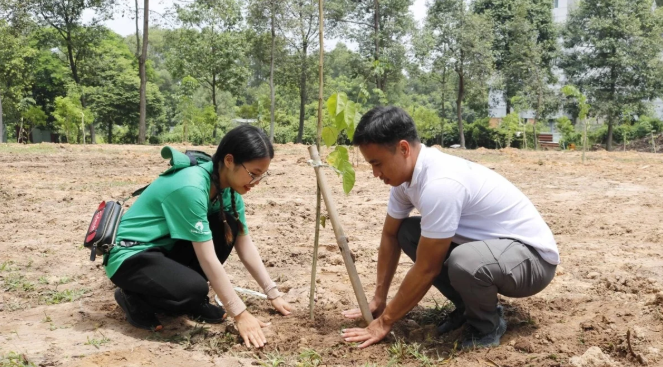 GreenViet was established in October 2012 and has operated in the field of Biodiversity Conservation in the Central and Central Highlands regions. Photo: GreenViet.
Notably, the multi-stakeholder matchmaking session focused on exchanging needs, cooperation opportunities, and the ability to mobilize resources to implement initiatives, connecting state management agencies, businesses, financial institutions, research units, development organizations, cooperatives, and local communities.
Sharing a practical model at the workshop, Mr. Tran Huu Vy, Vice Chairman of the GreenViet Founding Council, said the unit is implementing the project "Enabling women in Central Viet Nam to improve their lives, protect the environment and natural resources through the application of a green and circular economy". Funded by the European Union Delegation to Viet Nam with a total budget of nearly 1 million euros, the project spans 4 years. To date, the project has been running for over a year in Hai Van ward, Son Tra ward, and Song Vang commune.
One of the project's goals is to build capacity for 300 women, helping them access knowledge about the green and circular economies and gradually increase their income through appropriate models. So far, over 300 women have gained access to information, and some, after being trained, have continued to share and retrain the community.
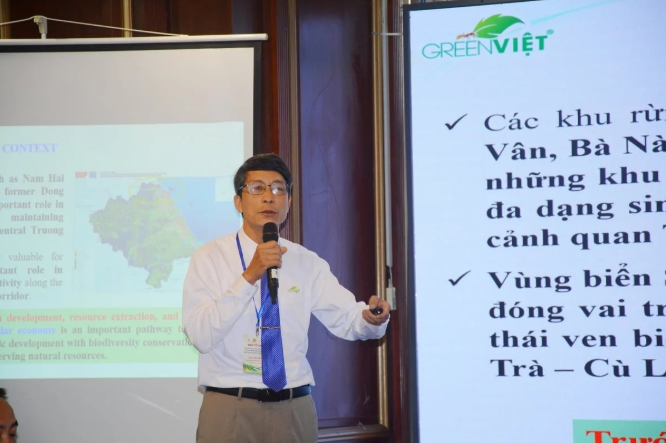 Mr. Tran Huu Vy, Vice Chairman of the GreenViet Founding Council, shares that multi-stakeholder cooperation creates resources for community initiatives to be implemented and maximize their effectiveness. Photo: Lan Anh.
According to Mr. Vy, the project's implementation involves coordinating the Da Nang Union of Science and Technology Associations, local authorities, the Women's Union, cooperatives, collaborative groups, and the local community. Beyond capacity building, GreenViet supports cooperatives with technical, financial, and market-connection assistance, while selecting women's initiatives to support implementation.
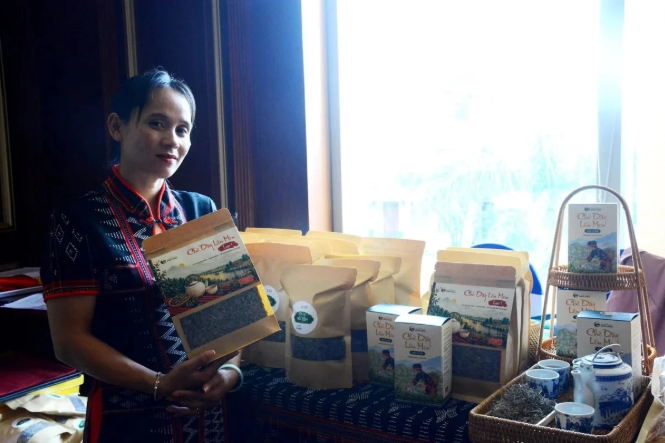 Che day (vine tea) products of the Co Tu ethnic people are produced in a green, circular direction with support from GreenViet and the EU. Photo: Lan Anh.
From the project's practical implementation, Mr. Vy emphasized the role of multi-stakeholder cooperation, as each party can contribute a different resource. Accordingly, social organizations, the Women's Union, authorities, and cooperatives jointly organize and deploy models; businesses provide financial support, purchasing, and market connections; and institutes and universities conduct research to enhance product value. This coordination creates additional resources for community initiatives to be deployed and prove effective.
On this occasion, GreenViet signed several cooperation agreements with relevant parties to promote the green and circular economies linked with biodiversity conservation.