Despite the important role in the wood, coffee and natural rubber supply chains, Vietnam remains largely a supplier.
The Agroforestry Policy Research Network raised this at an online workshop on September 22. To strengthen their market position and better meet importers’ requirements, the three sectors, which benefit from strong production capacity, need to shift toward greater control over value, standards, technology, and branding.
Nguyen Quoc Khanh, Chairman of the Viet Nam Timber and Forest Products Association (VIFOREST), said export value had risen from around US$300 million 20 years ago to US$17.2 billion in 2025. Viet Nam is now among the world’s major exporters of wood products and furniture, ranking second in Asia after China. The industry has also developed a relatively complete domestic supply chain, providing jobs for around one million workers.
However, Khanh said the industry’s biggest advantage remains its production capacity. Most businesses still manufacture to order, while their capacity for independent design, product development, and brand building remains limited. In other words, Viet Nam has become a major manufacturing hub but has yet to emerge as a center for innovation and market-shaping.
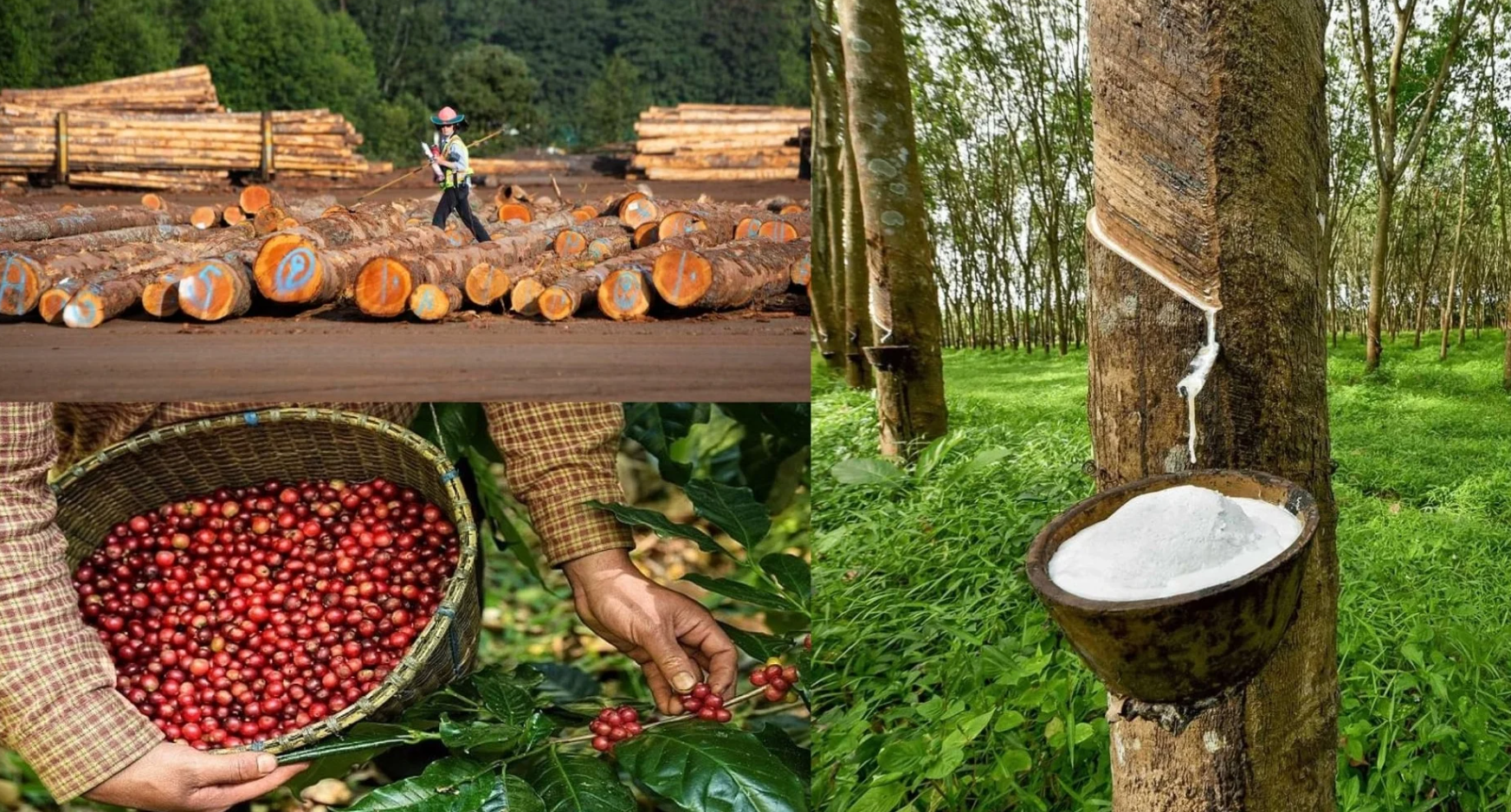 The three major export sectors need to shift toward production backed by stronger capabilities, data, technology and brands.
 A similar challenge can be seen in the coffee industry. Viet Nam has large production volumes and export value and supports millions of livelihoods, but its supply advantage has yet to translate into greater influence over the market.
According to Thai Nhu Hiep, Vice Chairman of the Viet Nam Coffee-Cocoa Association (VICOFA), cooperation among coffee businesses remains limited. Small businesses may sell through FDI companies, while larger enterprises trade through international commodity traders. Without an integrated ecosystem linking production areas, processing, distribution and branding, the industry’s collective bargaining power is fragmented. Meanwhile, new requirements on sustainability, emissions reduction and traceability, including the EU Deforestation Regulation (EUDR), are often approached primarily as requirements imposed by import markets.
Viet Nam is currently one of the world’s major producers and exporters of natural rubber. However, according to Nguyen Viet Tuong, former Vice Chairman of the Viet Nam Rubber Association and former Chairman of the Board of Directors of Dak Lak Rubber Company, large production volumes do not necessarily translate into the ability to influence the market.
Viet Nam’s rubber product portfolio remains limited, while raw-material exports still account for a large share. As a result, much of the added value generated through deeper processing and the production of high-value technical products remains outside Viet Nam.
According to experts, market power comes from the ability to set standards, own technology, design products, control data and build brands. The coffee industry illustrates this through the example of Switzerland’s Nespresso. Although Switzerland does not grow coffee, the company has been able to capture a significant share of market value through technology, processing and branding. This shows that a country’s position in the value chain does not necessarily depend on how much raw material it produces.
For rubber, lessons from Thailand and other producing countries also show that developing standards and traceability systems, investing in technological research and strengthening supply linkages can enhance the industry’s market position.