On November 9, the Department of Cooperatives and Rural Development (DRCD) under Viet Nam’s Ministry of Agriculture and Environment and the Department of Rural Development and Poverty Reduction under Laos’ Ministry of Agriculture and Environment signed a MoU on rural economic development, production organization, livelihood development and sustainable poverty reduction.
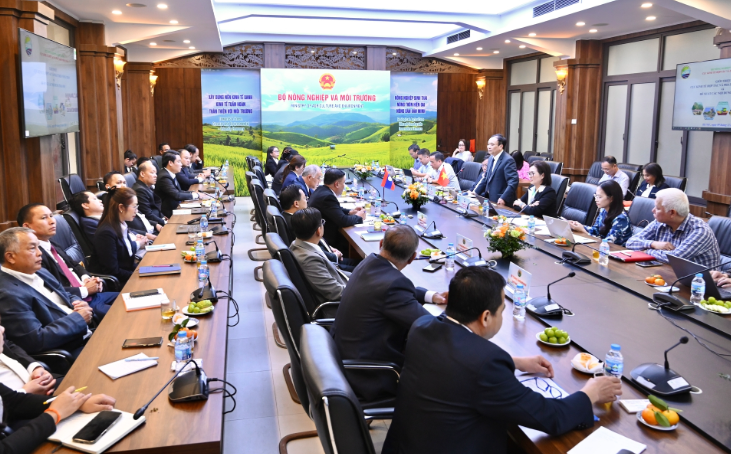 Working session between the two agencies under the Ministries of Agriculture and Environment of Vietnam and Laos. Photo: Kieu Chi.
Accordingly, the two sides will prioritize the exchange of experience in developing and implementing mechanisms, policies and programmes for rural development; cooperative economy and cooperatives; production organization and value chain linkages; livelihood development and poverty reduction; and the development of craft villages and traditional occupations.
The two agencies will also cooperate in providing technical assistance, developing, piloting and scaling up models of cooperatives, cooperative groups, production linkages, product development and livelihood initiatives suited to the conditions of each country. Other areas of cooperation include comprehensive rural development, multidimensional poverty reduction and the resettlement of communities in areas at risk of natural disasters.
At the meeting, Le Duc Thinh, DRCD Director General shared insights into changes in Viet Nam’s National Target Programmes.
Previously, new-style rural area development and poverty reduction were implemented through separate programmes. These areas are now integrated into an overall framework for rural socio-economic development, with a focus on culture, the environment and improving people's quality of life.
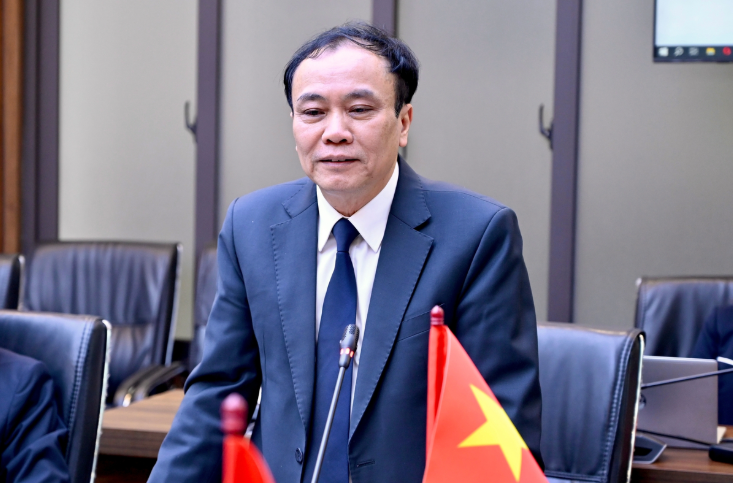 Le Duc Thinh, DRCD Director General of Vietnam’s Department of Cooperatives and Rural Development, meets with his Lao counterpart. Photo: Kieu Chi.
According to the Director General, infrastructure investment should be closely linked to livelihoods and production development needs. Transport networks, electricity and essential facilities should not only serve daily life but also create favourable conditions for establishing raw material production areas, developing value chains and expanding markets for agricultural products.
In this process, local people should play a central role, participating in planning, implementation, monitoring and benefiting from the outcomes. The State provides strategic direction, develops policies and offers partial financial support, while encouraging communities to mobilize their own resources to sustain the effectiveness of these models after programmes and projects come to an end.
Viet Nam currently has approximately 24,000 cooperatives, around 5,000 of which are involved in supporting farmers in marketing and selling their products. Alongside maintaining trade promotion policies, authorities are focusing on developing value chains led by businesses and cooperatives, while reforming agricultural extension services towards stronger market connectivity, information provision and encouraging farmers to participate in value chain linkages.
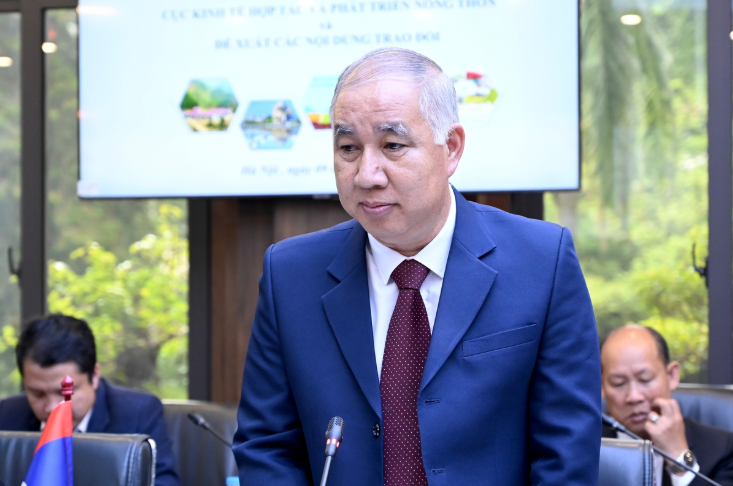 Thatsaka Saphangthong, Director General of Laos' Department of Rural Development and Poverty Reduction, briefs the Vietnamese delegation on the functions and activities of his agency. Photo: Kieu Chi.
One area of particular interest to the Lao side was the development of craft villages, traditional occupations and the integration of cultural values into the rural economy. According to Le Duc Thinh, the rural economy encompasses not only agriculture but also cultural, historical and tourism activities, as well as traditional industries.
Viet Nam has approximately 5,400 villages with traditional or craft-based occupations, including around 2,000 officially recognized craft villages and 700 long-established traditional craft villages. Handicrafts, OCOP products and rural industries not only generate additional income for local people but also help preserve local cultural identities, promote tourism and diversify economic activities in rural areas.
Thatsaka Saphangthong, Director General of Laos' Department of Rural Development and Poverty Reduction, shared that Laos also has craft villages, areas dedicated to preserving traditional culture, and programmes promoting ecotourism and community-based cultural tourism, reflecting a shared development orientation with Viet Nam.
The Lao side also sought Viet Nam's experience in sustainable poverty reduction. Viet Nam's experience shows the need to shift from providing input support alone towards developing livelihoods suited to the actual conditions of each locality. Rather than focusing solely on inputs such as crop seeds and livestock, it is necessary to identify products with the potential to generate long-term employment and income, then organize farmers into cooperatives, encourage investment in processing and develop product brands.
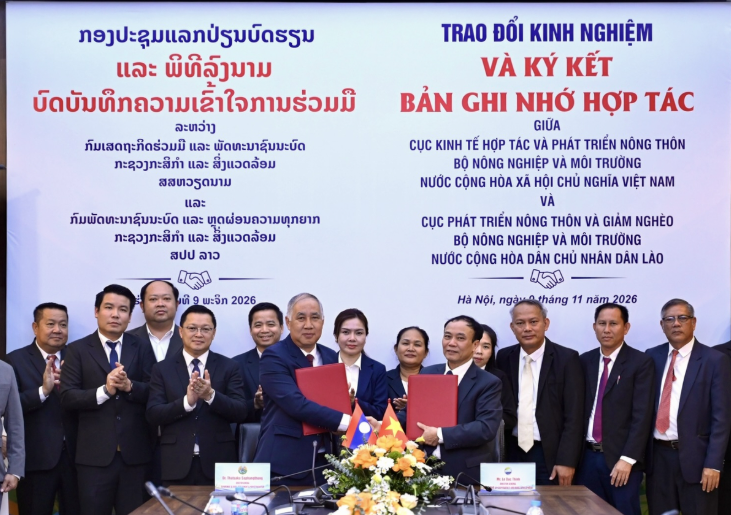 Viet Nam and Laos establish cooperation framework for rural economic development, production organization, livelihood development and sustainable poverty reduction. Photo: Kieu Chi.
The Lao side also highlighted the need to improve the sustainability of production support models, particularly their ability to remain operational after projects conclude. Linking production organization with businesses, markets and stable market outlets was identified as a key requirement to ensure that livelihood models do not remain dependent on initial external support.
Director General Thatsaka Saphangthong emphasized that the new cooperation framework is built on the foundation of the traditional friendship, special solidarity and comprehensive cooperation between the two countries. It is also aligned with the Viet Nam-Laos Bilateral Cooperation Agreement and the Cooperation Strategy between the two Governments for the 2026–2030 period.