The 2026 Viet Nam Youth Declaration on Climate Change outlines four priority policy areas to promote youth-led climate action.
On November 10, at the Viet Nam Pavilion on the sidelines of the 31st Conference of the Parties (COP31) in Türkiye, the Department of Climate Change under the Ministry of Agriculture and Environment, in collaboration with the United Nations Children's Fund (UNICEF) and the Youth Climate Action Network (YNet Viet Nam), organized an event entitled “From Voices to Climate Action: Advancing Youth-Led Climate Solutions”.
The event aimed to strengthen cooperation among government agencies, international organizations and youth networks, thereby promoting meaningful youth participation in implementing the Paris Agreement in general and Nationally Determined Contributions (NDCs) in particular. On this occasion, YNet Viet Nam unveiled the 2026 Viet Nam Youth Declaration on Climate Change.
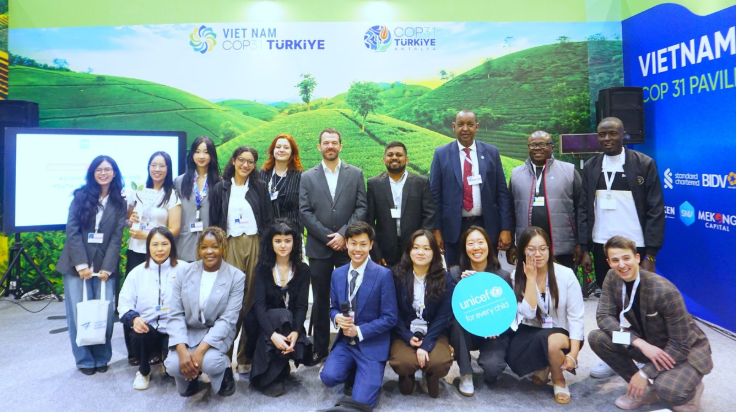 The event aims to promote meaningful youth participation in climate change action. Photo: Van Toan.
According to Nguyen Thanh Mai, Head of the Coordination Committee for the 2026 Viet Nam Youth Conference on Climate Change, a survey of more than 1,000 young people found that 77.5% of Vietnamese youth wanted to protect natural resources and the environment, 74.6% expressed strong interest in climate justice, and 68.6% wished to contribute to their communities.
Based on these findings, the 2026 Viet Nam Youth Declaration on Climate Change proposes four priority areas for action to redefine the role of young people in national climate governance.
First, Vietnamese youth call for the institutionalization of a permanent consultation mechanism, moving away from one-off, event-based dialogues towards a formal process with a designated coordinating agency. This would enable young people to contribute throughout the development, implementation and monitoring of national climate policies.
The Declaration also calls on government agencies and international partners to invest in green transition capacity-building, provide specialized technical training and facilitate access to decent employment, enabling young people to turn their ideas into practical action.
In terms of education and nurturing initiatives, Vietnamese youth propose integrating practical climate change education into the formal curricula at all levels, while establishing mechanisms to recognize and provide resources for initiatives launched by school and university students.
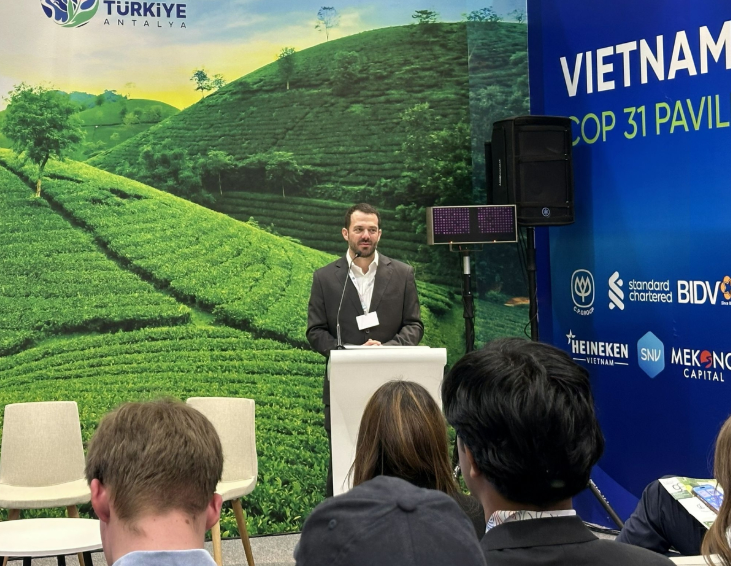 Shai Nades from UNICEF speaks at the event. Photo: Van Toan.
Through UNICEF's Youth-led Action Initiative (YAI) and projects supported by YNet, a number of climate solutions developed in response to community needs have been introduced. Notable examples include HORIZON, a soil and water sensor station system supporting climate adaptation in agriculture; circular solutions for rice straw recycling; and educational models focusing on disaster preparedness and clean water in schools.
Alongside YAI, UNICEF is promoting other youth platforms and networks. Voice of Green provides a space for children and young people to participate directly in content production, creative communications and advocacy on environmental and climate issues. Meanwhile, U-Report is a polling and consultation platform that enables young people to share their views on social and environmental issues.
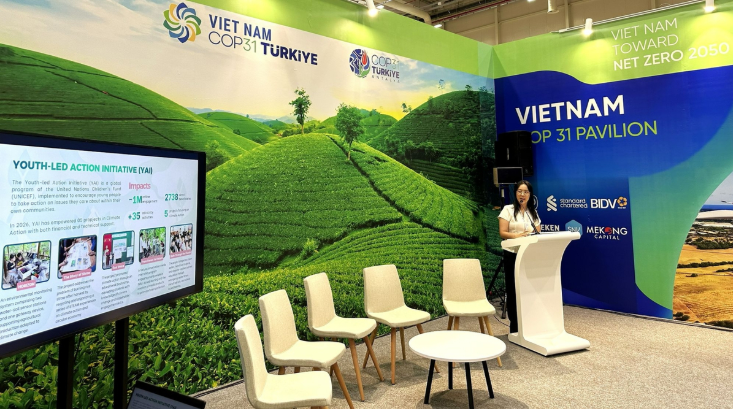 Doan Thi Phuong Hoa, Deputy Head of Partnerships at YNet Viet Nam and U-Report Ambassador, shares youth-led initiatives in Viet Nam. Photo: Van Toan.
Representing Vietnamese youth at COP31, Tran Do Bao Nghi, Director of YNet Viet Nam, emphasized that young people across the country are proactively implementing a wide range of initiatives on climate adaptation, environmental protection, sustainable agriculture and waste management. Many youth-led initiatives are closely rooted in local contexts and developed from a deep understanding of community needs. However, they still lack channels to engage with government agencies and access funding.
The event at the Viet Nam Pavilion is considered the starting point for the Viet Nam Youth Climate Initiative Pathway (VYCIP). Through this pathway, proposals put forward at COP31 are expected to be translated into concrete cooperation programs and follow-up actions after the conference.