An Giang partners with WWF-Vietnam, aiming to restore 10,000 hectares of ecosystems, conserve biodiversity, and foster nature-based livelihoods.
Facing mounting pressures from climate change, water depletion, and ecosystem degradation, An Giang Province is accelerating nature-based restoration solutions to safeguard biodiversity and advance sustainable agriculture.
The An Giang Department of Agriculture and Environment, in coordination with WWF-Viet Nam, recently launched Phase 2 of the project "Implementing Nature-Based Solutions in An Giang province to Restore Wetlands and Natural Processes of the Mekong Delta" (Mekong NbS).
Implemented during 2026-2029, the project marks a strategic shift from localized pilot models to a landscape-scale approach, connecting approximately 10,000 hectares of wetlands, floodplains, and hilly ecosystems. Thereby, it progressively restores natural hydrological processes, conserves biodiversity, and strengthens climate resilience.
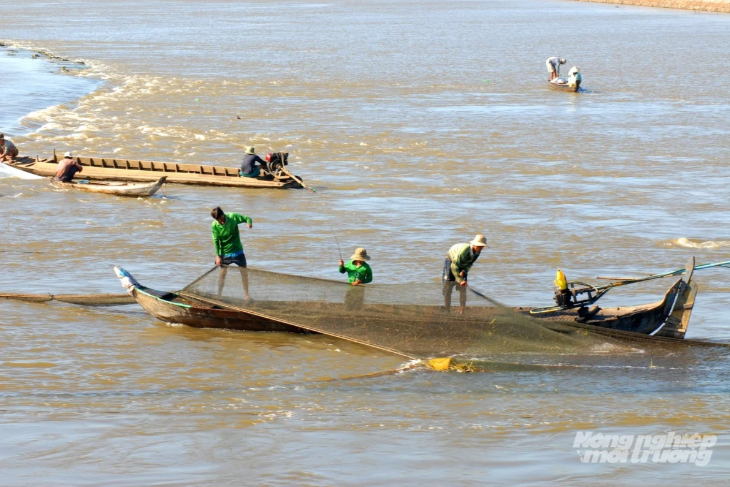 An Giang and WWF-Viet Nam launch Phase 2 of the Mekong NbS project to scale up wetland and natural ecosystem restoration locally. Photo: Le Hoang Vu.
The Long Xuyen Quadrangle serves as a crucial ecological zone of the Mekong Delta, playing a vital role in water regulation, flood retention, alluvial replenishment, and sustaining aquatic resources. However, this region faces intensifying strain from climate change and intensive agricultural production.
According to warnings from the Viet Nam National Mekong Committee, rainfall deficits, declining upstream river flows, and lower-than-average water storage in the Tonle Sap Lake could heighten risks of water scarcity and early saltwater intrusion. Notably, adverse weather patterns amid the 2026-2027 El Niño cycle underscore an urgent imperative to safeguard water resources.
Furthermore, prolonged triple-rice monoculture combined with closed-dike networks across numerous areas has disrupted natural flood-dry cycles, restricting nutrient-rich silt from entering fields and depleting wild fisheries. Consequently, restoring wetlands, regulating seasonal water flows, and reorganizing production in alignment with ecological conditions have become essential solutions.
During Phase 1 (2023-2025), the Mekong NbS project achieved tangible outcomes. At Tra Su Melaleuca Forest, over 280 hectares of degraded forest were restored through enrichment planting, while management was strengthened across 845 hectares. A network of three automated online monitoring stations was also commissioned to track and regulate water levels.
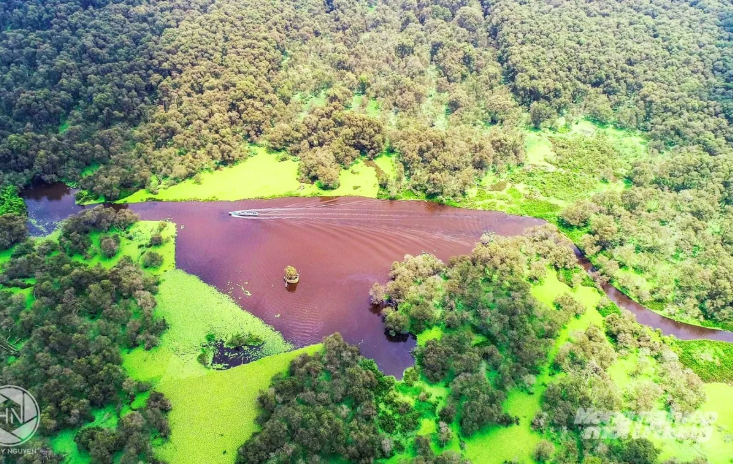 Tra Su Melaleuca Forest, one of An Giang's signature wetland ecosystems, is undergoing restoration and enhanced management to support biodiversity conservation. Photo: Le Hoang Vu.
Significantly, numerous waterbird species have returned to rehabilitated habitats. This serves as a clear ecological indicator that vegetation enrichment and hydrological management are successfully regenerating natural habitats.
The project also rolled out over 235 hectares of flood-based livelihood models, harnessing natural silt and wild aquatic resources to enrich soil fertility and generate supplemental household income. Over 2,400 residents across buffer-zone communes benefited directly, including more than 370 women.
Mr. Nguyen Tan Tai, a farmer in An Cu Commune, An Giang Province, noted that the project helped local residents understand natural cycles to adapt to increasingly erratic weather. Specifically, letting floodwaters enter fields at optimal intervals improves soil fertility, boosts wild fish stocks, and lowers input costs.
Field evidence demonstrates that when provided technical guidance and suitable models, farmers can transition from a "flood-prevention" mindset to proactively "welcoming floods," sustainably harvesting alluvial deposits and natural resources. This lays the groundwork for scaling nature-based livelihoods across ecologically compatible localities.
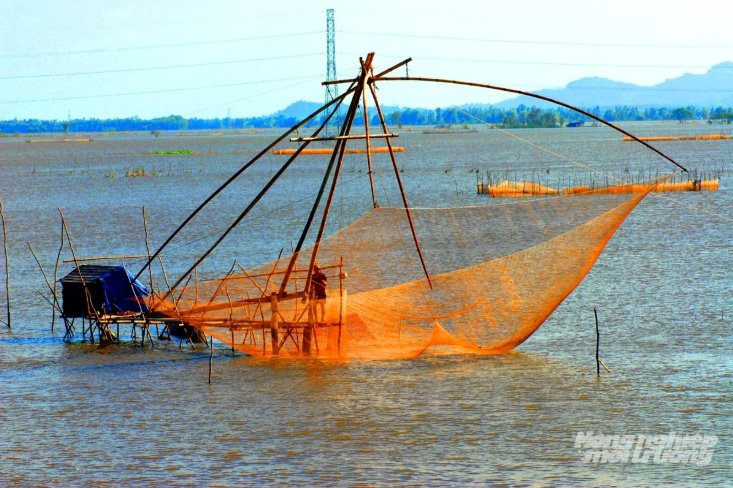 Residents in the Long Xuyen Quadrangle harness floodwaters and wild aquatic resources to develop livelihoods, boost incomes, and protect delta ecosystems. Photo: Le Hoang Vu.
Building upon initial achievements, Phase 2 of Mekong NbS targets the restoration and improved management of roughly 10,000 hectares of hilly forests and wetlands, alongside developing over 1,000 hectares of farmland through flood-season livelihood models.
The project focuses on connecting ecosystems from upland hills down to Melaleuca forests and floodplains to sustain water-retention functions, protect habitats, and fortify climate resilience.
Another core mandate involves digitizing forest management and wildfire prevention, while intensifying monitoring and protection for rare species such as the Sarus crane and the Indochinese silvered langur. Simultaneously, the project supports compiling technical dossiers to establish three new landscape protection areas at Sam Mountain, Thoai Son, and Tuc Dup, spanning roughly 730 hectares.
Mr. Tran Thanh Hiep, Deputy Director of the An Giang Department of Agriculture and Environment, noted that Phase 2 implementation requires selecting context-appropriate interventions, defining clear targets, and rigorously evaluating outcomes.
Regarding the rice-fish-lotus ecological landscape orientation, Mr. Hiep stressed the need to study crop rotation, intercropping, or spatial linkages across production zones based on water availability, soil conditions, and market demand, ensuring harmony between conservation goals and economic returns.
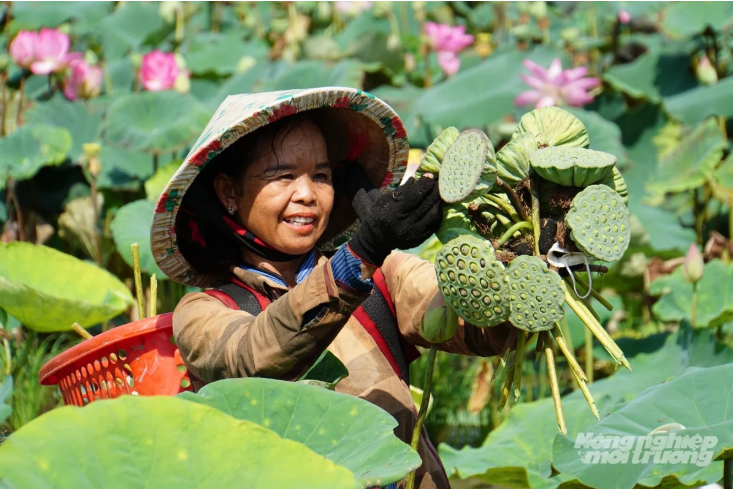 The integrated model combining rice cultivation, aquaculture, and lotus farming is oriented toward wetland conservation, fostering green and climate-resilient agriculture. Photo: Le Hoang Vu.
"Phase 2 of the Mekong NbS project demands selecting practical interventions and clearly evaluating execution results. For the rice-fish-lotus ecological space, we must study rotation, integration, or linkage schemes across production zones grounded in water, land, and market realities. The Department welcomes insights from experts, scientists, businesses, and farmers to chart feasible implementation pathways," Mr. Hiep shared.
Ms. Luu Thi Lan, Project Manager at WWF-Viet Nam, stated that the most enduring solutions are those working in harmony with nature. The project integrates indigenous knowledge with science-based conservation, strengthens upstream-to-downstream ecosystem connectivity, and links biodiversity protection with water security and community livelihoods.