New approach offered by the AgriConnect initiative is not simply about increasing investment, but making investment more integrated and better connected.
Agricultural investment goes beyond disbursement
According to Deputy Minister of Agriculture and Environment Nguyen Hoang Hiep, over the past 30 years, the World Bank (WB) has accompanied Viet Nam’s agricultural sector through numerous technical assistance and financial support projects. Each project has focused on a specific sector and objective, delivering important results in infrastructure development and production capacity.
However, implementation in practice also revealed a challenge: public investment resources, loans, and private investment have not always been effectively connected into a cohesive value chain.
"The success of a project should not be measured solely by implementation and disbursement capacity, but by how those resources can leverage additional investment source, particularly private one", Deputy Minister Nguyen Hoang Hiep told Mariam J. Sherman, World Bank Country Director for Viet Nam, during a meeting on September 9.
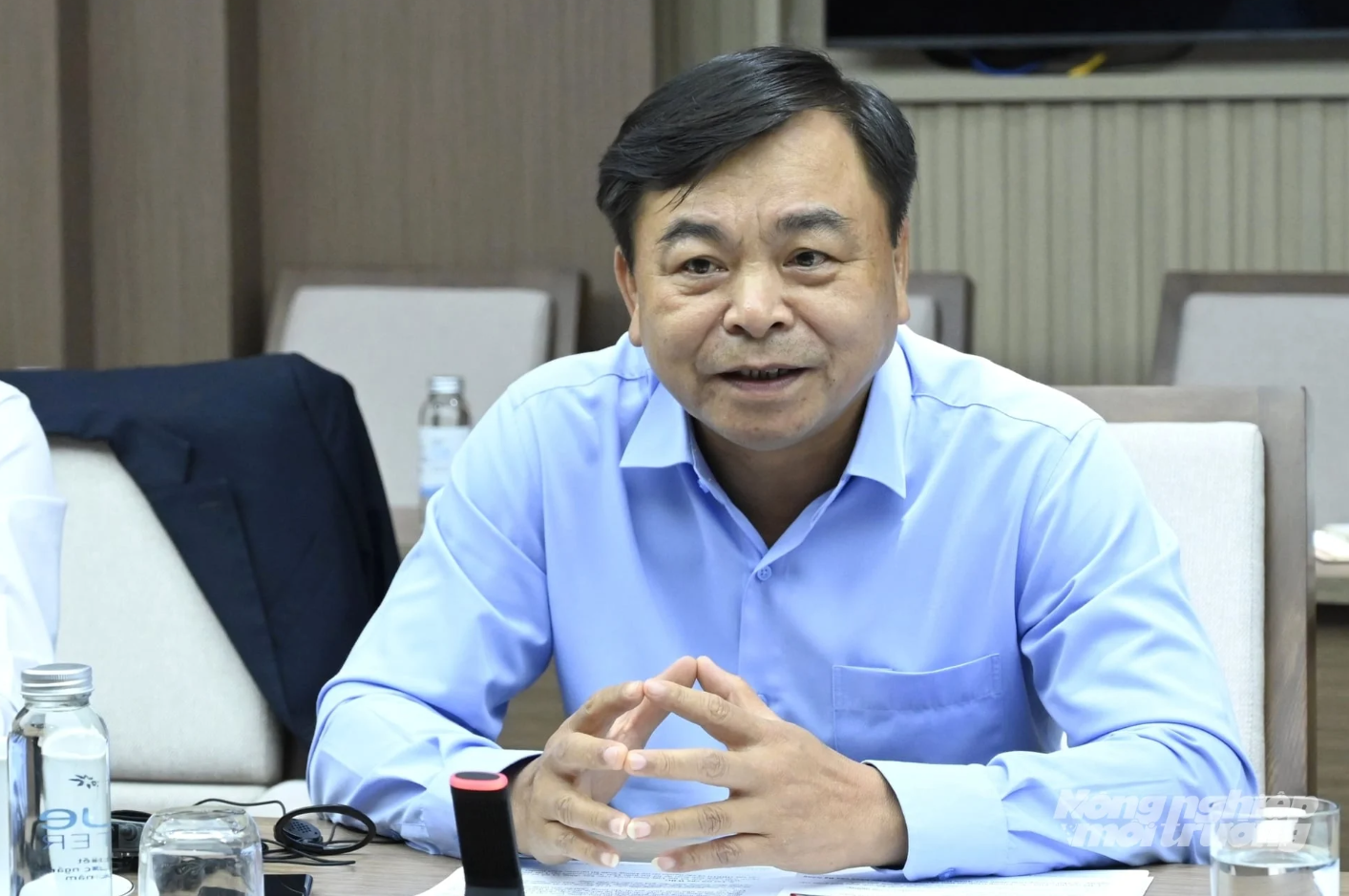 Deputy Minister Nguyen Hoang Hiep hopes the AgriConnect initiative will help accelerate the strategic priorities of Vietnam’s agricultural sector. Photo: Kieu Chi.
This is also a challenge facing the sector as it seeks to engage the private sector. Viet Nam currently has around 17,000 enterprises operating in agriculture, but the sector still lacks many of the conditions needed to achieve stronger growth, including access to capital, human resources and markets, as well as the ability to connect with farmers and other actors across the value chain.
At the same time, millions of farming households remain the backbone of agricultural production. The challenge therefore works in both directions: ensuring that farming households are connected with businesses, cooperatives, markets and support services, so that they can directly benefit from the sector’s investment and transformation process.
This is the gap that the World Bank Group’s AgriConnect initiative seeks to address.
AgriConnect: Linking public investment and private capital
AgriConnect is built around an integrated approach with three pillars: infrastructure investment, creating an enabling policy environment, and mobilizing private capital. The initiative aims to bring around 300 million farmers more deeply into value chains while creating more quality jobs.
Importantly, AgriConnect is not designed simply as a program to seek new loans. According to Mariam J. Sherman, the value of the approach lies in bringing together public and private investments already underway, while incorporating private-sector thinking and participation from the very design stage through to project implementation.
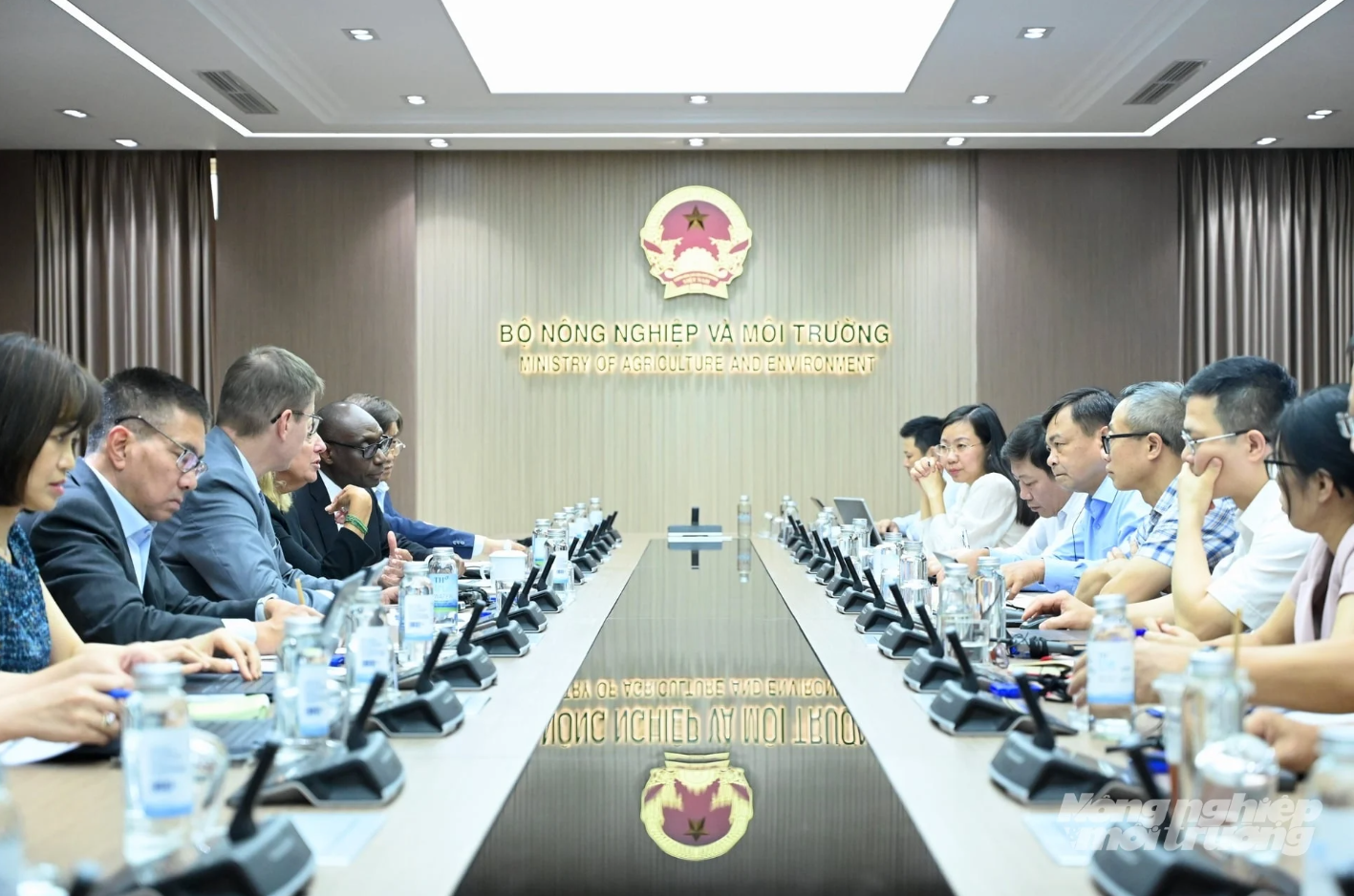 Leaders of the World Bank in Vietnam and the Ministry of Agriculture and Environment meet to discuss the implementation plan for the AgriConnect initiative, which aims to improve livelihoods and strengthen agricultural value chains. Photo: Kieu Chi.
"This is not just about loans, but also about finding ways to maximizing the results from the existing finance," Mariam J. Sherman said.
She also noted that infrastructure is an important factor, but not the only one. Alongside infrastructure investment, it is necessary to address policy and institutional bottlenecks and create mechanisms to enable deeper private-sector participation. Within the World Bank Group’s private capital mobilization framework, IFC can play a leading role, while MIGA can contribute through risk insurance solutions.
Mekong Delta as the starting point
At the meeting, the two sides agreed on the need to quickly translate the AgriConnect approach into an action plan. The Ministry of Agriculture and Environment will establish a working group to coordinate with the World Bank and relevant partners.
Mariam J. Sherman affirmed that the World Bank stands ready to work with the Ministry of Agriculture and Environment in developing the plan. The World Bank representative also emphasized that what matters is not creating another plan or issuing another statement, but clearly defining the objectives and implementation mechanisms and ensuring that these commitments deliver tangible results.
Under the plan, after the first draft is prepared in October, the two sides will continue discussions to finalize the content, establish coordination mechanisms and determine the competent authority for approval.
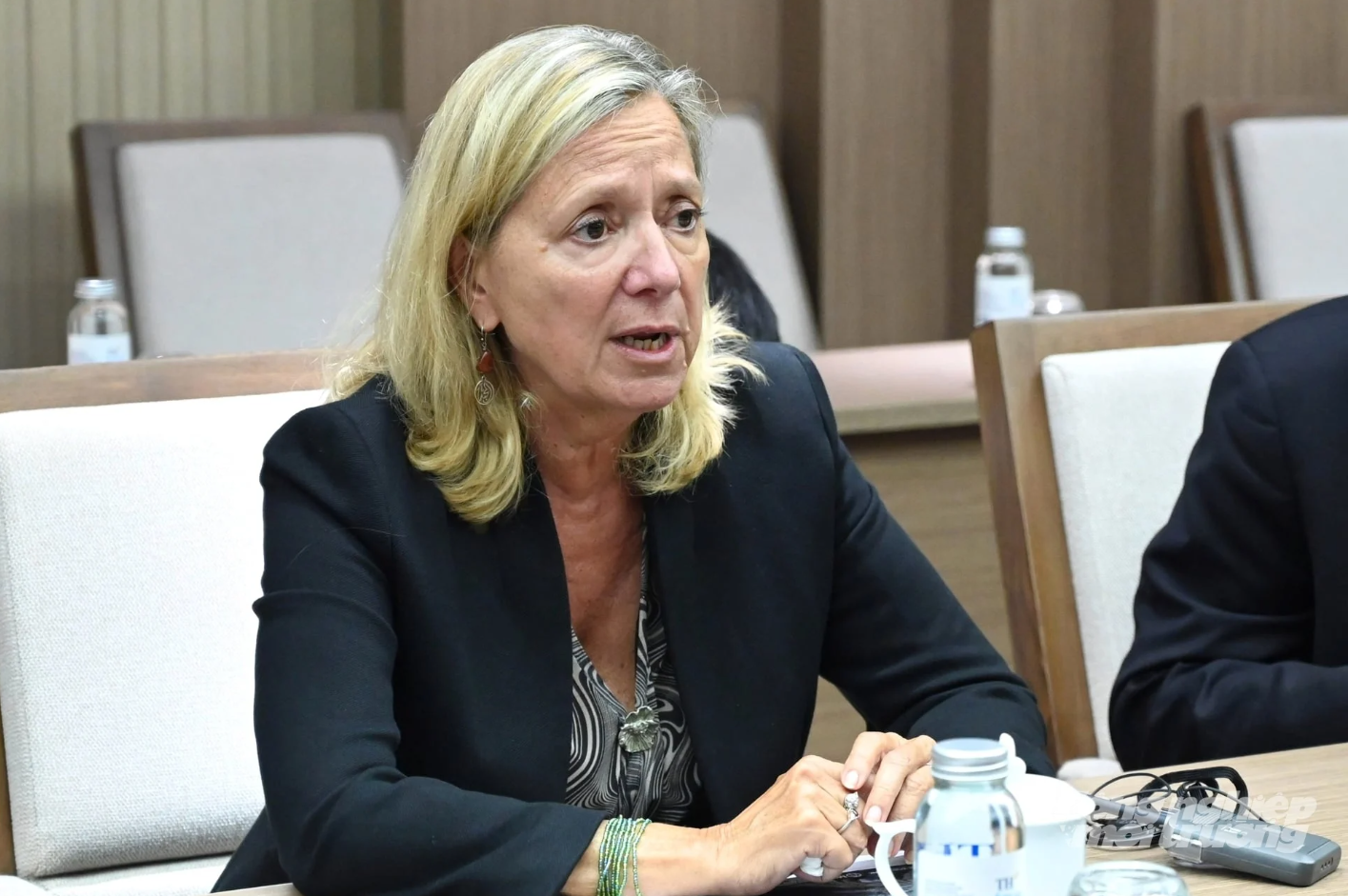 Mariam J. Sherman, World Bank Country Director for Viet Nam. Photo: Kieu Chi.
The Mekong Delta is being considered as a key area for implementing this approach. Under the direction discussed, the planning process will involve local authorities in the region, the World Bank, development partners, businesses and industry associations. This approach is intended to ensure that the plan is not developed solely from the perspective of government agencies, but also reflects the practical needs of localities and the market.
Several ongoing projects could provide a foundation for testing the new approach, including infrastructure investment projects supporting agriculture, fisheries and climate change adaptation. With private-sector resources, IFC could help connect businesses and financial institutions to develop project portfolios capable of attracting investment.