The Centre for Social Research and Development (CSRD) recently organized a workshop titled “Sharing Research Findings and Community Consultation on Aquatic Biodiversity and the Proposal for Fishery Resource Protection Areas in the A Sap River Basin” in the highland communes of A Luoi, Hue City. The workshop aimed to share and validate research findings, gather feedback from relevant stakeholders, and consult on and identify potential areas for developing community-based fishery resource protection models.
The workshop was held under IP3 Project: “Enhancing Climate Resilience and Water Resource Governance Capacity for Riverine Communities in the A Sap River Basin, Hue City, Vietnam through Aquatic Biodiversity Conservation and the Development of Sustainable, Climate-Resilient Livelihood Models.”
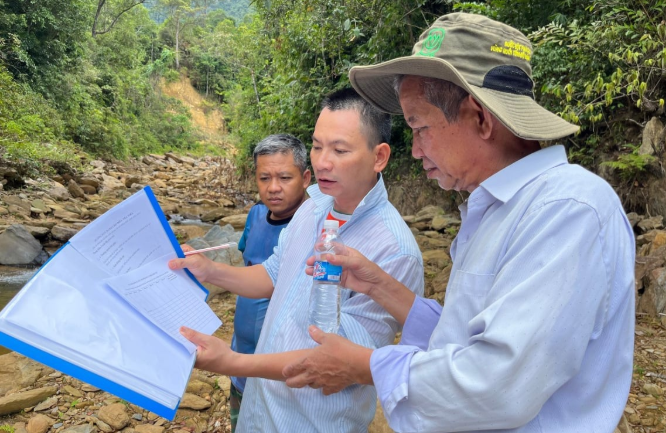 Field research and surveys were conducted at various locations across the A Sap River basin. Photo: Van Dinh.
The IP3 Project is funded by the Australian Department of Foreign Affairs and Trade (DFAT) and the Swiss Agency for Development and Cooperation (SDC), managed by Oxfam Novib, with the Centre for Social Research and Development (CSRD) serving as the implementing partner in Hue City.
From April to September 2026, CSRD, in coordination with fisheries experts, conducted research and field surveys at various locations across the A Sap River basin to assess aquatic species composition, particularly fish species; identify rare, threatened and endemic species; and examine areas that play important roles in fish reproduction, migration and the maintenance of fishery resources.
According to Associate Professor Dr. Ngo Huu Toan, head of the research team, the study recorded 102 fish species in the A Sap River basin, including 17 rare and threatened species listed under international and Vietnamese conservation categories, nine endemic species and 20 economically valuable species.
Compared with the results of the 2024 survey, the 2026 study recorded 13 additional species classified as rare, threatened or endemic, bringing the total number of different species in these groups recorded in the basin to 26.
In addition to identifying aquatic species composition and biodiversity values, the study also identified five areas with potential for fishery resource protection.
At the workshop, experts presented the research findings on aquatic species composition in the A Sap River basin, along with the results of the assessment of potential fishery resource protection areas and accompanying maps. These findings provide an important scientific basis for CSRD to consult with relevant stakeholders and local communities and select suitable areas for subsequent support activities.
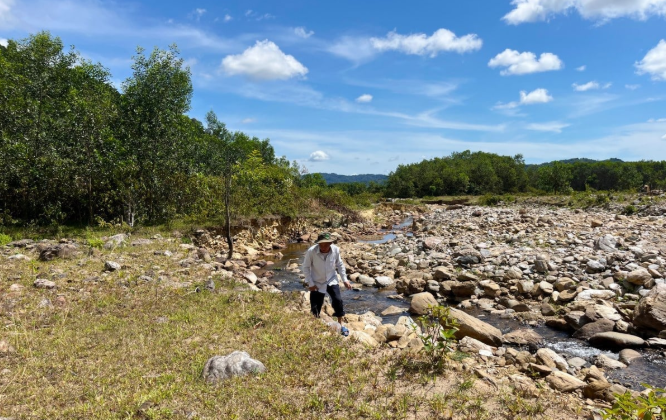 Potential areas in the A Sap River basin will be selected to develop a community-based fishery resource protection area model. Photo: Van Dinh.
According to Associate Professor Dr. Trinh Thi Dinh, Director of the Centre for Social Research and Development (CSRD), the A Sap River basin is a unique freshwater ecosystem in Vietnam. Located west of the Truong Son Range, it is part of the 3S river system within the Mekong River basin. Research findings highlight the diversity and ecological value of the basin’s aquatic ecosystem, particularly its fish species. However, fishery resources are facing increasing pressure from unsustainable exploitation.
Under the IP3 Project, CSRD will work with relevant stakeholders and local communities to select an area for support toward establishing a community-based fishery resource protection area.
“The operating regulations for the fishery resource protection group will be developed by combining scientific knowledge with the indigenous knowledge and customary practices of ethnic minority communities in A Luoi 3 and A Luoi 4 communes. We hope this model will provide a foundation for further application in other suitable areas across the A Sap River basin, while also offering opportunities for sharing and replication in the future,” Ms. Dinh said.