Viet Nam recognizes that climate change challenges offer strategic opportunities to transform toward greener and sustainable agrifood systems.
Initial side events have commenced at the 31st Conference of the Parties to the United Nations Framework Convention on Climate Change (COP31) in Türkiye.
On November 9, the Ministry of Agriculture and Environment of Viet Nam, in partnership with international counterparts, organized the side event: "Toward Sustainable Development - Transforming Viet Nam's Agrifood Systems: From Climate Commitments to Action on the Ground."
The event convened at the Viet Nam Pavilion - the dedicated venue hosting side events throughout COP31.
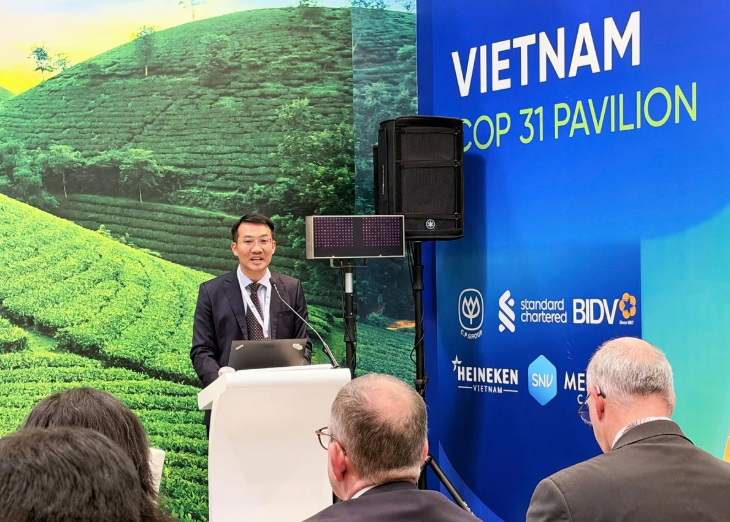 Mr. Bui Duc Hieu, Deputy Director General of the Department of Climate Change (Ministry of Agriculture and Environment), shares insights on Vietnam's agrifood transformation efforts. Photo: Chu Huong.
Data from the Ministry of Agriculture and Environment indicates that the agriculture, forestry, and fisheries sector accounts for 11.64% of national GDP, with agricultural export turnover exceeding the 70 billion USD benchmark in 2025. Given a population surpassing 100 million people, where 61.9% reside in rural areas, 26.94% of the labor force is anchored in agriculture, and up to 68% of farming households are smallholders, transforming the agricultural growth model plays a decisive role in national social welfare.
Viet Nam perceives climate headwinds not merely as systemic risks, but as strategic avenues to overhaul agrifood systems (AFS), charting a greener, more inclusive, climate-resilient, and sustainable development trajectory.
 Representatives of international partners, financial institutions, the scientific community, and business enterprises attend the event. Photo: Chu Huong.
Viet Nam has set forth resolute commitments to this structural transition. Achieving net-zero emissions by 2050, endorsing the COP28 Emirates Declaration on Sustainable Agriculture, Resilient Food Systems, and Climate Action, alongside rolling out the National Action Plan for Transforming the Agrifood System toward Transparency, Responsibility, and Sustainability by 2030 serve as defining strategic compasses.
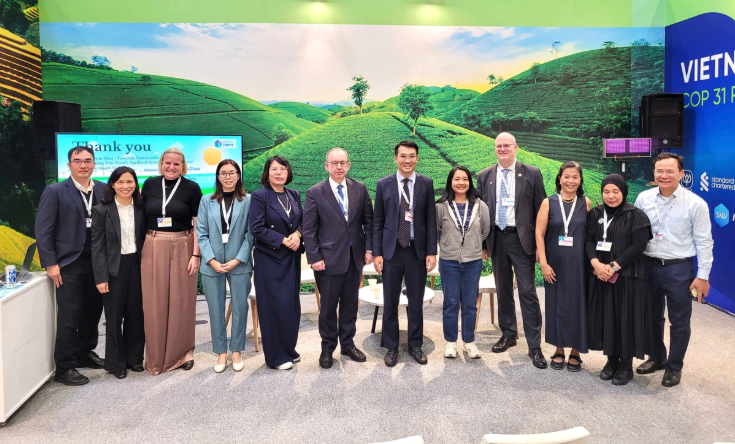 The event was co-organized by the Ministry of Agriculture and Environment of Vietnam and international partners. Photo: Chu Huong.
During the panel session themed "From Farm to Fork," speakers scrutinized interventions to embed climate commitments into daily production and dietary consumption. The Vietnamese delegation shared practical takeaways from rolling out the One Million Hectare High-Quality, Low-Emission Rice Project in the Mekong Delta, underscoring urgent requirements for technical assistance, cooperative capacity building, and production infrastructure upgrades.
Panelists also clarified the critical roles of value chain integration, incentive mechanisms for agribusinesses and farmers adopting low-carbon practices, expanding affordable access to healthy foods, and strengthening the economic empowerment of female smallholders. The core principle centers on positioning farmers at the heart of the transformation, ensuring the process delivers tangible dividends for primary producers, rural communities, and the ecosystem. This trajectory demands concerted alignment across regulatory authorities, private enterprises, and development partners.
Partnering with Viet Nam, Mr. Yevgeniy Zhukov, Director General of the Climate Change and Sustainable Development Department at the Asian Development Bank (ADB), reaffirmed commitments to support the region in mobilizing green finance facilities, contributing to realizing agrifood system transformation goals.