The Agricultural Trade Promotion Center (Agritrade) under the Ministry of Agriculture and Environment has recently issued a decision on the criteria for selecting exhibits, products, models and solutions to be showcased at the Viet Nam Pavilion at GREEN EXPO 2027.
The criteria will provide a basis for ministries, sectors, localities, organizations and businesses to review and propose outstanding content, helping convey the message “Viet Nam - A Green Journey for Happiness.”
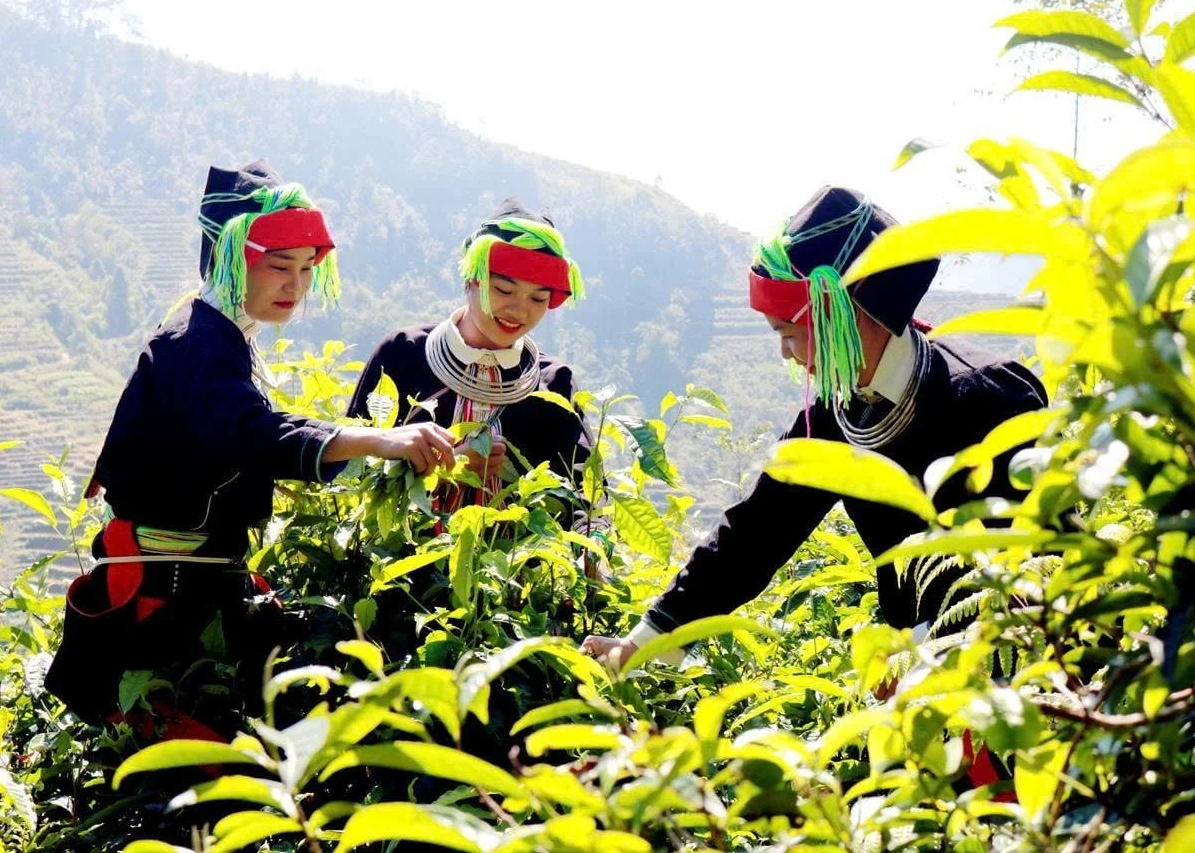 Dao ethnic people harvesting Shan Tuyet tea buds. Photo: Duc Tho.
According to the decision, the exhibition will focus on achievements, products, models and solutions in the fields of agriculture and environment. Priority will be given to agroecology, green agriculture, the circular economy, environmental protection, nature conservation, emissions reduction, climate change adaptation and innovation serving these areas.
OCOP products, traditional craft villages, cultural products, handicrafts and rural tourism may also be featured, but they should play a supporting role and have a clear connection with nature, agriculture, the environment, green livelihoods or Viet Nam’s sustainable development story.
Accordingly, selected content must demonstrate tangible value: it should have been applied in practice, commercialized and produced real-world results, or reached a sufficient level of development to demonstrate its applicability. Standards, certifications, awards, OCOP ratings, patents, intellectual property rights and international standards will serve as bases for assessing the quality, credibility and value of the products.
Each selected item should be able to tell a story that is easy for international visitors to understand: where the product comes from, what problem it addresses, what advantage of Viet Nam it represents, and how it contributes to the country’s green development journey. The accompanying information must also be suitable for translation into English, Japanese or other required languages.
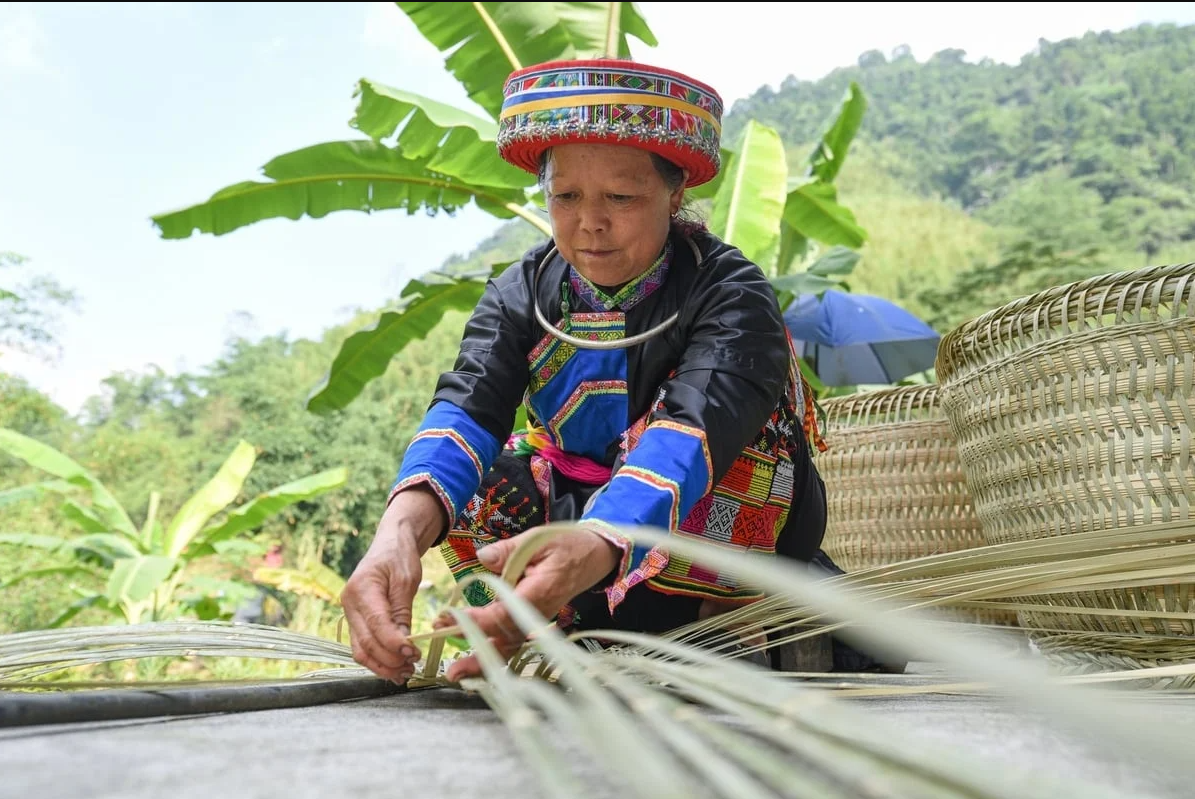 Dao women in Que Lam are skilled not only in farming and making traditional cakes, but also in weaving bamboo products, making agricultural tools and handicrafts. Photo: Tung Dinh.
1. Agroecology and sustainable agriculture: Key agricultural products, OCOP products and distinctive local products associated with green production; organic, smart and high-tech agriculture; resource-efficient farming with reduced inputs and emissions; low-emission agricultural production models, agroforestry, carbon storage, and the use and recycling of agricultural by-products; sustainable value chains, traceability, value-added processing and post-harvest loss reduction.
2. Environment, natural resources and biodiversity: Models and solutions for environmental protection; ecosystem and biodiversity conservation and restoration; sustainable use of land, water, forests and marine resources; waste and pollution treatment; climate change adaptation; and nature-based solutions.
3. Circular economy, emissions reduction and green products: Utilization of agricultural by-products; reuse and recycling; efficient use of raw materials, water and energy; bio-based materials and environmentally friendly alternatives; low-emission production, processing and consumption models; and exemplary models and solutions for green production, green industrial development, efficient resource use and emissions reduction, in line with the theme and overall content of the Viet Nam Pavilion.
4. Science, technology and innovation for agriculture and the environment: Digital technology, biotechnology, new varieties, smart solutions, green technologies and research results that have been applied or have clear potential for application in production, processing, resource management and environmental protection. Priority will be given to products, models and solutions developed by science and technology enterprises or innovative businesses, or resulting from scientific research and technological development; those featuring patents, utility solutions, intellectual property rights or high technological content; and those with potential for commercialization and market development, while contributing to the development and promotion of Vietnamese brands in science, technology and innovation.
5. Supporting content: Agricultural culture, traditional craft villages, indigenous knowledge, rural tourism, handicrafts, cuisine and other content that can highlight the relationship between people, nature, culture and livelihoods. Priority will be given to content that can be demonstrated, experienced or presented in an interactive format.
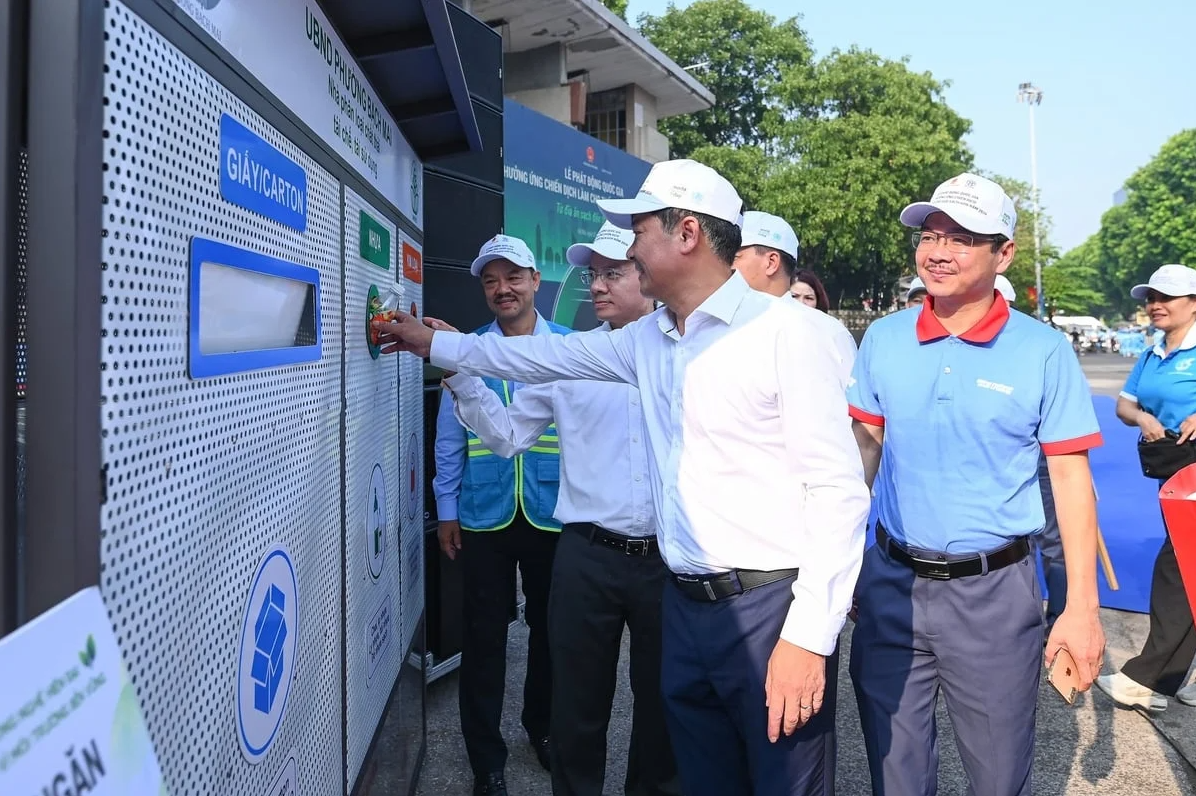 Deputy Minister of Agriculture and Environment Le Trong Yen and delegates visit and experience waste sorting at a Hub for the Sorting and Recovery of Recyclable Waste (HUB). Photo: Tung Dinh.
The criteria consider whether products, specimens and materials can be transported to Japan, maintain their quality throughout the exhibition, and meet requirements for packaging, preservation, import procedures, quarantine and safety.
For live plants, plant materials or products with specific requirements, alternative options may also be considered. Instead of necessarily shipping physical items from Viet Nam, participating organizations may source materials in Japan or use replicas, models and digital content.
Proposals that do not align with the theme, have unclear origins or ownership, contain unverifiable information, or fail to meet requirements for quality, safety, environmental protection or intellectual property will not be selected. The criteria also exclude content that is purely commercial advertising or lacks a feasible exhibition plan.
The Viet Nam Pavilion is not intended to be a collection of local specialties. The selection process must ensure that the featured content is representative, substantive and supported by verifiable information, while fitting into the broader story that Viet Nam seeks to share with the world.