On November 6, in Hanoi, the National Statistics Office (NSO) under the Ministry of Finance, in collaboration with the Food and Agriculture Organization of the United Nations (FAO), held a consultation workshop on “Findings from an In-depth Analysis of the Proportion of Agricultural Land under Productive and Sustainable Agriculture - Sustainable Development Goal (SDG) Indicator 2.4.1.”
The workshop aimed to review the findings of an in-depth survey conducted as part of the 2025 Rural and Agricultural Census, while gathering expert feedback on measurement methodologies, analytical results, and the potential use of data in formulating sustainable agricultural development policies.
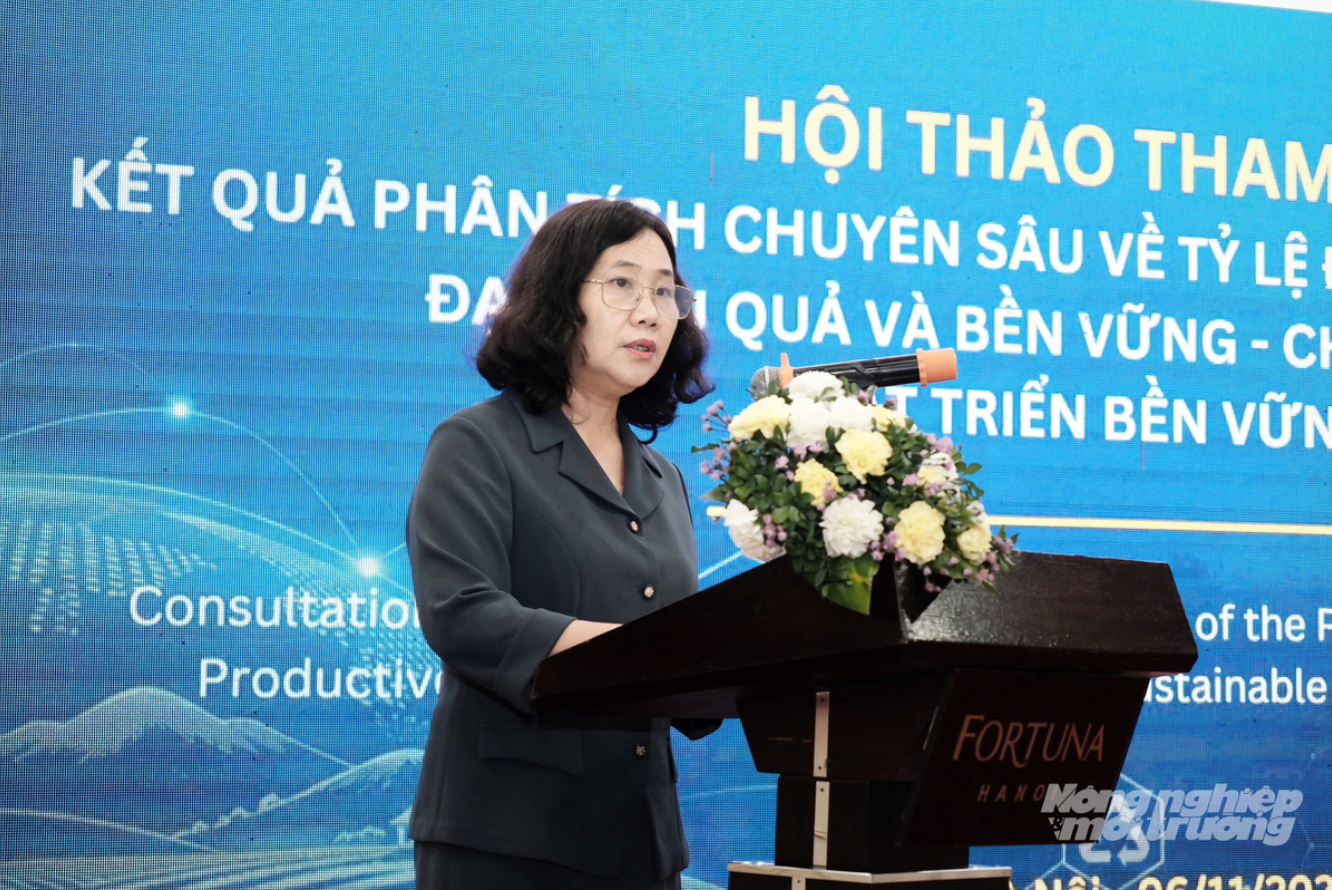 Nguyen Thi Huong, Director General of the National Statistics Office, delivers the opening remarks at the workshop. Photo: Thanh Trang.
In her opening remarks, Nguyen Thi Huong, Director General of the National Statistics Office, noted that agricultural land is facing mounting pressures from climate change, resource degradation, and urbanization. Against this backdrop, agricultural development must shift its focus from increasing production volumes to enhancing value, improving resource-use efficiency, and ensuring sustainability.
According to Huong, analyzing SDG Indicator 2.4.1 is essential for assessing agricultural production, monitoring progress toward the Sustainable Development Goals, and providing a scientific basis for policymaking and agricultural land management.
In 2021, with support from FAO, Viet Nam compiled SDG Indicator 2.4.1 for the first time using data from the 2020 Intercensal Rural and Agricultural Survey. In 2025, the survey was conducted again with FAO's technical assistance, aiming to improve data quality and enhance comparability in line with international methodologies.
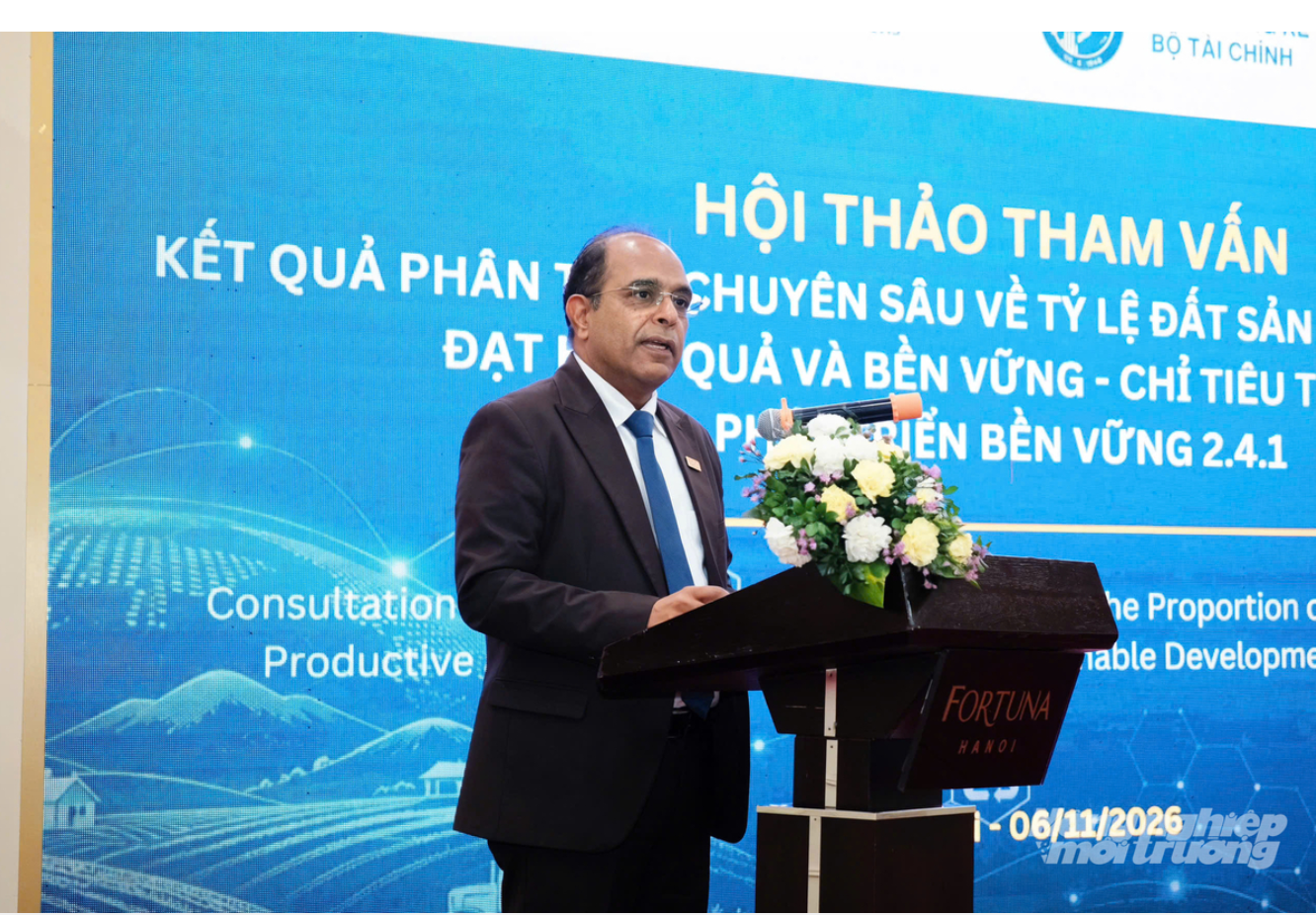 Vinod Ahuja, FAO Representative in Viet Nam, highlights the role of statistical data in sustainable agricultural development. Photo: Thanh Trang.
Speaking at the workshop, Vinod Ahuja, FAO Representative in Viet Nam, emphasized that the Rural and Agricultural Census provides an important source of data for monitoring rural development. According to the FAO Representative, SDG Indicator 2.4.1 enables a comprehensive assessment of economic performance, environmental impacts, and social factors, helping identify policy priorities for sustainable agricultural development.
At the workshop, Nguyen Cong Thang, an official from the Survey Division of the National Statistics Office, presented the methodology for assessing agricultural land sustainability under SDG Indicator 2.4.1.
The assessment uses 11 sub-indicators across three dimensions: economic, environmental, and social. These include agricultural production value per hectare, net farm income, risk mitigation mechanisms, soil degradation, water availability, fertilizer management, pesticide management, adoption of biodiversity-supporting practices, working conditions, food security, and land tenure rights.
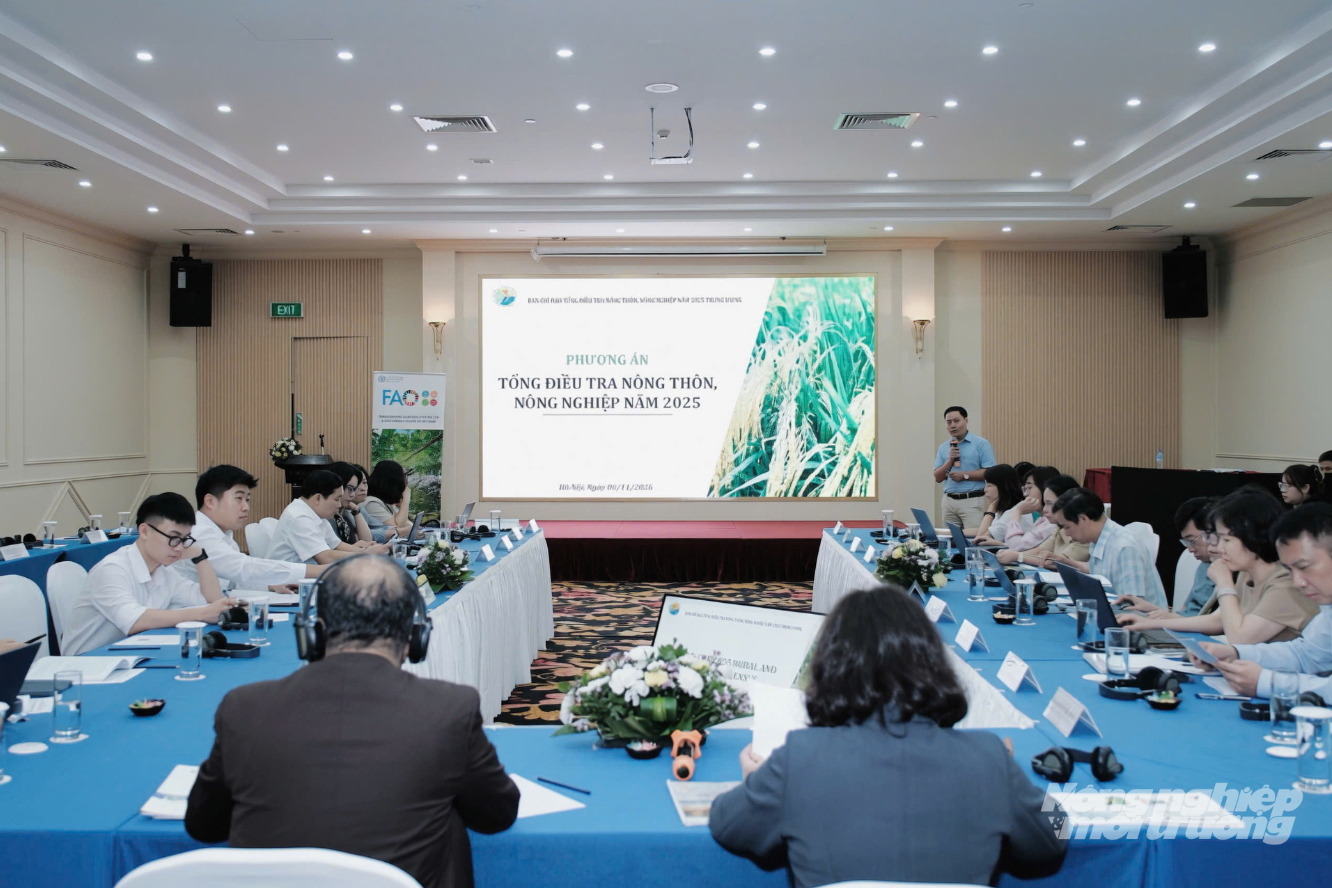 Nguyen Cong Thang, an official from the Survey Division of the National Statistics Office, presents the methodology for surveying and assessing agricultural land sustainability. Photo: Thanh Trang.
Presenting the survey findings, Do Thi Thu Ha, Deputy Head of the Agriculture, Forestry and Fisheries Statistics Division at the National Statistics Office, reported that 53% of agricultural land in 2025 had not reached the highest sustainability level. Areas requiring further improvement include production value per hectare, risk mitigation, fertilizer and pesticide management, and biodiversity-supporting practices.
Several indicators showed positive progress compared with 2020. The proportion of agricultural land achieving a high sustainability level in water availability increased from 29.9% to 77.5%, while the share of land classified as unsustainable in pesticide management declined from 61% to 42.8%. Improvements were also recorded in risk mitigation.
Despite these gains, greater attention is still needed to promote agricultural biodiversity and increase production value per unit of land. The survey revealed varying levels of sustainability across indicators, helping identify priority areas for the transition toward more sustainable agricultural production.
During the workshop, participants discussed calculation methodologies, the comparability of results across survey periods, and the use of data by region and production type. Their feedback will help refine the analysis, improve the quality of statistical information, and support more effective management and sustainable use of agricultural land resources.