At the Government press conference, Deputy Minister of Agriculture and Environment Dang Ngoc Diep answered questions regarding Viet Nam’s durian exports.
2026 export value nears US$2 billion
Questions raised at the press conference focused on remaining challenges, lessons learned from addressing difficulties facing agricultural exports in recent years, and solutions to remove bottlenecks hindering durian exports.
Responding to these issues, Deputy Minister Dang Ngoc Diep affirmed that durian has become one of Viet Nam’s key export commodities in the fruit and vegetable sector in recent years. Export value rose from US$177.7 million in 2021 to approximately US$3.85 billion in 2025, accounting for around 45% of the total export value of Viet Nam’s fruit and vegetable sector.
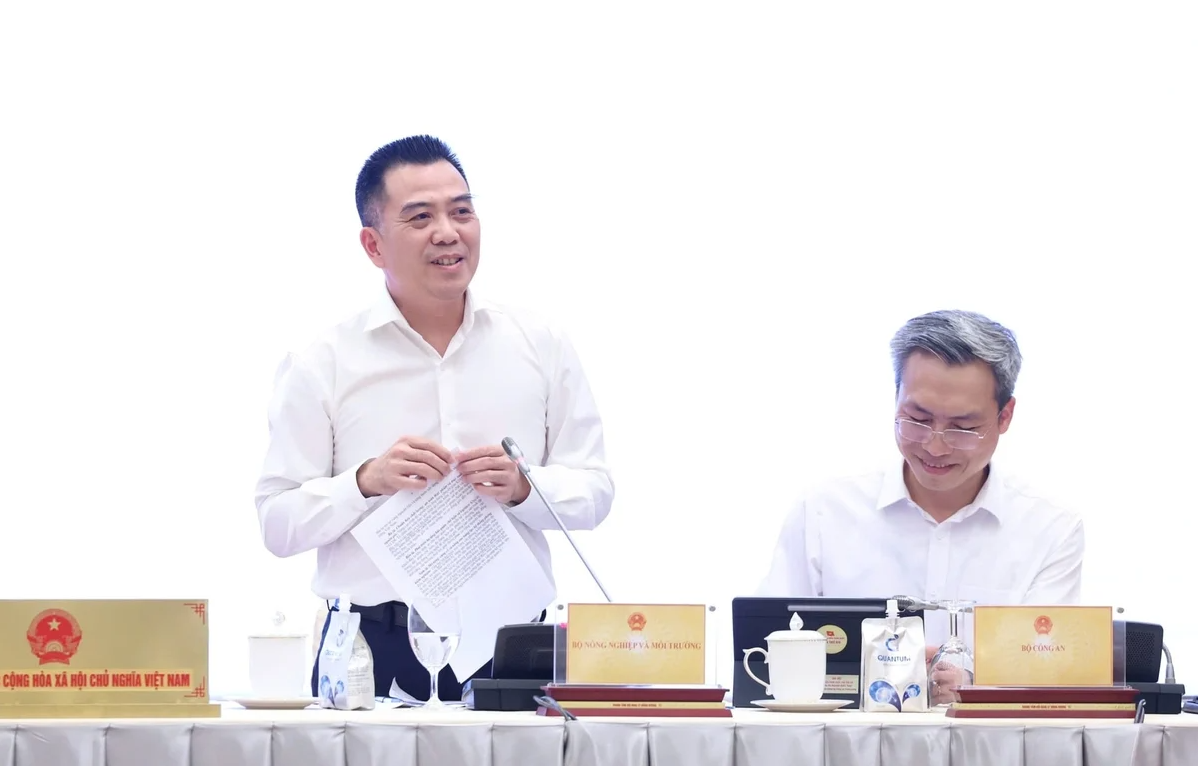 Deputy Minister of Agriculture and Environment Dang Ngoc Diep speaks to the press at the Government press conference on September 3. Photo: Quang Phuc.
In the first seven months of 2026, Viet Nam’s durian exports reached approximately US$1.47 billion, up 44.1% year on year. China alone accounted for more than 95% of the market share, with exports reaching around US$1.38 billion, up 49.6%, the Deputy Minister of Agriculture and Environment said.
According to data from the Ministry of Agriculture and Environment, durian exports in the first eight months of 2026 are estimated at US$1.97 billion, up 28.3% from the same period last year. Of this, exports to China reached US$1.85 billion, an increase of 29.9%.
Alongside the Chinese market, Viet Nam has made efforts to expand durian exports to more than 20 countries and territories. Notably, in July 2026, India officially allowed imports of fresh Vietnamese durian, opening up further room for growth and helping diversify export markets.
For durian production, the country currently has 1,599 registered growing-area codes and 281 active packing-house codes. Most recently, on August 14, 2026, the General Administration of Customs of China (GACC) approved an additional 401 growing-area codes and 166 packing-house codes for Vietnamese durian.
 Vietnam’s durian export value in the first eight months of 2026 nearly reached US$2 billion. Photo: Tung Dinh.
According to the Deputy Minister, Viet Nam’s testing capacity for export purposes has been strengthened in recent years, while the network of testing laboratories approved by China has continued to expand, meeting the demand for testing food safety indicators. This is an important condition for maintaining stable exports and reducing risks arising from quality and food safety alerts.
Notably, since July 1, 2026, the Ministry of Agriculture and Environment has officially implemented an electronic traceability system for agricultural products in general and exported durian products in particular.
The Deputy Minister also pointed to several difficulties and challenges facing durian exports, highlighting a key lesson: Viet Nam needs to shift from a mindset of “addressing problems when they arise” to proactively preparing early and from the outset. Quality, food safety and traceability should serve as the foundation; markets and businesses should guide production organization; linkages among actors across the value chain should be strengthened; and export markets should be proactively diversified while value-added should be increased. These efforts will help build a stable, transparent and sustainable agricultural sector.
Five key solutions
Regarding efforts to boost durian exports in the coming period, Deputy Minister Dang Ngoc Diep said the Ministry of Agriculture and Environment is directing and guiding efforts to improve the management of quality, food safety and traceability, while steering the durian industry towards more professional, transparent, high-quality, value-added and sustainable development. Five key solutions will be prioritized.
 Regular Government press conference on the afternoon of September 3. Photo: Nhu Y.
First, step up trade promotion and expand and diversify export markets, including continuing negotiations to open up new markets and increase market share in promising markets such as India, Australia and New Zealand.
Viet Nam should increase exports of frozen durian and processed durian products to suitable markets, strengthen trade promotion, promote the Vietnamese durian brand and facilitate supply-demand connections. Viet Nam should also enhance market information, analysis, and forecasting to provide timely guidance on production, harvesting, and sales.
Second, reorganize production and develop sustainable raw material areas. This includes reviewing and planning production areas in line with land, water, climate and infrastructure conditions; developing concentrated raw material areas linked with pre-processing, processing, storage, consumption and export; strengthening linkages among farmers, cooperatives and businesses; encouraging businesses to reinvest in raw material areas; and gradually building the Vietnamese durian brand.
Third, standardize quality, food safety and traceability while strengthening research, the application and transfer of science and technology, and digital transformation.
Production should follow safe practices, with strict control over inputs and residue risks. Strengthen food safety and plant quarantine monitoring, along with early warnings of potential violations. The traceability system should also be completed, covering the entire chain from growing areas and packing facilities to exporting businesses.
Fourth, develop storage, processing and logistics infrastructure. Encourage investment in cold storage, pre-processing, storage, and processing facilities in concentrated production areas. Expand processing, diversify products and transportation methods, and apply technology to reduce costs and improve quality. Irrigation and transport infrastructure serving raw material areas should also be upgraded.
Fifth, expand, strengthen and improve the capacity of the testing laboratory network. Socialization efforts should continue to expand the number of qualified laboratories, with priority given to investment in equipment and testing capacity, particularly for cadmium, Yellow O and other indicators required by importing markets. Support should also be provided to complete testing dossiers and methods that meet the requirements of competent authorities in importing countries.
At the same time, testing procedures should be standardized and further digitalized to shorten processing times and improve the reliability of test results. Laboratories should operate flexibly in line with seasonal production, while procedures, turnaround times and costs should be made transparent. Training should also be strengthened, with regular updates on technical requirements and international standards for laboratory personnel and regulatory officials.