According to the Planning and Finance Department under the Ministry of Agriculture and Environment, the project “Sustainable Development of One Million Hectares of High-Quality, Low-Emission Rice Associated with Green Growth in the Mekong Delta by 2030” targeted about 180,000 hectares of rice in the 2024–2025 period. Most of these areas were inherited from production zones developed under the Viet Nam Sustainable Agriculture Transformation (VnSAT) project.
After two years of implementation, the program has achieved encouraging results. By the end of 2025, the rice area included in the project had reached more than 354,000 hectares, nearly double the initial target.
Over the past two years, dozens of pilot production models have been launched across localities. Notably, all rice produced under these models has been purchased by businesses through contract farming arrangements.
Production areas have applied a range of technical improvements, including mechanised seeding, efficient water management and sustainable farming practices. As a result, 100% of rice fields in the models have ensured irrigation and drainage.
 Farmers cultivate low-emission rice in Quang Tri Province. Photo: Vo Dung.
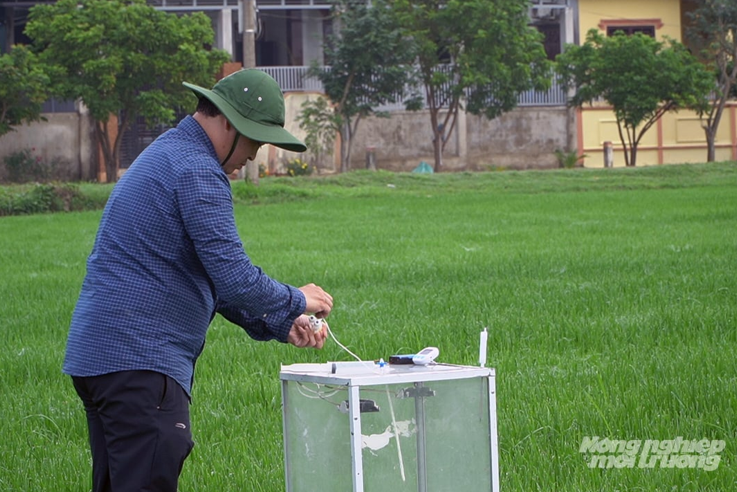
A key component of the program is the Measurement, Reporting and Verification (MRV) system for emission reductions. In 2025, this process was piloted in 11 models. Initial results show strong feasibility, as both technical staff and farmers were able to apply the procedures effectively. The Ministry of Agriculture and Environment also issued Decision No. 4801/2025/QĐ-BNNMT on piloting the MRV system for rice areas under the project.
The new farming models have helped reduce emissions by 3–4 tonnes of CO₂ equivalent per hectare compared with traditional production methods. At the same time, farmers participating in the models have seen their average income increase by 13.4%.
Beyond economic benefits, the project is also gradually building a low-emission “green rice” brand. So far, more than 5,000 hectares of rice have been certified under this label.
In the next phase leading up to 2030, the program will expand by an additional 800,000 hectares, while upgrading infrastructure for rice production. Currently, six localities (after administrative mergers) have registered to participate. An Giang has the largest planned area with about 530,000 hectares, followed by Dong Thap with 190,000 hectares and Tay Ninh with around 140,000 hectares.