At a press conference on October 6, Deputy Minister Phung Duc Tien reported that Vietnam’s agro-forestry-fishery exports surged 14% year-on-year, with September alone contributing USD6.35 billion - marking one of the sector’s strongest monthly performances ever.
At the regular press conference on October 6, Deputy Minister of Agriculture and Environment Phung Duc Tien announced that despite a series of natural disasters in September 2025, Vietnam’s agriculture sector continued to sustain robust growth, particularly in exports, with total agro-forestry-fishery export turnover reaching over USD 52 billion in the first nine months of the year, up 14% compared to the same period in 2024.
The biggest highlight came from trade performance. In September alone, exports of agricultural, forestry, and fishery products hit USD 6.35 billion, bringing the nine-month total to USD 52.31 billion. Of this, farm produce accounted for USD 28.5 billion, seafood USD 8.12 billion, forestry products USD 13.41 billion, and livestock USD 447.5 million.
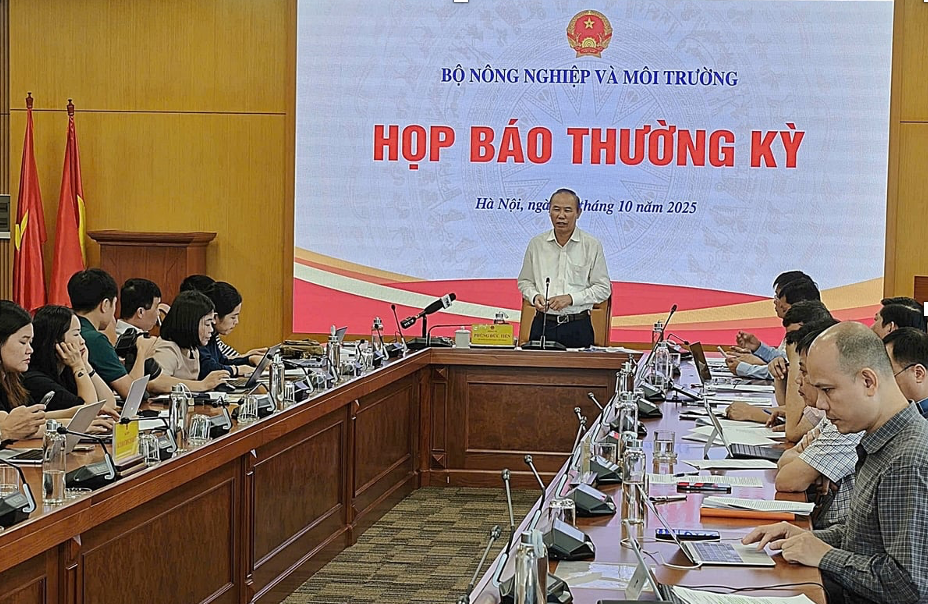 Deputy Minister of Agriculture and Environment Phung Duc Tien speaks at the press conference.
Market diversification was evident: Asia accounted for nearly 44% of total export value, the United States 23%, and Europe over 14%, while exports to Africa almost doubled.
Several key commodities continued to shine. Coffee exports jumped 61% in value to USD 6.98 billion, driven by an average export price of USD 5,658 per tonne. Rubber reached USD 2.32 billion, up nearly 11%, mostly exported to China. Cashew nut exports climbed 18.9% to USD 3.75 billion. Pepper, despite a decline in volume, saw export value increase by nearly 29% thanks to higher prices.
Rice moved in the opposite direction: while export volume remained stable at around 7 million tonnes, total value fell 18.5% due to a drop in average export price to USD 509 per tonne. Fruit and vegetable exports reached USD 6.22 billion, up more than 10%, with China remaining the largest market.
Seafood exports showed steady growth at USD 8.12 billion, with shrimp being the main contributor to the sector’s trade surplus. Wood and wood product exports brought in USD 12.52 billion, maintaining over half of the market share in the U.S.
Overall, Vietnam’s agro-forestry-fishery trade surplus hit USD 15.93 billion, up 17.6% year-on-year. Wood, coffee, fruit and vegetables, shrimp, rice, tra fish, and pepper each recorded a surplus exceeding USD 1 billion, wood products alone contributing USD 10.15 billion.
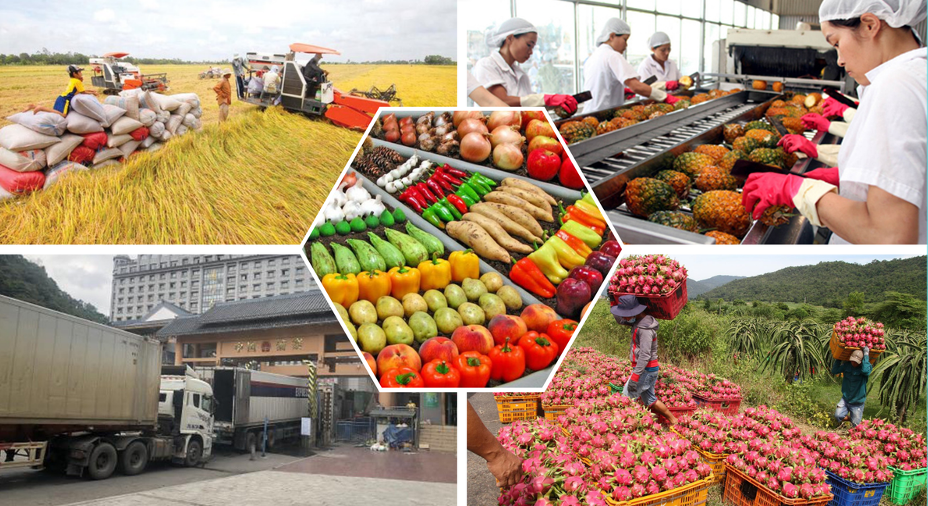 Vietnam’s agro-forestry-fishery exports reached USD 6.35 billion in September 2025 alone.
Deputy Minister Phung Duc Tien emphasized that these results demonstrate the agricultural sector’s vital role as an economic stabilizer amid global uncertainty.
Vu Duc Dam Quang, Deputy Director General of the Department of International Cooperation, noted that Vietnam’s agricultural trade has not only expanded in scale but also improved in quality, increasingly meeting global standards.
Vietnam is currently negotiating six new trade agreements to tap into emerging markets such as the Middle East (Halal), Latin America, Africa, and Central Asia. At the same time, the Ministry of Agriculture and Environment is actively addressing trade barriers and meeting stringent import requirements, including the EU Deforestation Regulation (EUDR) and U.S. controls on wood and seafood.
Another highlight is the growing involvement of international corporations in Vietnam’s agricultural value chains. Through public-private partnership (PPP) models in sectors like coffee, pepper, rice, and aquaculture, multinational enterprises are working alongside farmers and industry associations to build transparent, traceable, and low-emission supply chains.
Quang added that in the next phase, Vietnam will prioritize green and technology-linked foreign investment (FDI) projects that include technology transfer and direct cooperation with local farmers. The development of carbon credit markets and the implementation of Extended Producer Responsibility (EPR) are also seen as “green passports” that will strengthen the global competitiveness of Vietnamese agricultural products.
Looking ahead, Deputy Minister Phung Duc Tien said that if the sector maintains a monthly export turnover of USD 5 billion, well within reach, especially with increased year-end demand from Western markets, total exports could reach USD 67 billion in 2025.
“With a more optimistic scenario of USD 6 billion per month, Vietnam’s agriculture could shatter last year’s record and hit the USD 70 billion mark”, he said.