The Multilateral Fund has been replenished with 695 million USD for the 2027-2029 period to support ozone layer protection activities.
The 38th Meeting of the Parties to the Montreal Protocol on Substances that Deplete the Ozone Layer (MOP38) convened from November 2 to 6 in Kigali, Rwanda. Following protracted negotiation sessions, the conference concluded in the early hours of November 7 with pivotal decisions aimed at continuously advancing the implementation of the Montreal Protocol.
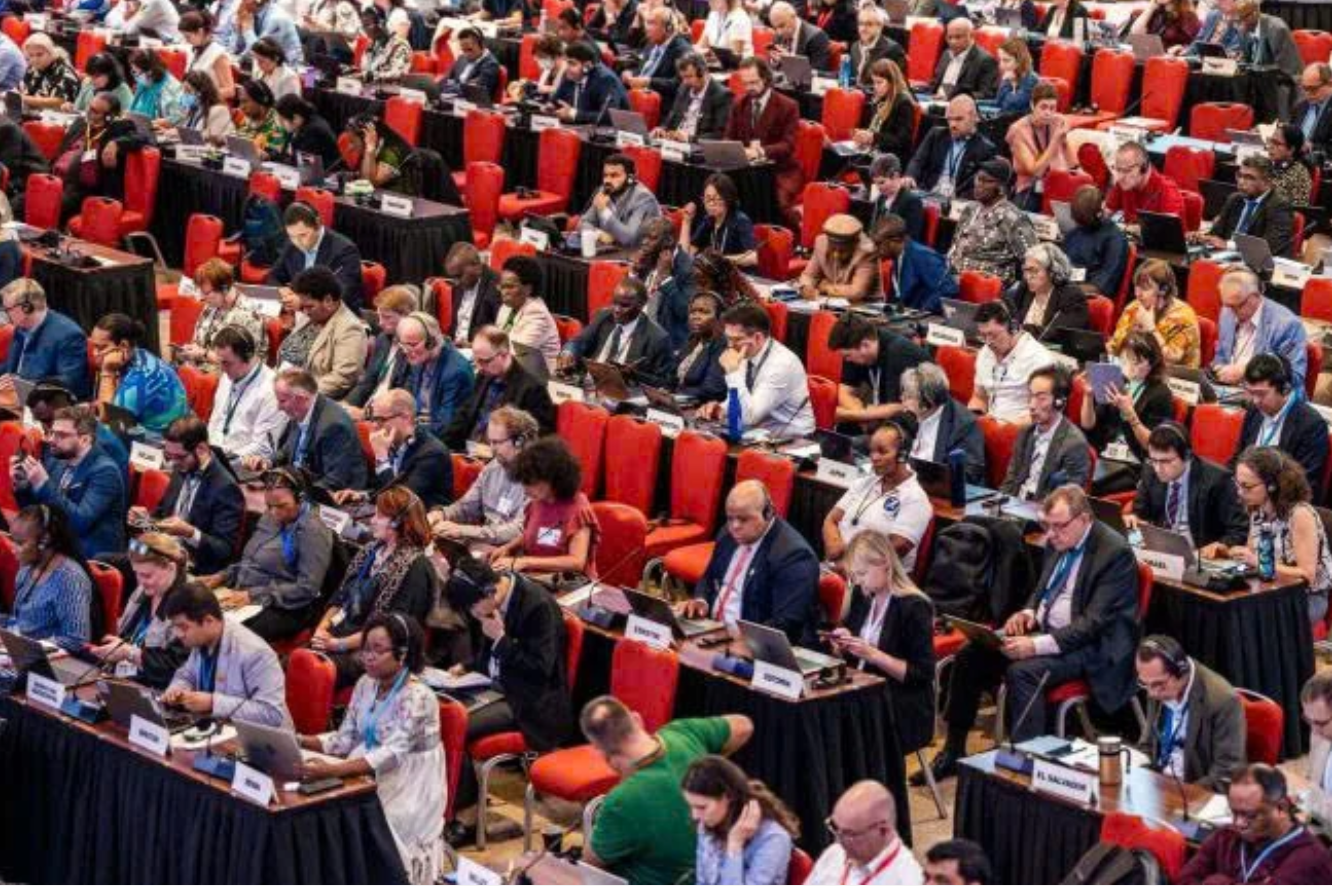 The conference convened approximately 700 delegates, comprising representatives of member states, international organizations, observers, and the Secretariat. Photo: DCC.
Critically, the Parties reached consensus on replenishing the Multilateral Fund for the 2027-2029 period with an aggregate budget of 695 million USD, comprising 360 million USD in fresh contributions from donor countries and 335 million USD in carry-over funds from the prior operational cycle.
This capital envelope will sustain developing nations in fulfilling compliance schedules to phase out ozone-depleting substances (ODS), phasedown hydrofluorocarbons (HFCs), execute industrial technology transitions, and build institutional capacity. The agreement was brokered against a backdrop of divergent national stances regarding financial requirements and contribution commitments for the forthcoming cycle.
Beyond financial matters, the Conference adopted multiple decisions to reinforce the enforcement efficacy of the Montreal Protocol, with particular focus on controlling emissions of HFC-23, a potent greenhouse gas possessing an extremely high global warming potential. Consensus was reached on elevating the operational efficiency of technical and scientific advisory panels, tracking international compliance obligations, streamlining data reporting, and accelerating ratifications of the Kigali Amendment.
The Parties agreed on an administrative operational budget of approximately 5.77 million USD for the Montreal Protocol in 2027, concurrently approving measures to ensure optimal resource allocation, streamline procedural workflows, and elevate organizational efficiency for official meetings under the Protocol framework.
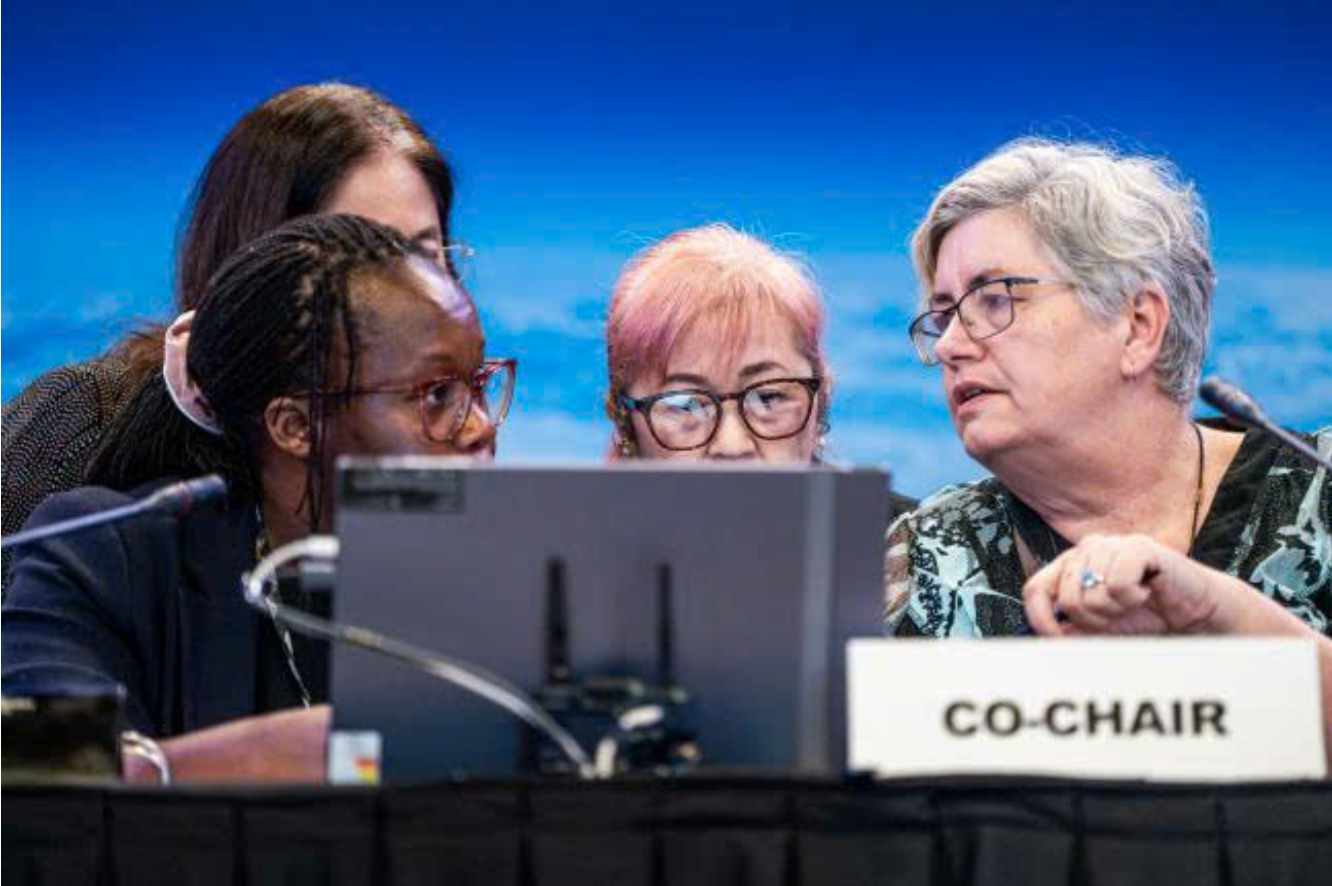 The Parties agreed on an operational budget of approximately 5.77 million USD for the Montreal Protocol in 2027. Photo: DCC.
Despite broad consensus on most of the agenda, several contentious issues remained unresolved. On expanding regional atmospheric monitoring, Parties maintained divergent views on financial oversight mechanisms across donor streams, host-country legal responsibilities for monitoring stations, and data-sharing protocols. On institutional strengthening and preventing illegal trade, deliberations failed to forge consensus on the study scope and the consolidation of regulatory tools and compliance practices, particularly concerning illicit transactions conducted via online e-commerce platforms.
Another notable development at the Conference was the divergence in perspectives concerning regional representation mechanisms, specifically the participation of Central Asian states within the Eastern European Group (EEG). These disputes impeded the selection of representatives to statutory bodies of the Montreal Protocol. Despite multiple rounds of consultations, the Parties could not reach consensus on nominating an EEG representative to serve on the Implementation Committee for 2027. Consequently, one vacant seat on this Committee remains unfilled, pending future review and resolution.
The outcomes of MOP38 reaffirm the Montreal Protocol's standing as one of the world's most successful multilateral environmental agreements. Over nearly four decades of implementation, the Protocol has forged a cooperative state architecture anchored in concrete international commitments, rigorous scientific foundations, dedicated compliance assistance mechanisms, and technology transfer. These pillars have contributed substantially to global achievements in phasing out ozone-depleting substances and driving climate change mitigation.
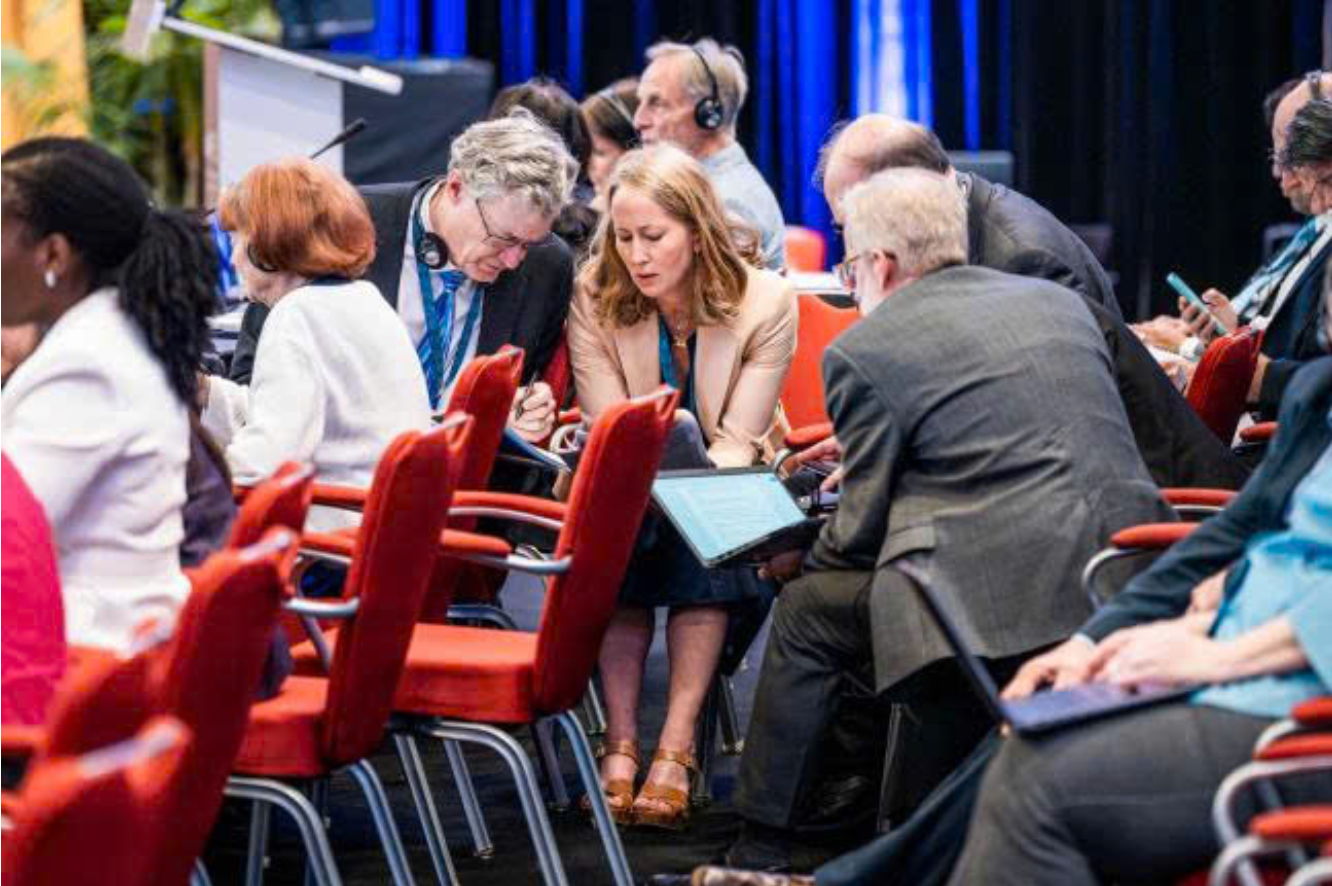 The evolving mandates of the Montreal Protocol necessitate steadfast diplomacy during negotiation rounds. Photo: DCC.
The negotiations at MOP38 also underscored that sustaining consensus in multilateral diplomacy demands perseverance, flexibility, and a commitment to reciprocal compromise among sovereign states. As operational mandates grow increasingly diverse, challenges surrounding technical capacity, data governance, stakeholder accountability, and international coordination become inherently more intricate. The Conference's deliverables demonstrate the member states' enduring capacity to preserve cooperative momentum and identify common ground, even amid conflicting perspectives and interests.
For Vietnam, the outcomes of MOP38 establish favorable conditions to advance national compliance with international commitments to phase out HCFCs, phase down HFCs, accelerate industrial technology conversions, and enforce lifecycle refrigerant management. Through proactive engagement in negotiation tracks, technical exchanges, and international partnerships, Vietnam continues to demonstrate its adherence to the Montreal Protocol and the Kigali Amendment, contributing to collective global efforts to protect the ozone layer and combat climate change.
According to the official schedule, the 49th Meeting of the Open-ended Working Group (OEWG49) is slated for the week of June 28 to July 2, 2027, with the venue to be announced later. The 39th Meeting of the Parties to the Montreal Protocol (MOP39) will convene from October 25 to 29, 2027, in Nairobi, Kenya.