On the morning of December 10, at the Government Headquarters, Prime Minister Pham Minh Chinh chaired the 2025 Dialogue Conference with Farmers under the theme “Application of Science and Technology, Innovation, and Digital Transformation in Agriculture.” The conference was jointly organized by the Central Committee of the Viet Nam Farmers’ Union, the Government Office, and relevant ministries, sectors, and localities, and was connected online to 34 provinces and cities nationwide.
The Prime Minister highly appreciated the spirit of democratic, candid, and substantive dialogue between the Government and farmers. He also tasked the Government Office, in coordination with the Viet Nam Farmers’ Union, with compiling and submitting conclusions for issuance in line with the principle of “six clarities”: clear responsibilities, clear tasks, clear timelines, clear accountability, clear authority, and clear outcomes.
Agriculture remains a strategic pillar of the economy
The Prime Minister noted that in 2025, Viet Nam is expected to fulfill all 15 out of 15 socio-economic targets, with agriculture, farmers, and rural areas making especially significant contributions. On behalf of the Party and State leadership, he acknowledged and commended the vital role and major contributions of farmers to national development.
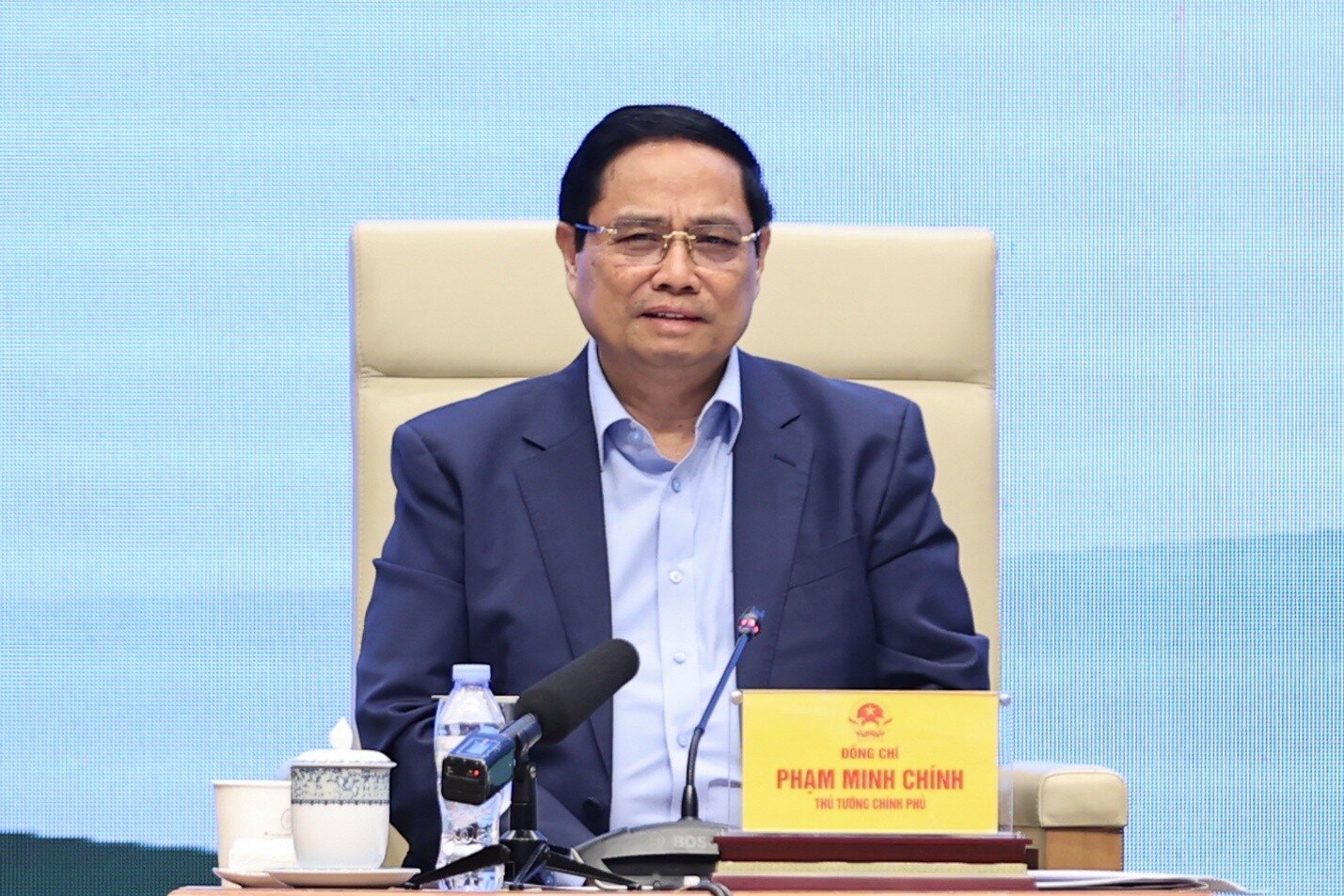 The Prime Minister outlines key issues in supporting farmers in applying science and technology to agricultural production and product marketing. Photo: VGP/Nhat Bac.
Reflecting on 40 years of Doi Moi, the Prime Minister affirmed that agriculture, farmers, and rural areas have consistently served as a backbone of the economy, contributing to political and social stability, inflation control, and food security. From a poor, food-insecure country in the post-war period, Viet Nam has risen to become a major agricultural exporter, achieving the United Nations Millennium Development Goals ahead of schedule.
According to the Prime Minister, in 2025 Viet Nam will officially enter the group of upper-middle-income countries, with per capita income exceeding USD 5,000. To realize the goal of becoming a high-income developed country by 2045, science and technology, innovation, and digital transformation are an inevitable pathway, and agriculture must be one of the leading sectors in this process.
The Prime Minister stressed that all stakeholders in agriculture should take pride in the achievements attained so far, viewing them as a foundation to continue building momentum, strength, and positioning for the development of agriculture, farmers, and rural areas in the new phase - a phase of rapid, sustainable growth and deep international integration.
Expanding markets
The Prime Minister noted that, alongside the domestic market, expanding export markets is a long-term strategic task. Viet Nam has now signed 17 free trade agreements with more than 60 economies, creating vast opportunities for Vietnamese goods in general and agricultural products in particular.
“We must not only export individual agricultural products, but move toward exporting the entire agricultural sector. Vietnamese enterprises should boldly invest overseas, organize cultivation and processing, build value chains, and export on the spot,” the Prime Minister emphasized.
The long-term goal is to reach USD 100 billion in agricultural export turnover, linked to the development of national brands for each key product group.
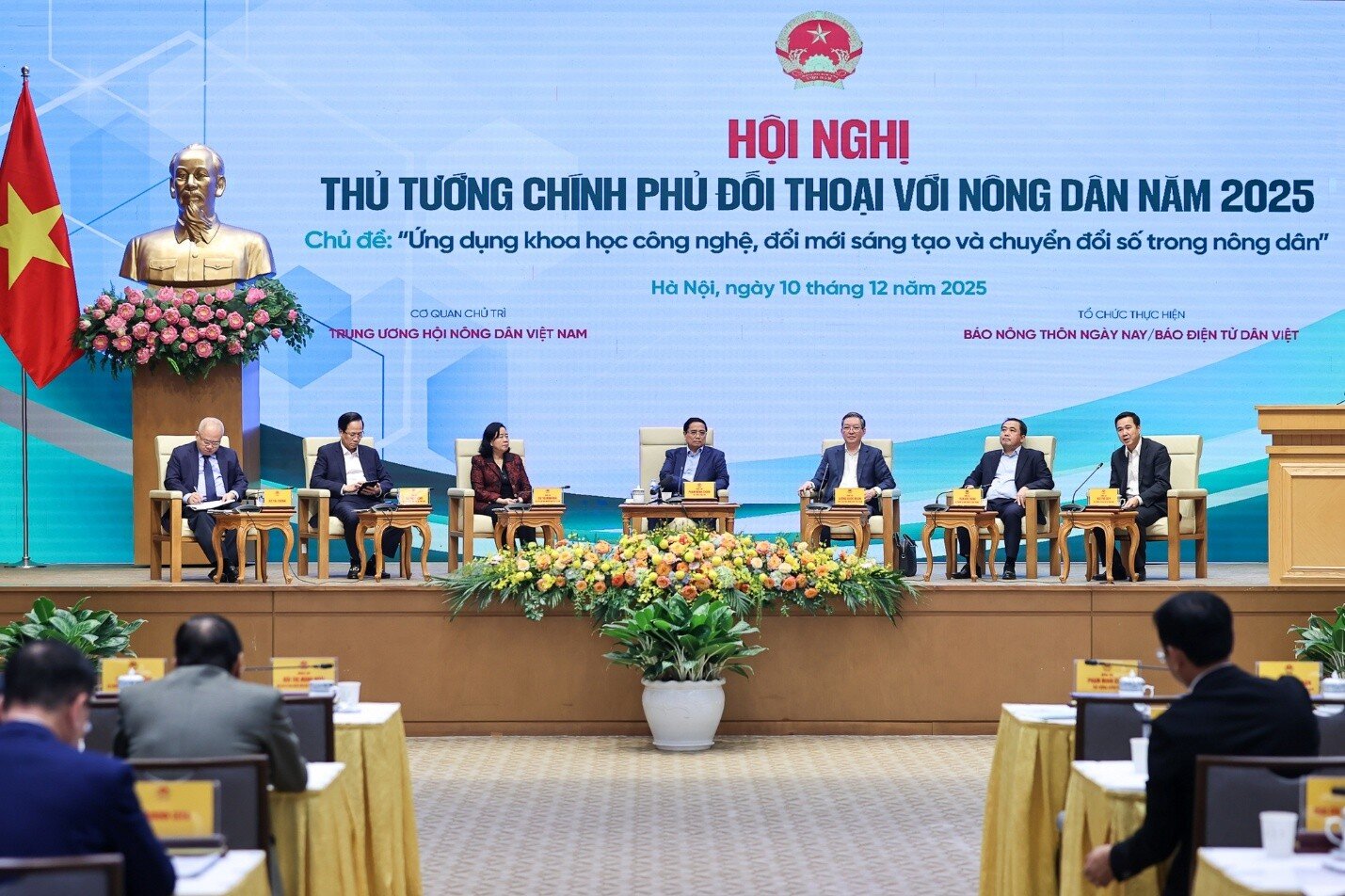 The Prime Minister, together with leaders of central ministries and agencies, responds to groups of questions. Photo: VGP/Nhat Bac.
Along with market expansion, the Prime Minister called for continued diversification of products and supply chains to avoid overreliance on a limited number of traditional markets, while also boosting domestic consumption and strengthening effective linkages among production, processing, and distribution.
Regarding infrastructure, the Prime Minister noted that around 50% of state development investment is currently allocated to strategic infrastructure, particularly transport. This helps reduce logistics costs, lower prices, and enhance the competitiveness of agricultural products, while opening up new development space for rural areas.
In addition, he urged further improvement of mechanisms to promote green, low-emission production and a circular economy, alongside stronger management of food safety, traceability, anti–trade fraud measures, and intellectual property protection, thereby laying a solid foundation for sustainable agricultural development.
Placing farmers at the center, mobilizing resources, and proactively adapting to climate change
The Prime Minister affirmed that farmers are both the center and the main actors, as well as the objectives, driving force, and resources of development. Therefore, special emphasis must be placed on training and enhancing farmers’ knowledge, production skills, management capacity, and ability to master technology.
He tasked the Ministry of Agriculture and Environment and the Vietnam Farmers’ Union with strengthening the “three-party linkage” among the State, educational institutions, and enterprises in training human resources for modern, high-tech, and green agriculture.
To achieve rapid and sustainable development, the Prime Minister stressed the need to mobilize all social resources in an integrated manner, including the state budget, private capital, credit, bonds, and public-private partnership (PPP) models such as BT and BOT. The State plays a role in creating enabling institutions, while enterprises must proactively propose investment projects, ensuring a harmonious balance of interests among the State, businesses, and farmers.
In the face of the increasingly severe impacts of climate change, the Prime Minister underscored that disaster prevention, response, and recovery are regular and long-term tasks. The State must lead and coordinate, enterprises should pioneer the application of technology, and society as a whole should mobilize resources for disaster prevention and mitigation, safeguarding production and people’s livelihoods.
On this occasion, the Prime Minister also announced the Quang Trung campaign to build and repair homes for people affected by natural disasters, guided by the spirit of “everyone contributes what they can, wherever they can,” so that every person has a home, every family can enjoy Tet, and no one is left behind.