Cashless payment rules aim to boost transparency in forestry deals, but their implementation has posed challenges for residents and businesses.
Transaction standstill
The rollout of Decree 320/2025/ND-CP, which mandates cashless payments for agricultural, forestry, and fishery transactions above 5 million VND, has had a significant impact in Quang Ninh. Although the aim is to increase transparency and improve tax management, in practice, the regulation has made trading plantation timber more difficult.
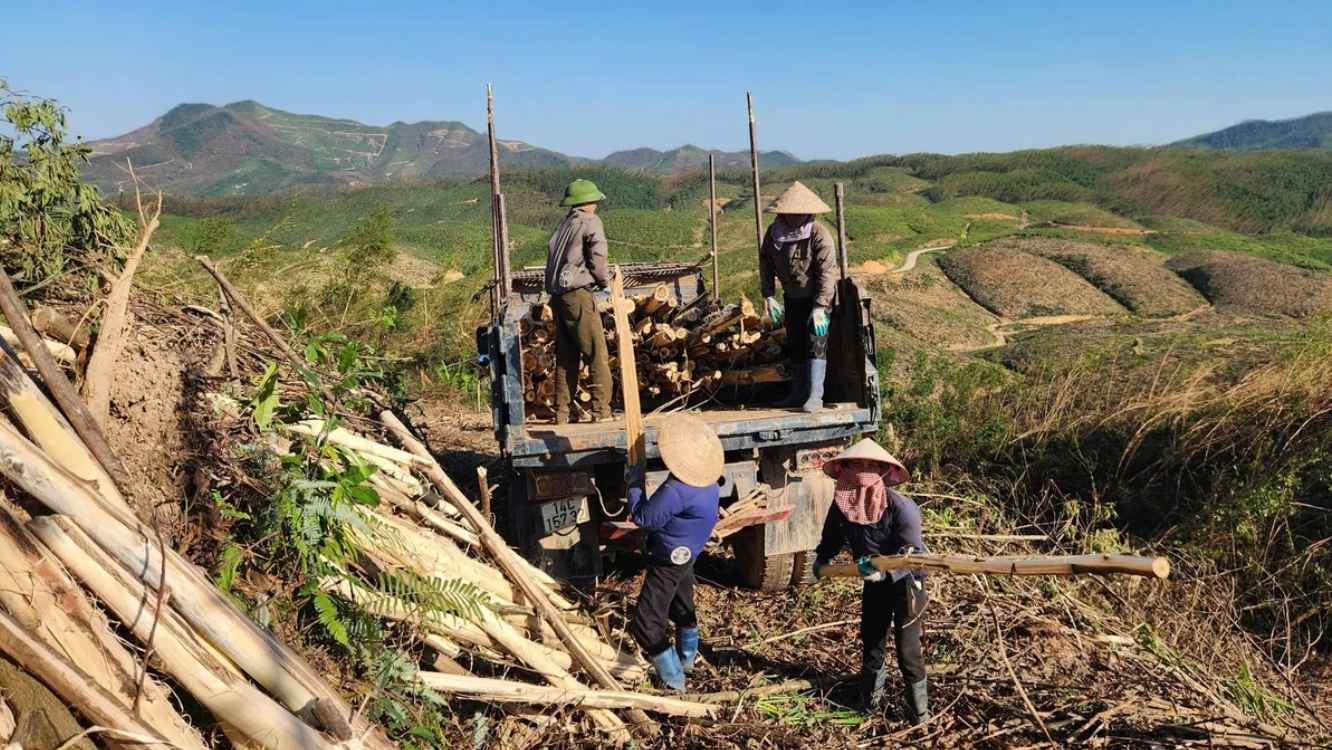 Residents of Ba Che commune harvest acacia wood. Photo: Nguyen Thanh.
 In areas with large plantation forests, many households have harvested timber but are unable to sell it. The main challenge is the requirement to pay via bank transfer. Timber buyers explain: "The current price of acacia is over 1.2 million VND per cubic meter. Each shipment exceeds 5 million VND, so payments must be made by bank transfer under Decree 320. However, many forest owners either do not have bank accounts or prefer not to receive money this way, making transactions difficult".
In Ky Thuong commune, which has extensive plantation forests, transaction slowdowns are common. Mr. Nguyen Van Thanh, Deputy Director of the Commune Public Service Center, said: "Most residents are ethnic minorities with limited smartphone skills, and many do not have bank accounts. Some areas lack mobile network coverage, so transfers according to regulations are very difficult".
Legal issues over forest land add further complications. In many cases, ownership transfer procedures have not been completed, and the people who planted the trees are not the registered landowners, making it impossible to transfer payments to the right person under Decree 320.
Not only residents but also timber-processing businesses are strongly affected. Mr. Vu Van Tuyen, Director of Ty Long Wood Production and Trading Co., Ltd., said: "Businesses cannot pay in cash because such payments are not considered legitimate expenses for corporate income tax. But if we pay by bank transfer, we cannot purchase timber. At present, we are relying on existing stock, but it will only last for a short time".
Some wood chip export companies in Quang Ninh also say that the shortage of raw materials is directly affecting delivery schedules, while export contracts with foreign partners impose strict deadlines.
Practical solutions needed
Mr. Nguyen Minh Son, Director General of the Quang Ninh Department of Agriculture and Environment, said that implementing Decree 320 is crucial for controlling money flows, preventing tax losses, and gradually improving transparency in production and business activities. At the same time, the forestry sector requires flexible solutions that fit local conditions.
One proposed solution is to organize households into groups or clusters and appoint a representative to handle contracts and payments. This representative would receive funds from businesses and pay households via bank transfer based on their actual output.
"There must be a single point of contact for management and transparency. But this requires agreement among households, with local authorities confirming the arrangement to avoid disputes", Mr. Son emphasized.
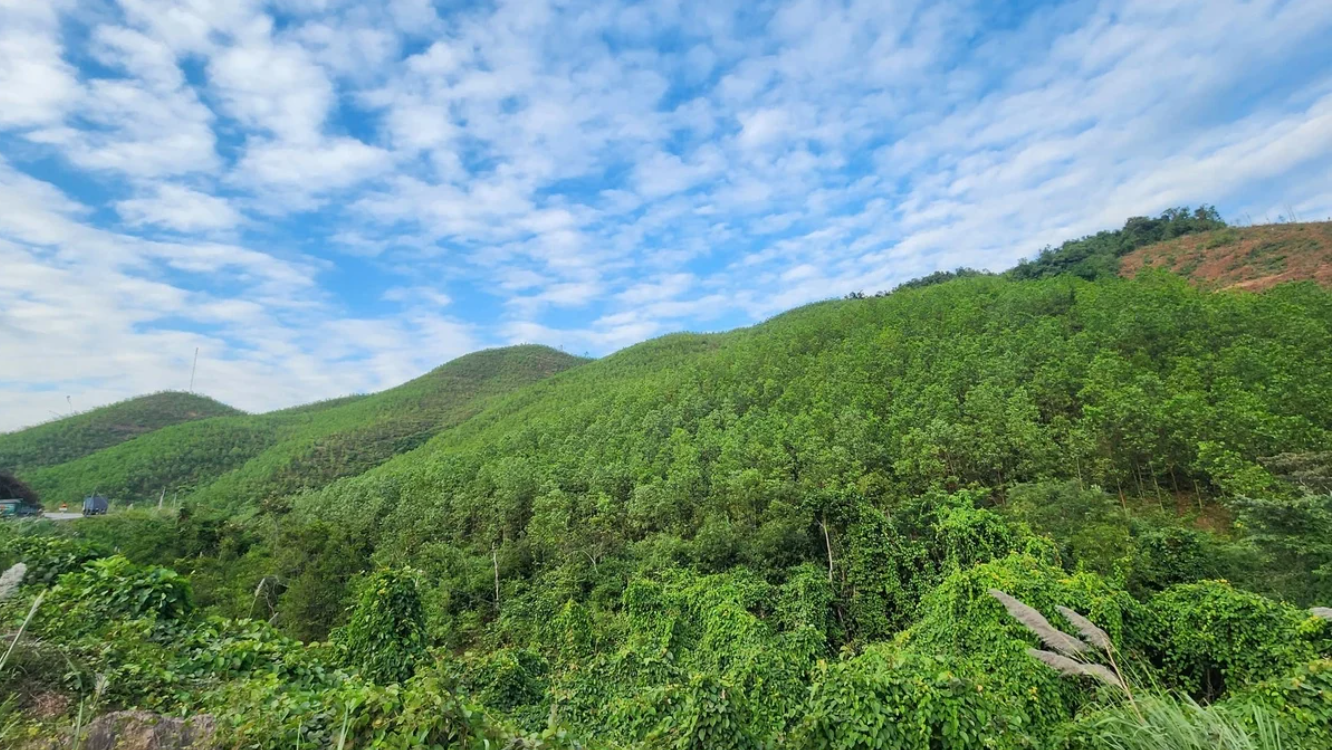 Plantation forests in Quang Ninh certified by FSC cover over 36,000 ha. Photo: Nguyen Thanh.
To ensure smooth and secure implementation, local authorities, community organizations, and organizations such as the Fatherland Front should supervise and support the process. Community digital technology teams can also guide residents in opening bank accounts and using digital payment services.
In the long term, the forestry sector plans to integrate Decree 320 into traceability systems. The focus will be on assigning plot codes, managing plantation forest data, and promoting FSC sustainable forest certification.
According to Mr. Son, traceability is mandatory for export markets. To help residents meet this requirement, support from the private sector is essential.
“Enterprises should assist residents with certified seedlings and cover the costs of obtaining FSC certification. Once residents are certified, they provide a stable supply of materials suitable for export,” Mr. Son said.
Mr. Vu Van Tuyen confirmed that companies are ready to fund consultants and handle FSC certification procedures for residents.
"Funding can come from enterprises, but organizing, mobilizing, and issuing guidance must come from local authorities for residents to trust and follow. We fully support the state’s policies to collect taxes and regulate the sector, but we request a grace period to improve technical infrastructure before full enforcement", Mr. Tuyen added.
In practice, Decree 320 is a necessary step for economic management, but its rollout must follow a realistic timeline. Successful implementation requires coordinated efforts from authorities, local communities, and the private sector. With these measures in place, current difficulties can be gradually resolved, contributing to sustainable forestry development.
* $1 = VND 26,105 (source: Vietcombank).