KOICA is supporting climate-resilient agricultural livelihoods to strengthen the role of women in disadvantaged communes in Quang Tri Province.
To help ethnic minority communities in disadvantaged communes build sustainable, climate-resilient livelihoods, the Project Management Board under the Department of Agriculture and Environment, in coordination with Plan’s Quang Tri Office, is implementing a hybrid native chicken farming model in Truong Son and Dan Hoa communes in 2026.
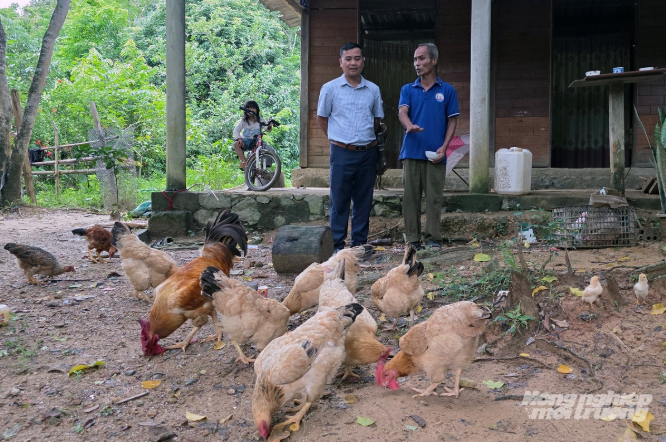 Hybrid native chickens adapt well to climate change and local conditions, offering new livelihood opportunities, higher incomes and greater economic participation for women, while helping build more climate-resilient communities. Photo: Vo Dung.
The model involves 12 groups with 150 participating households. The households receive 13,800 30-day-old hybrid native chickens, along with feed, netting, heating lamps, electrical wiring, feeders, drinkers, probiotics, disinfectants, veterinary medicines and technical support throughout the implementation process.
The activity is part of the project “Supporting climate-resilient agricultural livelihoods to strengthen women's role in disadvantaged communes”, funded by the Korea International Cooperation Agency (KOICA), with total funding of more than VND 2.16 billion. Of this amount, the project provides more than VND 1.85 billion, while the community contributes more than VND 304 million by preparing poultry houses and rice-husk bedding.
Before receiving the support, participating households underwent training in poultry farming techniques, coop construction, the use of biological bedding, chicken care and disease prevention. They also committed to using the support for its intended purposes.
The model shows that hybrid native chickens can adapt well to climate change and local conditions. It is expected to provide additional livelihood opportunities, help increase household incomes, strengthen the role of women in household economic activities and build communities that are better able to adapt to climate change.
To date, the chickens raised by participating households have developed well. Some have been sold for meat, while others have started laying eggs, indicating potential for the model to be expanded.