Viet Nam and Arusha Region (Tanzania) have identified agriculture, environment and tourism as areas with strong potential for cooperation, with a view to expanding markets for agricultural products from both sides.
On September 24-25, Deputy Minister of Agriculture and Environment Nguyen Hoang Hiep and a delegation visited and held working sessions with the authorities of Arusha Region, Tanzania. As part of the visit, the delegation visited the Arusha Forest Ranger Station to learn about forest management and protection in the Mount Meru area.
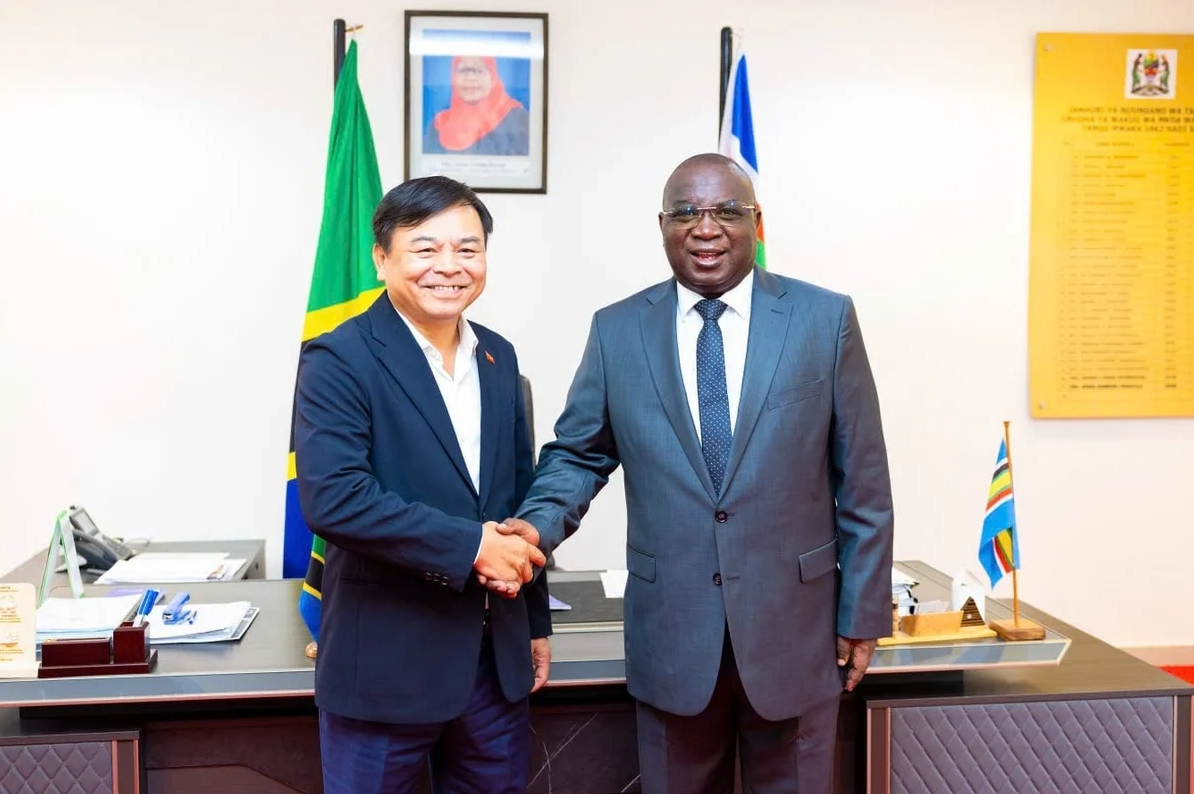 Deputy Minister Nguyen Hoang Hiep poses for a commemorative photo with Arusha Regional Commissioner Amos Gabriel Makalla. Photo: Working delegation.
Welcoming the Vietnamese delegation, Arusha Regional Commissioner Amos Gabriel Makalla congratulated Viet Nam on the outcomes of The 2nd Joint Intergovernmental Committee Meeting between Tanzania and Viet Nam on economic, trade, technical, scientific, cultural and social cooperation, held from September 21-23 in Dar es Salaam.
Introducing Arusha’s potential and advantages, the Regional Commissioner placed particular emphasis on agriculture, forestry, tourism and biodiversity conservation. According to him, Arusha has strong potential for producing a wide range of agricultural commodities, with coffee being one of its important products. However, most products are still exported as raw materials. This leaves considerable room for the region to attract investment in deeper processing and increase the value of its agricultural products.
In addition to agriculture, the region is home to numerous national parks, diverse ecosystems and distinctive natural landscapes. These advantages provide favorable conditions for developing various forms of tourism and attracting both domestic and international visitors.
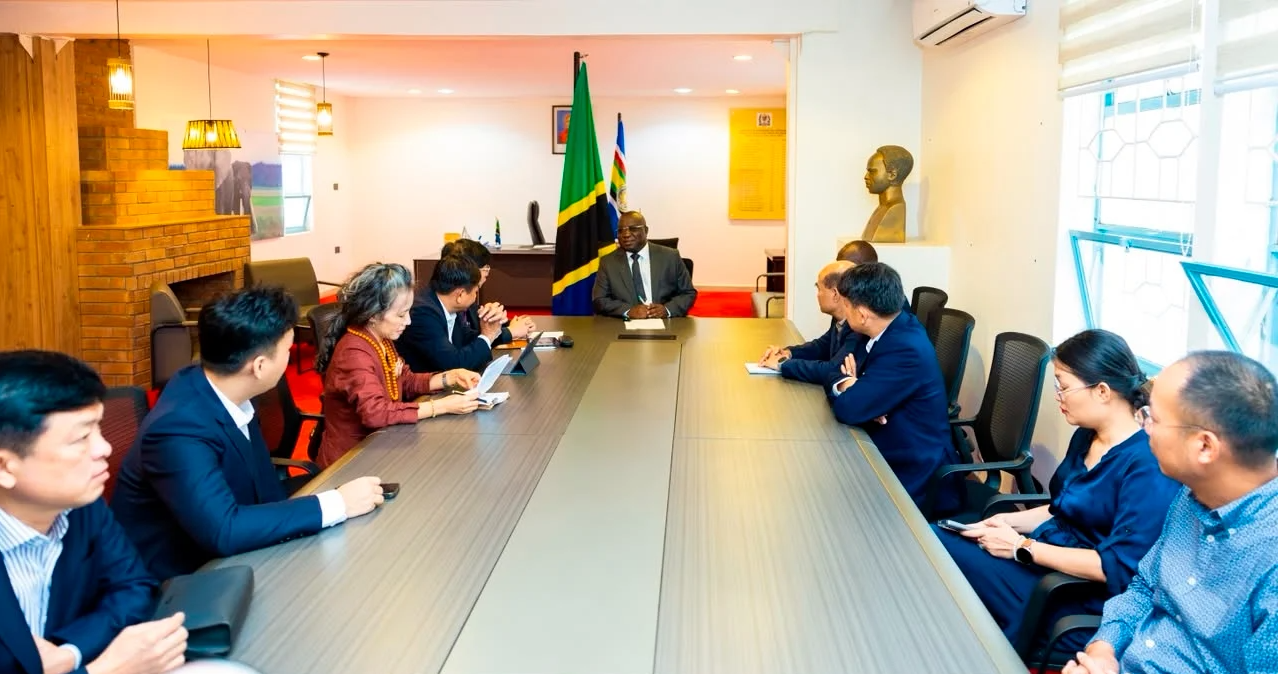 Overview of the working session between Deputy Minister of Agriculture and Environment Nguyen Hoang Hiep and the authorities of Arusha Region, Tanzania. Photo: The Respondents.
Deputy Minister Nguyen Hoang Hiep thanked Regional Commissioner Amos Gabriel Makalla and the authorities for their warm and respectful reception of the delegation. He also emphasized that Arusha’s strengths are areas in which Vietnam has experience and cooperation potential, thereby opening up opportunities to connect government agencies, businesses and partners from both sides.
“Based on the areas proposed by the Tanzanian side, I believe agriculture and the environment are sectors that could be prioritized for further discussions. The two sides could continue exploring cooperation in sustainable agricultural production, efficient water use and climate change adaptation; seeds, farming techniques, agricultural extension and training; preliminary processing, processing and storage, and reducing post-harvest losses; quality management and market linkages,” Deputy Minister Nguyen Hoang Hiep said.
The Deputy Minister also said the two sides could exchange experience in combining production development with environmental protection, biodiversity conservation and the development of sustainable livelihoods for local communities.
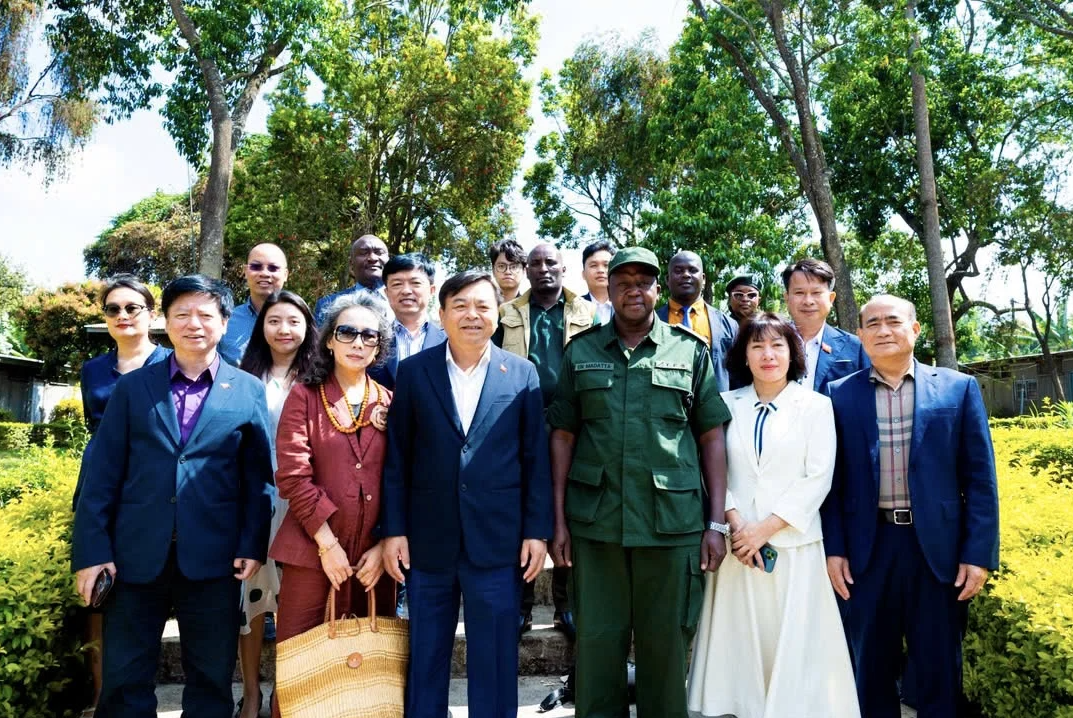 The working visit by the Ministry of Agriculture and Environment reflects Viet Nam’s interest in the Tanzanian market, particularly opportunities for trade, investment and cooperation in agriculture. Photo: ICD.
Regarding trade and investment, Deputy Minister Nguyen Hoang Hiep said cooperation should be promoted on the basis of mutual benefit, market demand, business efficiency and compliance with the regulations of each side.
Accordingly, local authorities have an important role to play in building a stable, safe, transparent and favorable environment for businesses, investors, experts and workers.
Regarding political and security issues, the two sides agreed that maintaining a peaceful, stable, safe and trusted environment is an important condition for strengthening economic cooperation, investment, trade and people-to-people exchanges.
Under South - South cooperation, Viet Nam is ready to coordinate with relevant Tanzanian agencies and the Arusha regional authorities to identify needs and connect relevant specialized agencies, research institutions, businesses and development partners.
As an immediate step, the two sides agreed to designate focal points for coordination and regularly exchange information on priority sectors, projects and partners in order to further explore cooperation opportunities following the visit.
During the working session, Nguyen Huu Tri, Director of the cashew division and representative of Intimex Group, expressed interest in exporting rice to Arusha while exploring the possibility of importing coffee and raw cashews from Tanzania.
On this issue, the Arusha Regional Commissioner expressed his willingness to cooperate in agriculture, particularly deep processing. The region will also facilitate Vietnamese businesses in exploring investment opportunities and establishing production and processing facilities locally.