Viet Nam and Japan are stepping up cooperation on environmental protection, climate action and emissions reduction, including rice straw treatment technologies.
As part of the state visit to Japan by General Secretary of the Communist Party of Viet Nam and State President To Lam and his spouse from 8-11 November , at the invitation of the Japanese State, Minister of Agriculture and Environment Trinh Viet Hung held a working meeting with Japanese Minister of the Environment Hiroyoshi Sasagawa to review cooperation achievements and discuss directions for strengthening collaboration in environmental protection and climate change response.
At the meeting, the two ministers spoke highly of the substantive cooperation achieved between the two countries across several key areas.
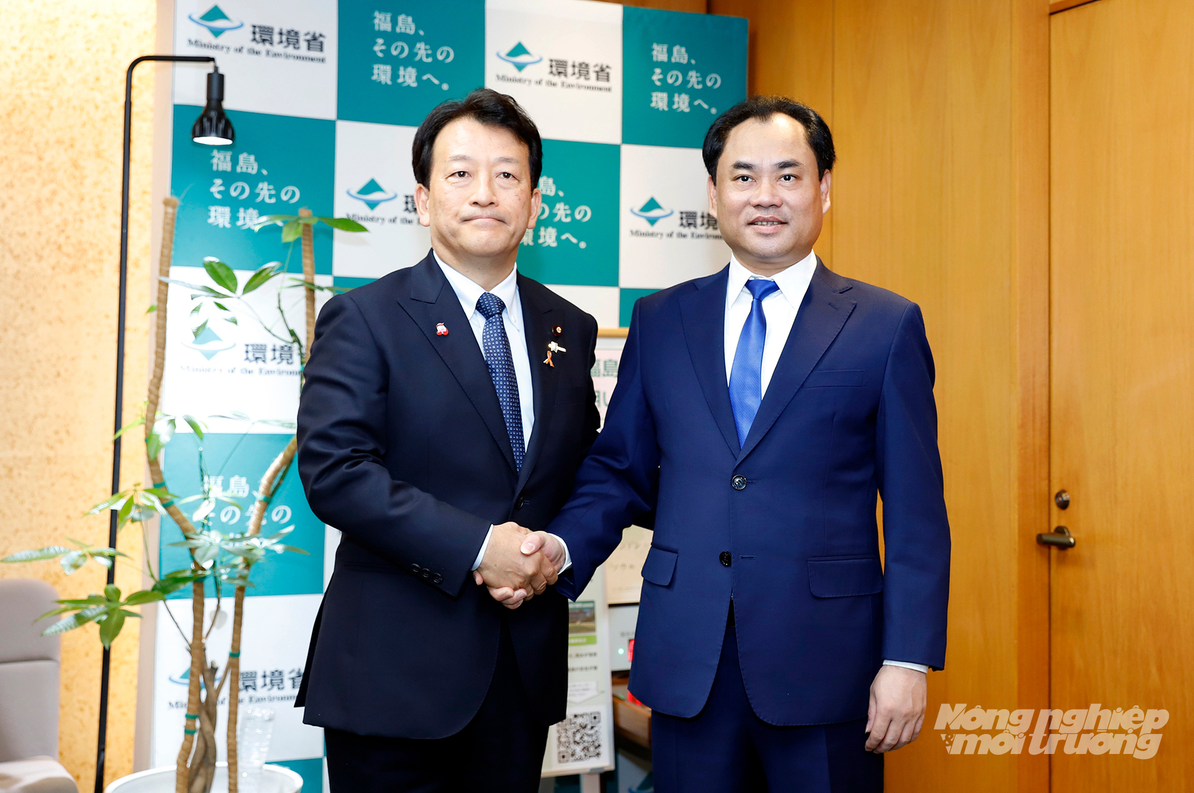 Minister of Agriculture and Environment Trinh Viet Hung held a working meeting with Japanese Minister of the Environment Hiroyoshi Sasagawa. Photo: Khuong Trung.
Regarding climate change and the carbon market, the two sides have effectively implemented the Joint Crediting Mechanism (JCM). The official recognition of the JCM by Viet Nam and Japan as a bilateral cooperation mechanism under Article 6.2 of the Paris Agreement has established an important legal framework for promoting greenhouse gas emission reduction projects and methane mitigation. Cooperation programmes on transparency (PASTI), greenhouse gas inventories and early warning systems for natural disasters are also being actively implemented.
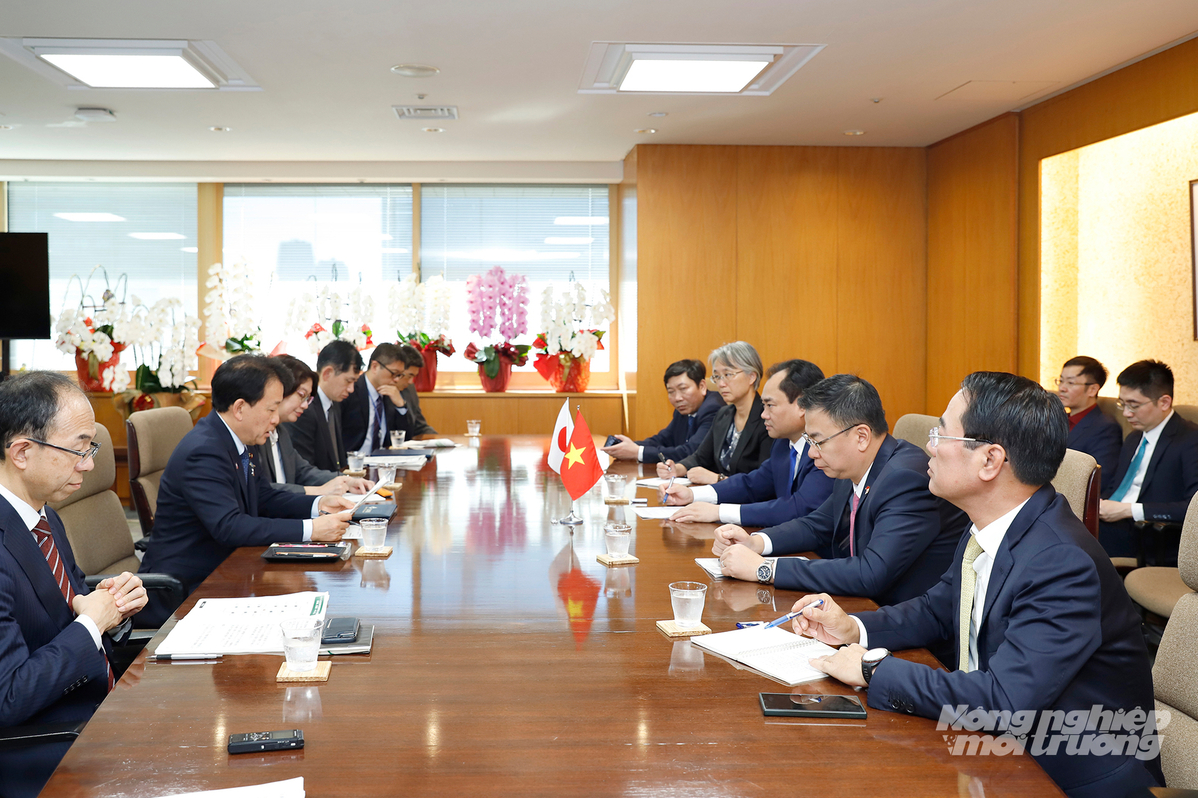 The two ministers discussed cooperation achievements and orientations for strengthening collaboration in environmental protection and climate change response. Photo: Khuong Trung.
In solid waste management and the circular economy, the waste-to-energy plant model in Bac Ninh serves as evidence of effective technological cooperation between the two countries. Viet Nam also appreciated the joint publication of the electronic waste (e-waste) information handbook and the sharing of experience in implementing policies on Extended Producer Responsibility (EPR).
In pollution control and the marine environment, cooperation programmes through the Acid Deposition Monitoring Network in East Asia (EANET), the Water Environment Partnership in Asia (WEPA) and activities to monitor marine plastic litter have helped strengthen Viet Nam's environmental management capacity.
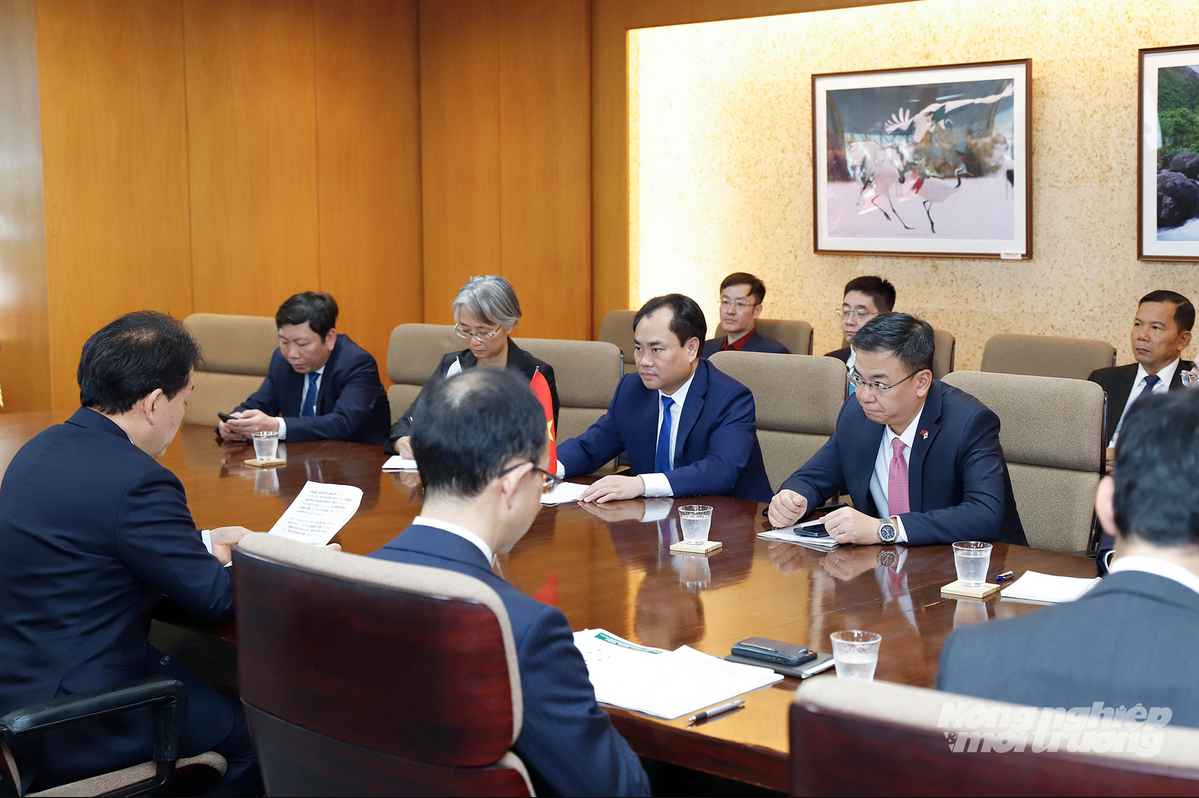 At the meeting, the two ministers spoke highly of the substantive cooperation achieved between the two countries across several key areas. Photo: Khuong Trung.
To translate their commitment to achieving net-zero emissions by 2050 into action and implement the Asia Zero Emission Community (AZEC) initiative, the two ministers agreed that cooperation should shift decisively from traditional technical assistance towards a strategic partnership focused on jointly creating high-quality solutions.
Key priorities include further refining the rules and methodologies of the JCM under Article 6.2 of the Paris Agreement, and promoting carbon credit projects in waste treatment, renewable energy and low-emission agriculture. The two sides will also step up technology transfer in the circular economy, e-waste treatment, materials recycling and hazardous chemical management, while expanding the application of remote sensing technology and artificial intelligence (AI) in air quality monitoring and marine plastic pollution surveillance.
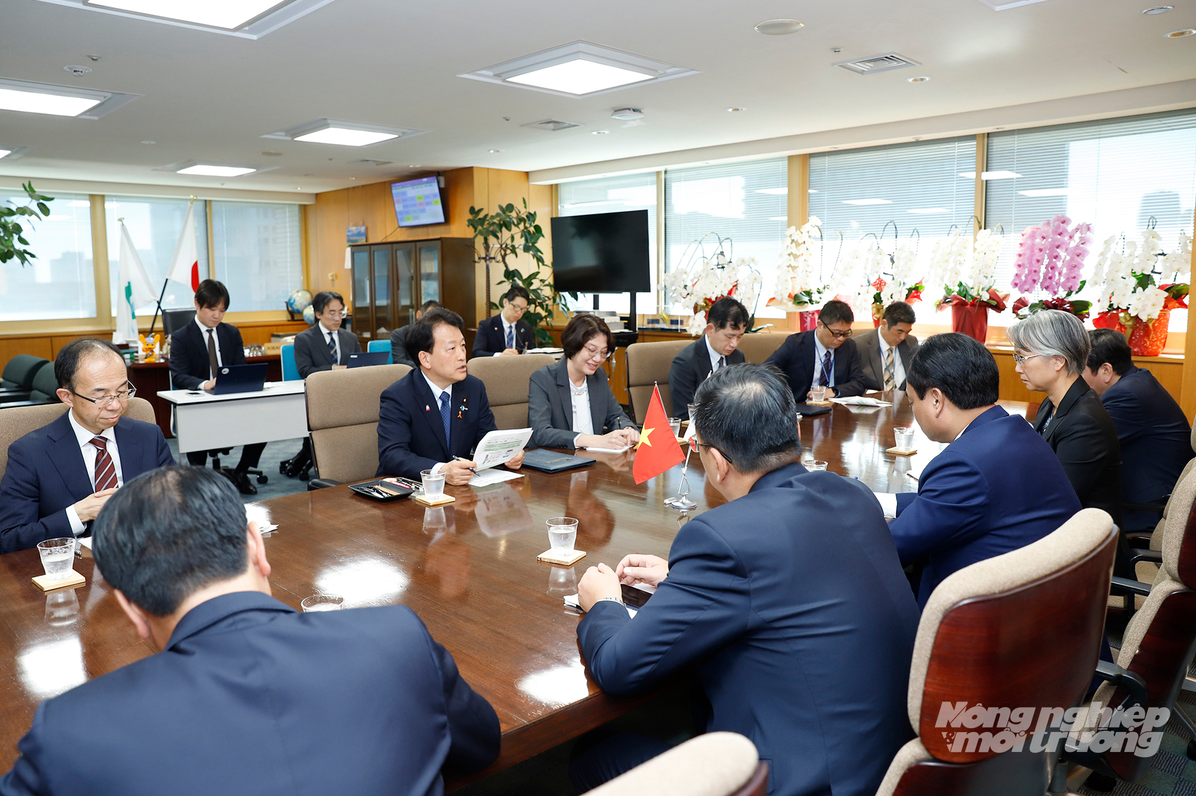 The two ministers discussed cooperation achievements and orientations for strengthening collaboration in environmental protection and climate change response. Photo: Khuong Trung.
Notably, Minister Trinh Viet Hung proposed that Japan cooperate in researching effective rice straw treatment technologies that can reduce emissions and are suited to Viet Nam's practical conditions.
Minister Trinh Viet Hung said that Viet Nam has a large rice-growing area and generates approximately 61 million tonnes of rice straw after each harvest year. The Mekong Delta accounts for nearly 50% of this total, equivalent to around 27 million tonnes. This represents a huge volume of agricultural by-products and poses considerable challenges for environmental management.
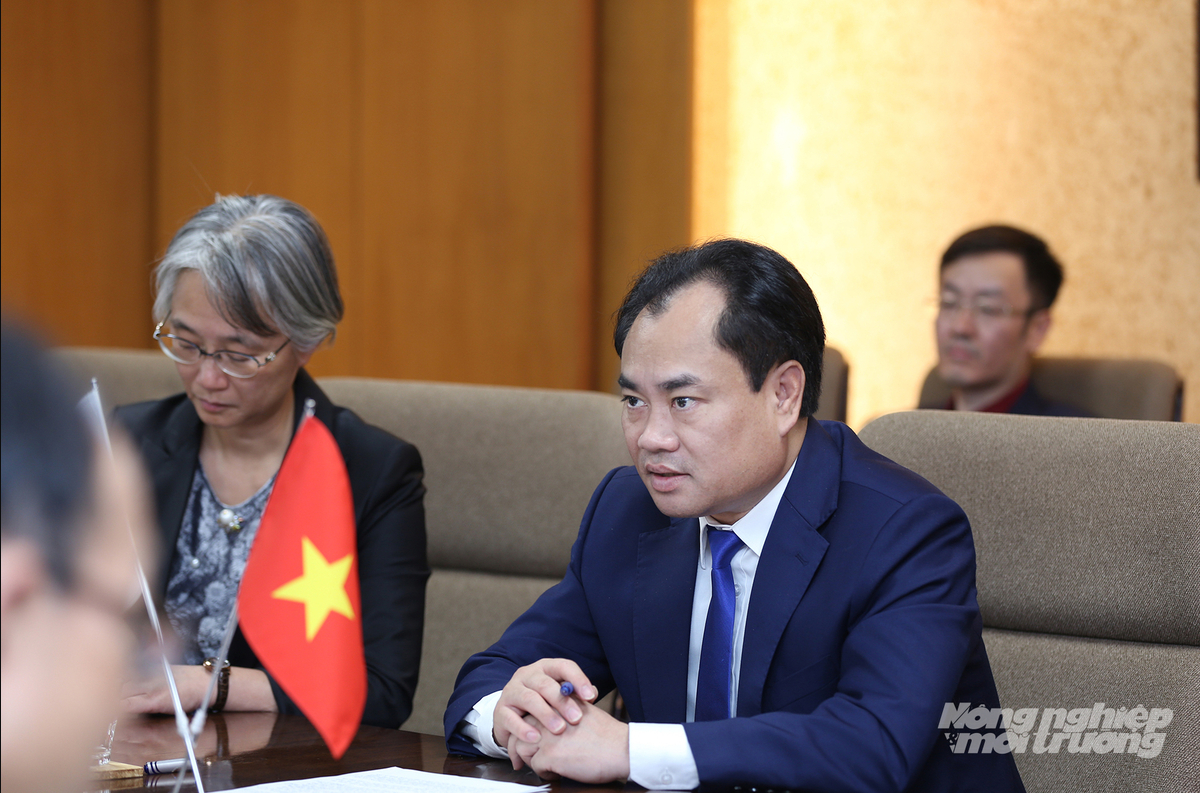 Minister Trinh Viet Hung proposed that Japan cooperate in researching effective rice straw treatment technologies that can reduce emissions and are suited to Viet Nam's practical conditions. Photo: Khuong Trung.
Currently, measures to utilise rice straw, such as using it for livestock feed, mushroom cultivation and compost production, only handle around 5-10% of the total volume generated. According to the minister, rice straw treatment remains a difficult challenge, with no truly optimal solution yet available. If incineration technology is used to recover energy, the amount of heat generated is relatively low, while the process produces a large volume of ash and slag.
Highlighting Japan's technological capabilities in waste treatment and energy recovery, Minister Trinh Viet Hung proposed that Japan study and support Viet Nam in identifying suitable technological solutions, focusing on two key issues: improving energy recovery efficiency from rice straw and treating the ash and slag generated after incineration.
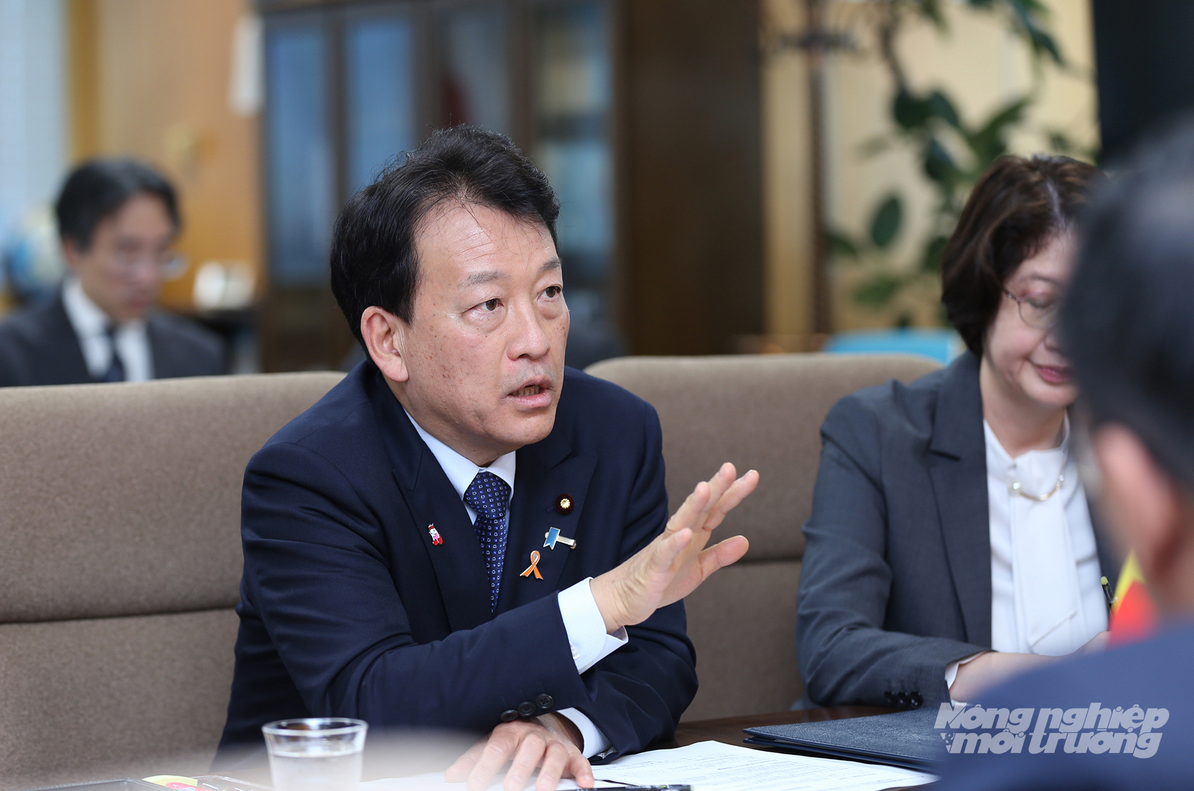 Japanese Minister of the Environment Hiroyoshi Sasagawa affirmed that he would seriously consider Viet Nam's proposal and study appropriate support solutions. Photo: Khuong Trung.
Responding to the proposal, Japanese Minister of the Environment Hiroyoshi Sasagawa said that Japan also faces similar challenges to Viet Nam in treating waste from rice straw. He affirmed that he would seriously consider Viet Nam's proposal and study appropriate solutions to support the country.
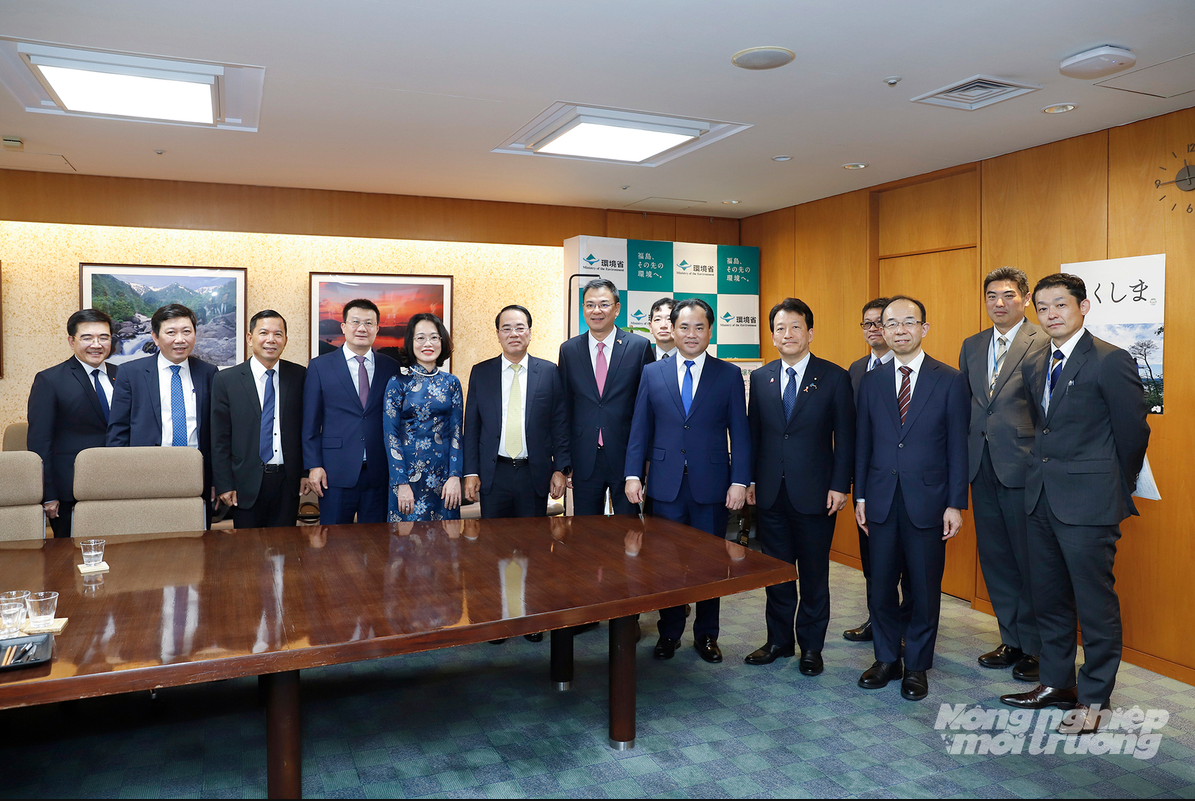 The Vietnamese Ministry of Agriculture and Environment delegation poses for a group photo. Photo: Khuong Trung.
The two ministers concluded the meeting by reaffirming their commitment to further strengthening Viet Nam-Japan cooperation on environmental protection and climate change response, building on the strong ties between the two countries and contributing to their respective sustainable development goals.
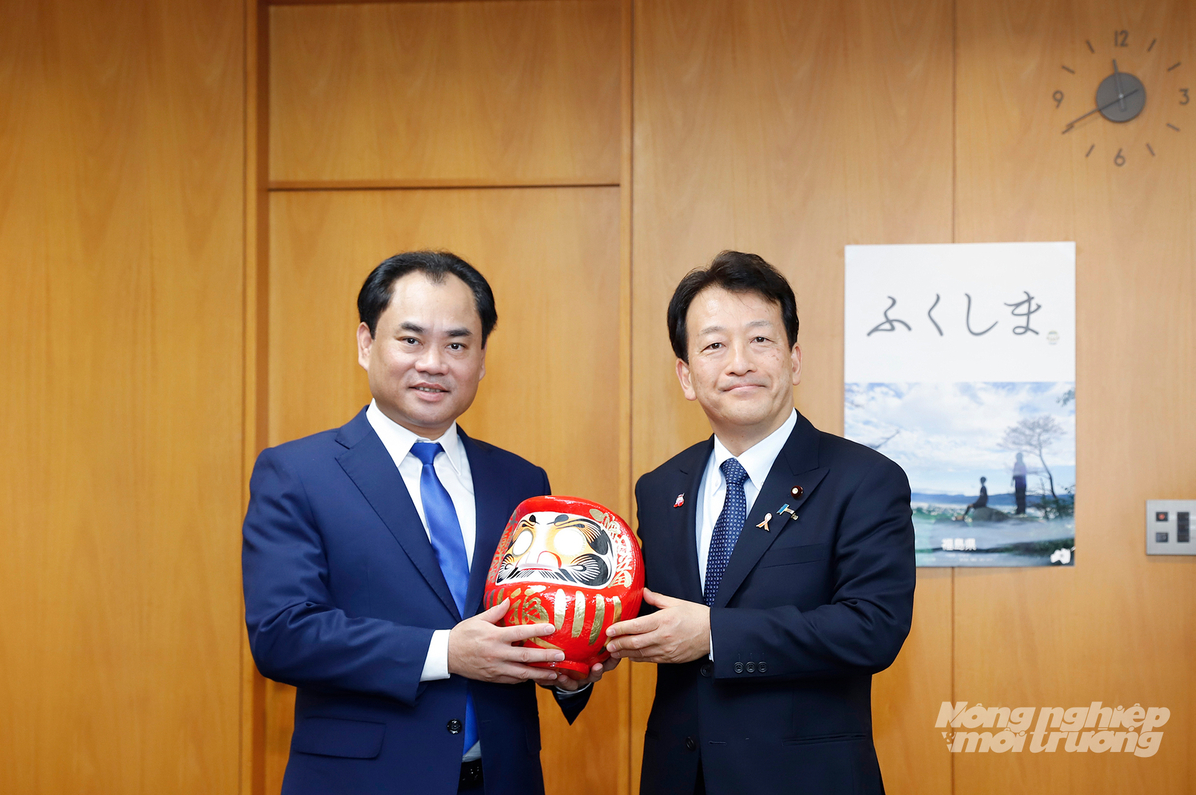 Japanese Minister of the Environment Hiroyoshi Sasagawa presents a commemorative gift to Minister Trinh Viet Hung. Photo: Khuong Trung.
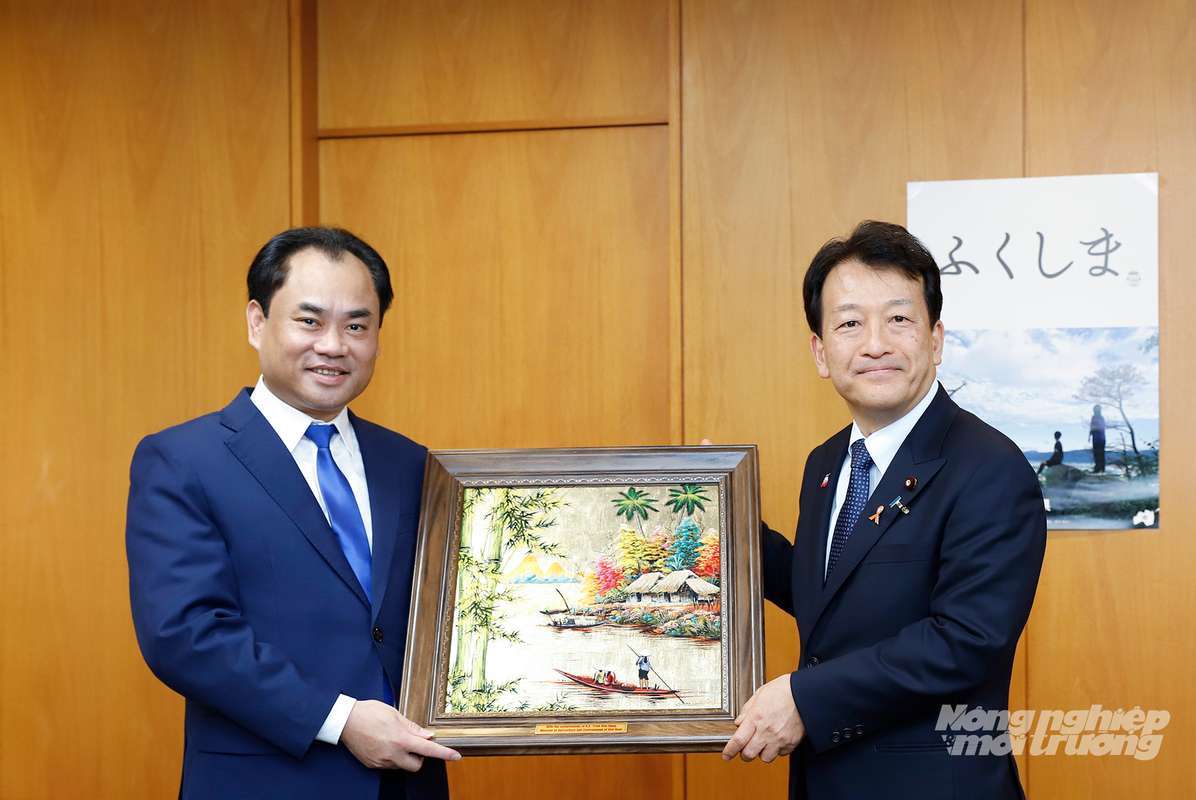 Minister Trinh Viet Hung presents his Japanese counterpart with a lacquer painting depicting a Vietnamese rural landscape. Photo: Khuong Trung.