The Government has issued the National Action Plan for Implementing the Circular Economy by 2035 under Decision No. 222/QD-TTg (dated January 23, 2025). One of its key objectives is to enhance resource efficiency to levels comparable with the leading ASEAN countries.
Ambitious goals
The plan sets ambitious goals, including reducing the exploitation of non-renewable resources and water while improving the efficiency of land, water, and mineral use. By 2030, the Government aims to increase resource efficiency, minimize waste, and promote energy savings, striving to match the top ASEAN economies in sustainable resource management.
The capacity of biomass and solid waste power plants is set to reach 2,270 MW (1.5% of total power capacity), while renewable energy will account for 47% of total primary energy consumption. The plan also targets 8-10% energy savings nationwide.
In waste management, the Government aims to collect and treat 95% of urban solid waste and 80% of rural solid waste, reducing the proportion of waste sent to landfills to below 50%. At the same time, efforts will be made to extend the lifespan of materials, equipment, and products, thereby limiting waste generation and minimizing environmental impact.
By 2035, Viet Nam envisions an inclusive, innovation-driven circular economy that ensures economic prosperity, environmental sustainability, and social equity. The country aims to become a regional hub for technology, investment, and services related to the circular economy, contributing to the sustainable development of the ASEAN Economic Community.
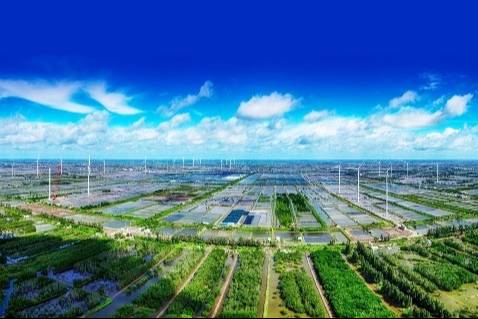 Viet Nam strives to become one of the innovation centers, providing technology, equipment, products, and services and mobilizing investment capital for the circular economy in the ASEAN Economic Community (AEC).
Priority Sectors
The Government has identified key sectors for circular economy implementation by 2035, including agriculture, forestry and fisheries; energy; mineral extraction and processing; manufacturing; chemicals; construction; transportation; services and tourism; waste management; and urban and industrial development.
Establishing Markets for Circular Economy Goods
A key focus is to promote circular economy adoption in production, business, and consumption. This includes supporting eco-friendly product design, encouraging circular business models, and applying advanced sustainable production technologies.
The Government aims to drive innovation, expand digital and environmentally friendly technologies, and support the formation of markets for circular economy goods and services. Additionally, promoting circular consumption while ensuring consumer rights is a priority.
To strengthen waste management within the circular economy framework, the Government will pilot, expand, and develop sustainable waste management models, promote investment in waste management, and encourage resource recovery.
Enhancing Standards and Regulations
Building and refining legal frameworks, policies, and state management efficiency are crucial steps for circular economy implementation. The Government has instructed ministries, ministerial-level agencies, and localities to develop action plans that integrate circular economy principles into national strategies, planning, and development programs.
In the coming years, efforts will focus on improving legal regulations, standards, and technical guidelines to encourage circular economy adoption and ensure sustainable growth.