The Ministry of Agriculture and Environment (MAE) is developing a low-emission crop production plan with the goal of reducing methane (CH₄) emissions by 30% and overall greenhouse gas emissions from the crop sector by at least 10% by 2030, compared to the base year of 2020. This will be achieved through the application of appropriate technical measures tailored to each ecological zone and crop group.
By 2030, the plan targets a minimum of 2.5 million hectares of cultivated land adopting low-emission farming practices, with a focus on concentrated commodity production regions. By 2023, Vietnam aims to establish a greenhouse gas emissions database for crop production - classified by crop type, ecological zone, and technical practice -contributing to the development of a carbon market.
To implement the plan, MAE will develop communication materials, disseminate knowledge, and promote behavioral changes among farmers toward low-emission practices. It will also organize training sessions on techniques, policies, and emissions measurement tools for technical staff, agricultural extension workers, and farmers nationwide.
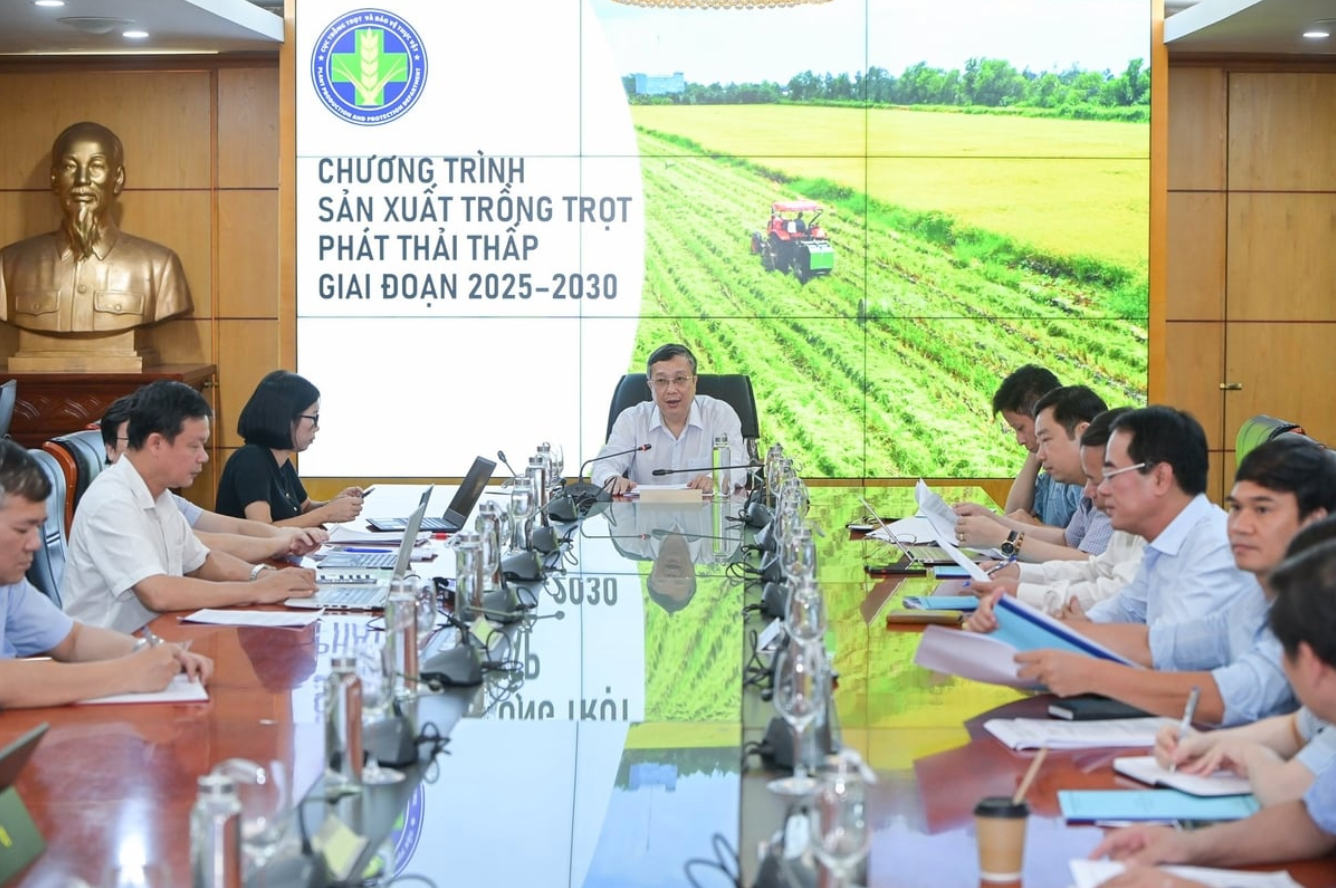 Deputy Minister of Agriculture and Environment Hoang Trung chaired the meeting to develop low-emission crop production plan. Photo: Tung Dinh
Deputy Minister Hoang Trung emphasized that low-emission crop production should serve the goals of fulfilling Vietnam’s Nationally Determined Contributions (NDC), shifting farming practices toward reduced input use, sustainability, and environmental friendliness. He also called for the development of a low-emission agricultural brand, promoting the crop sector’s responsibility to the environment and future generations.
The drafting committee is expected to design emission-reduction cultivation procedures for each crop and ecological region, thereby establishing a standard MRV (Measurement, Reporting, and Verification) system that meets international scientific standards and recognition.
These standards will be reflected in legal documents guiding local implementation and enabling emissions accounting for every stage of the production process. Participating in low-emission production is not only a way for farmers to contribute to the country’s NDC commitments, but also helps build the Vietnamese agricultural brand, reduce input costs, and improve economic efficiency.
When both management agencies and farmers achieve emission reduction goals in crop production, Vietnam will attract greater attention, engagement, and resources from international organizations.