Closer cooperation between scientists and local authorities is opening new pathways for urban agricultural development, focusing on higher value production and digital transformation.
On the afternoon of March 24, the Viet Nam National University of Agriculture (VNUA) and Gia Lam Commune in Ha Noi signed a cooperation agreement covering four key areas: agricultural development, digital transformation, human resource training, and public security and environmental management.
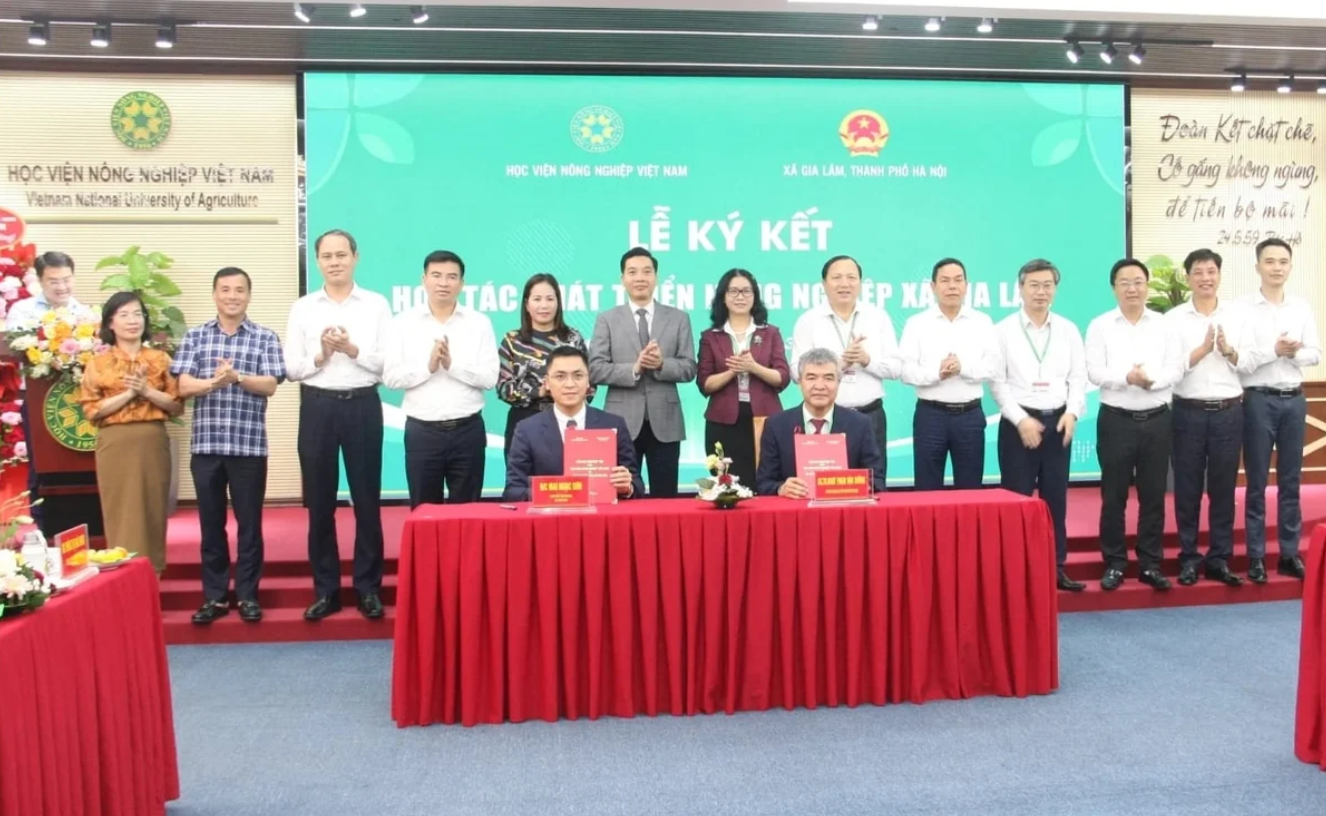 The Viet Nam National University of Agriculture and Gia Lam Commune (Ha Noi) launched a cooperation programme, agreeing on four key areas for agricultural development. Photo: Mai Dan.
 Connecting science and local governance to advance agriculture
Speaking at the event, Prof. Nguyen Thi Lan, Director of the Viet Nam National University of Agriculture, said deeper cooperation with local authorities is needed as governance structures change and development demands grow.
According to Ms. Lan, close collaboration between universities and local governments not only improves the quality of training but also helps bring scientific and technological advances into practical production.
Meanwhile, Mr. Nguyen Viet Ha, Member of the Ha Noi Party Committee and Secretary of the Gia Lam Commune Party Committee, said Gia Lam Commune was recently formed through the merger of several administrative units and now has a population of around 100,000. With rapid urbanisation, it aims to develop high-quality agriculture, promoting plant varieties with clear origins and applying digital technologies in production and marketing.
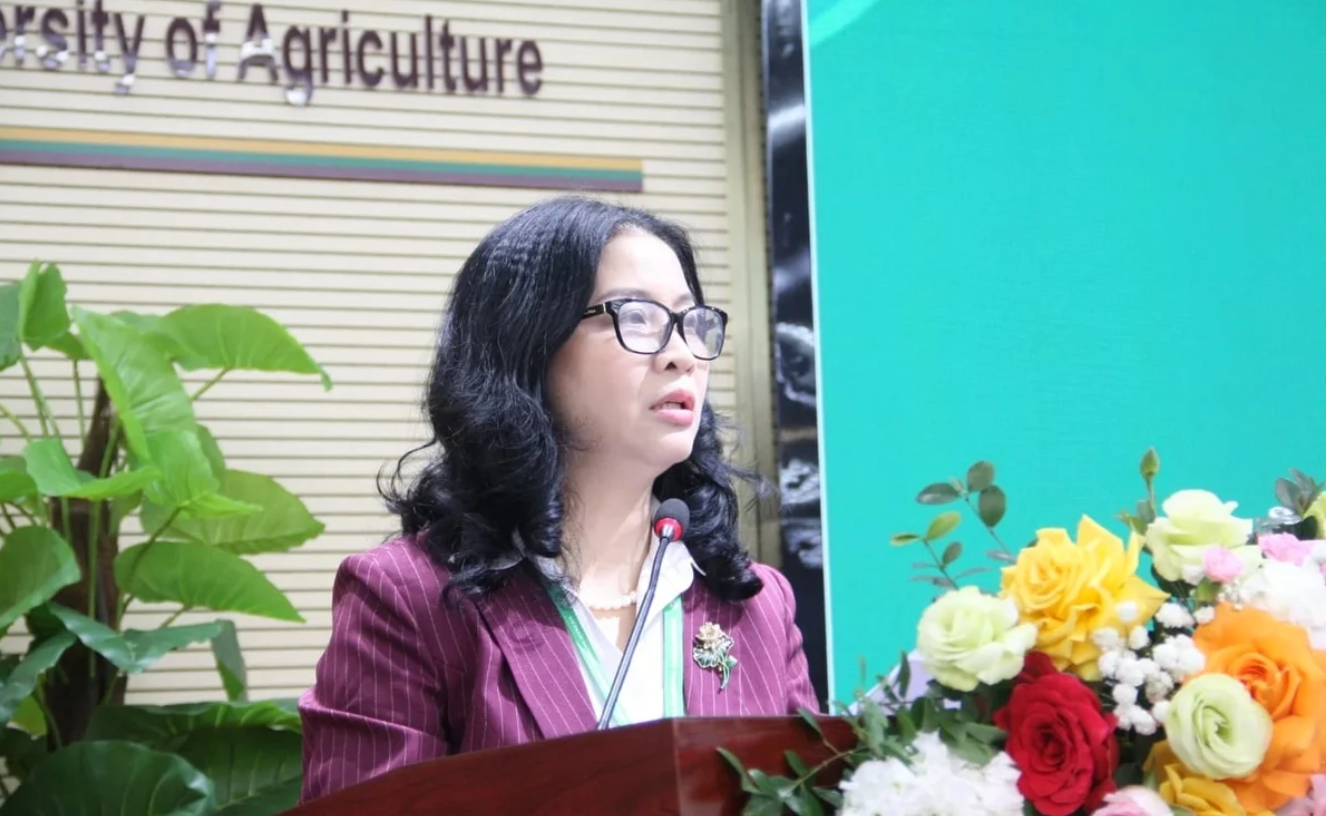 Prof. Dr. Nguyen Thi Lan, Director of the Viet Nam National University of Agriculture, speaks at the event. Photo: Mai Dan.
He added that Gia Lam’s key advantage is being home to the Viet Nam National University of Agriculture. This provides a strong foundation for research and technology transfer, supporting modern agricultural value chains that connect with urban development.
In practice, science, technology and innovation are increasingly vital to sustainable agricultural development. By applying advanced technologies and using research results in production, many localities have improved productivity, product quality and the competitiveness of their agricultural products.
From plant breeding to agricultural value chains
A key focus of the cooperation programme is setting up a plant variety centre in Gia Lam. According to Assoc. Prof. Dr. Tran Hiep, Head of the Science and Technology Department at VNUA, the model aims to strengthen capacity for producing and supplying seeds in a more modern and transparent way, ensuring a stable supply of high-quality plant varieties for the northern region.
Developing high-quality plant varieties is a key step toward higher-value agriculture. Studies show that advances in plant breeding technologies can help ensure food security, support climate adaptation and increase farmers’ incomes.
In addition, the cooperation programme will promote e-commerce for agricultural products, particularly OCOP (One Commune One Product) items. The two sides plan to work with several selected cooperatives to standardise production processes, strengthen branding and develop product stories to enhance market value.
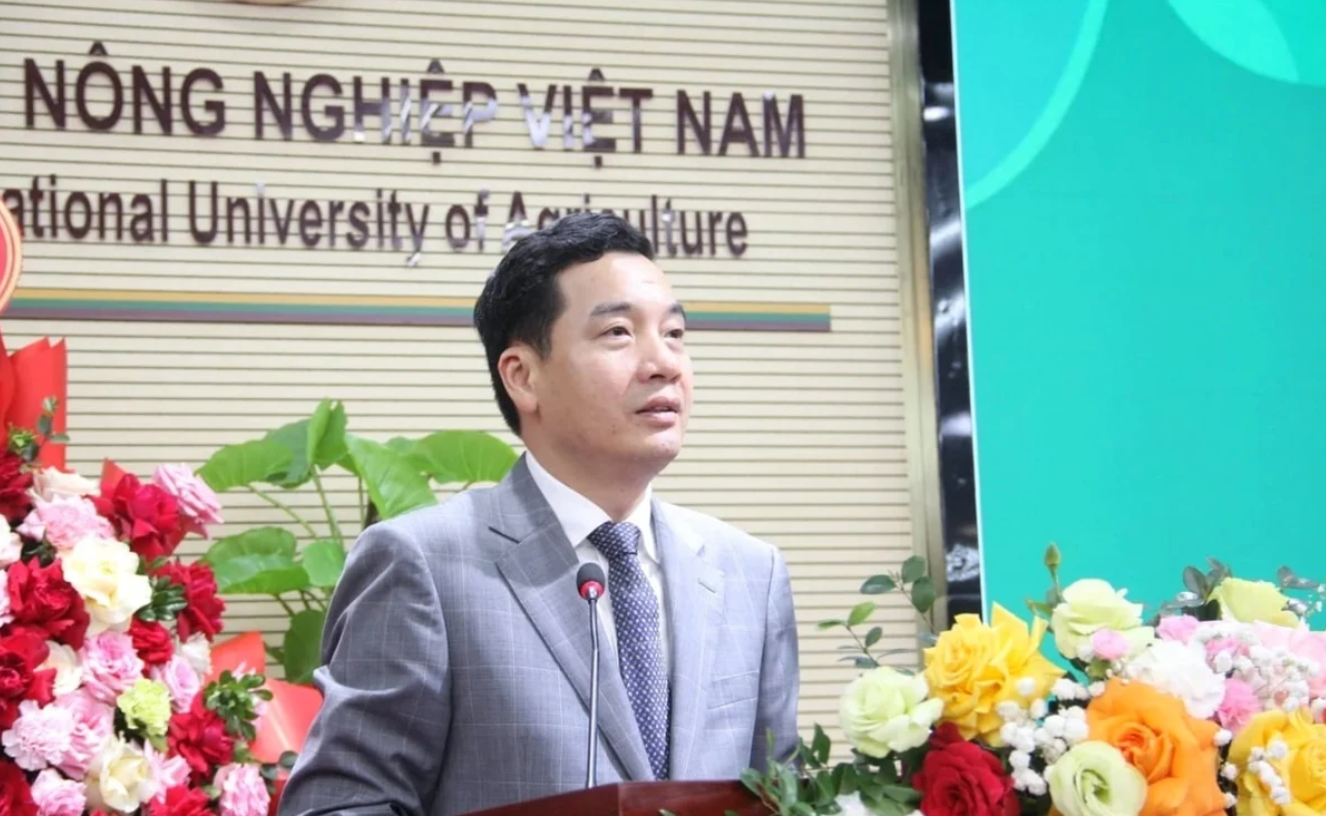 According to Mr. Nguyen Viet Ha, Secretary of the Gia Lam Commune Party Committee, the commune aims to develop high-quality agriculture, promoting plant varieties with clear origins and applying digital technologies in production and marketing. Photo: Mai Dan.
Mr. Duong Viet Cuong, Chairman of the Gia Lam Commune People’s Committee, said that despite rapid urbanisation, the commune still has a large area of farmland that needs more modern and efficient development. Therefore, the commune will work closely with the university to set up a joint working group for the cooperation programme and gradually build a shared brand for local agricultural products.
Alongside production development, human resource training is considered another key pillar. Training programmes for local officials, businesses and cooperatives will help enhance management capacity and promote the application of digital technology in administrative procedures as well as production and business activities.
From the perspective of Party work and community development, Ms. Phung Thi Hoai Huong, Deputy Secretary of the Gia Lam Commune Party Committee, suggested the university expand experiential learning and career guidance programmes for local students to spark interest in agriculture and nurture future agri-professionals.
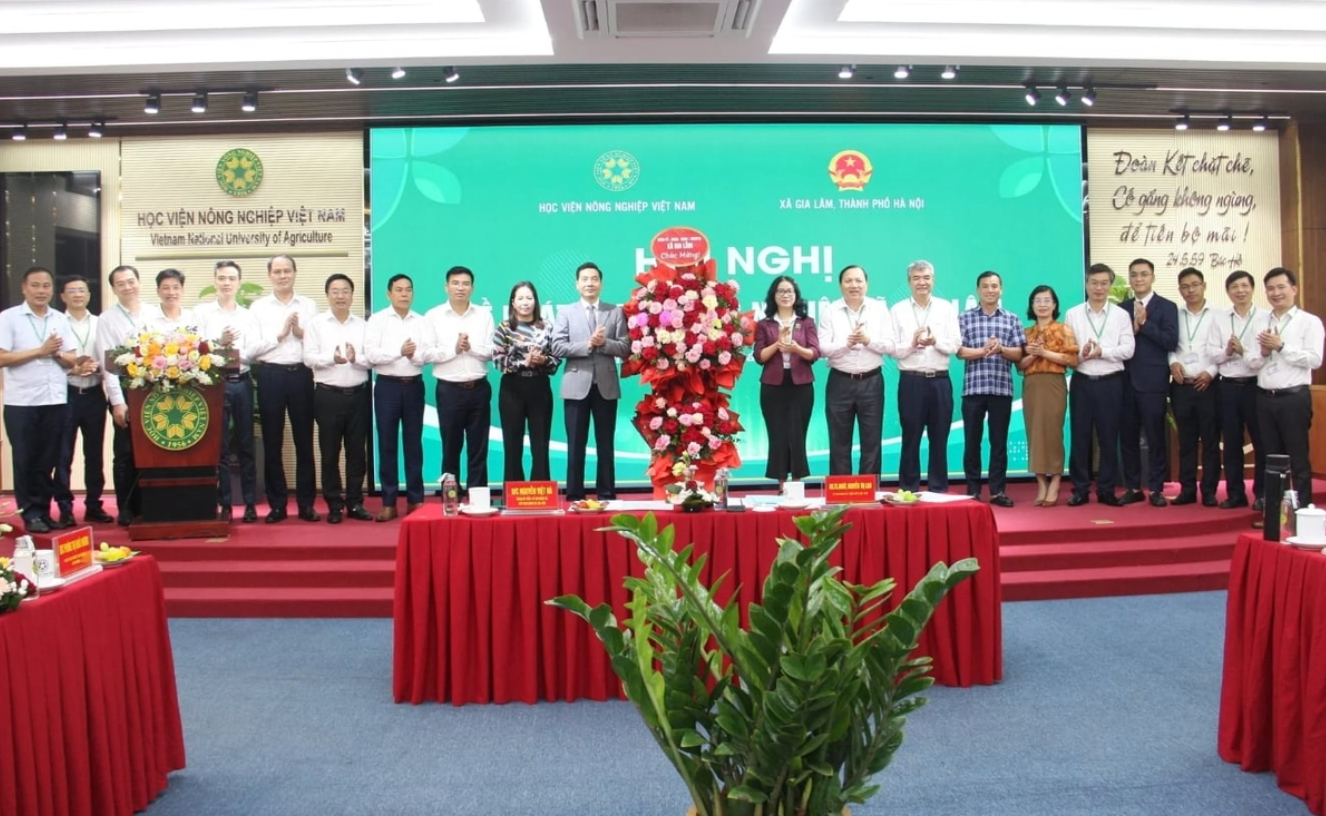 Close cooperation between the university and local authorities strengthens training and turns scientific and technological achievements into practical results. Photo: Mai Dan.
At the event, Mr. Nguyen Viet Ha outlined four key areas of cooperation between the two sides: establishing the Gia Lam Plant Variety Centre; promoting e-commerce for agricultural and OCOP (One Commune One Product) products; training skilled human resources; and strengthening coordination in public security and student management.
He also proposed a four-step roadmap for implementation: signing a memorandum of understanding; setting up a joint working group to coordinate activities; developing a detailed plan with clear tasks, timelines and goals; and carrying out the plan with regular meetings and periodic reviews.
Regarding the plant variety centre, Mr. Ha noted that the centre’s immediate priority is to consolidate existing seed supply facilities - managed by the university, local cooperatives and households - while ensuring traceability and quality control.
At the conclusion of the ceremony, Prof. Nguyen Thi Lan welcomed the proposals from the commune leadership and urged swift action on the agreed cooperation activities to boost local agricultural and rural development.