On May 26 in Hue city, the Center for Social Research and Development (CSRD), in collaboration with Oxfam in Vietnam, launched the "Water Resource Governance and Enhancing Climate Resilience" project under the Mekong Water Governance Program Phase 3 (Mekong Inclusion Project Phase 3 - IP3).
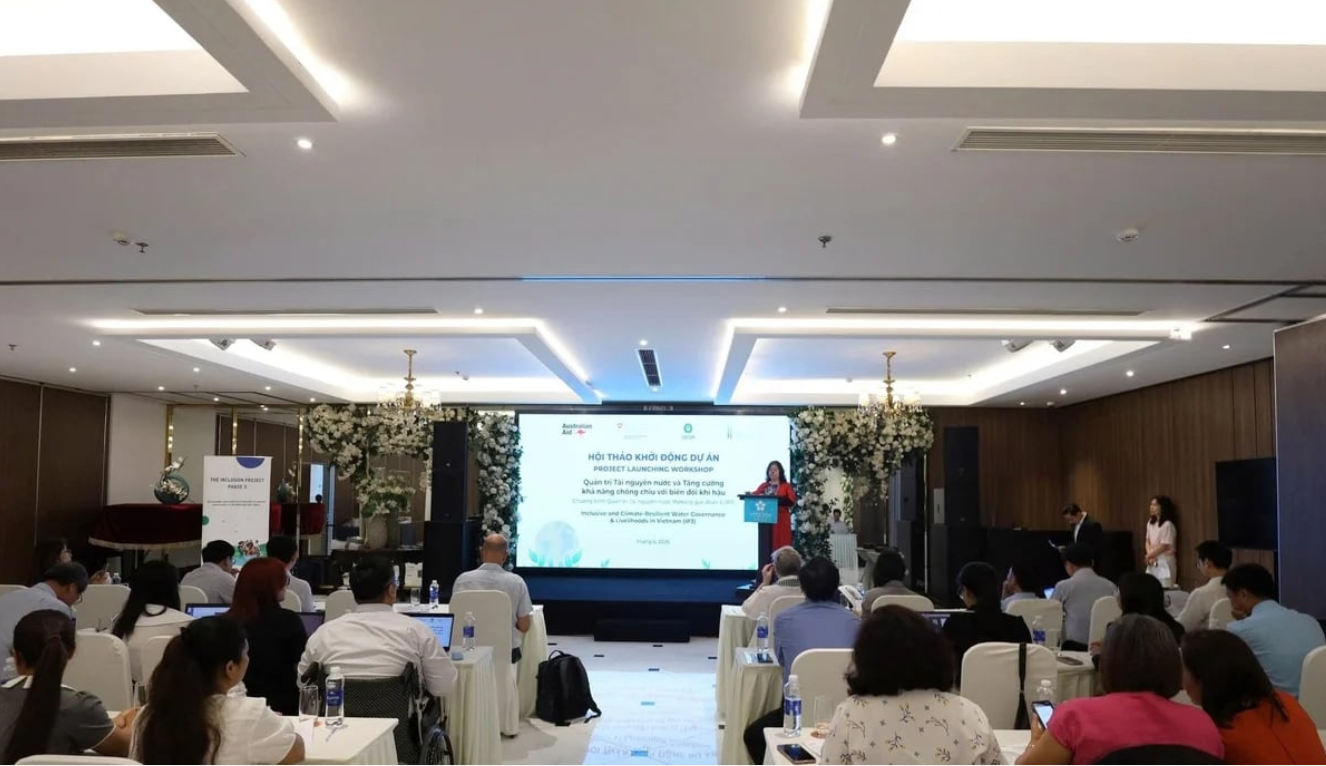 The inception workshop of the "Water Resource Governance and Enhancing Climate Resilience" project. Photo: V.D.
Funded by the Australian Department of Foreign Affairs and Trade (DFAT) and the Swiss Agency for Development and Cooperation (SDC) through Oxfam, IP3 is implemented in five countries: Cambodia, Thailand, Laos, Vietnam and Myanmar.
IP3 focuses on integrating water resource governance with climate resilience to create regional policy impacts, improving sustainable livelihoods and the resilience of riverside communities in the Mekong sub-region. The total non-refundable grant for the project in Vietnam is $506,276 (equivalent to 13.34 billion VND), implemented from 2025 to 2029.
In Vietnam, the IP3 project is managed by Oxfam in Vietnam and co-implemented with three partners: the Center for Social Research and Development (CSRD, based in Hue City), the Hanoi Association of People with Disabilities (DP Hanoi) and the Mekong Institute at Can Tho University.
The IP3 project aims to ensure access for women, ethnic minorities, people with disabilities and vulnerable communities to essential water resources for sustainable livelihoods in the Sekong River basin and the Mekong Delta through strengthening inclusive water governance in Hanoi, Hue, Can Tho and Ca Mau. It will support the development and replication of at least 7 climate-resilient livelihood models (rice-shrimp, shrimp-mangrove, brackish water aquaculture) in the Mekong Delta, and 5 climate change-adaptive livelihood models, including aquaculture, integrated crop-livestock-aquaculture models or community-based eco-tourism in the Sekong River basin.
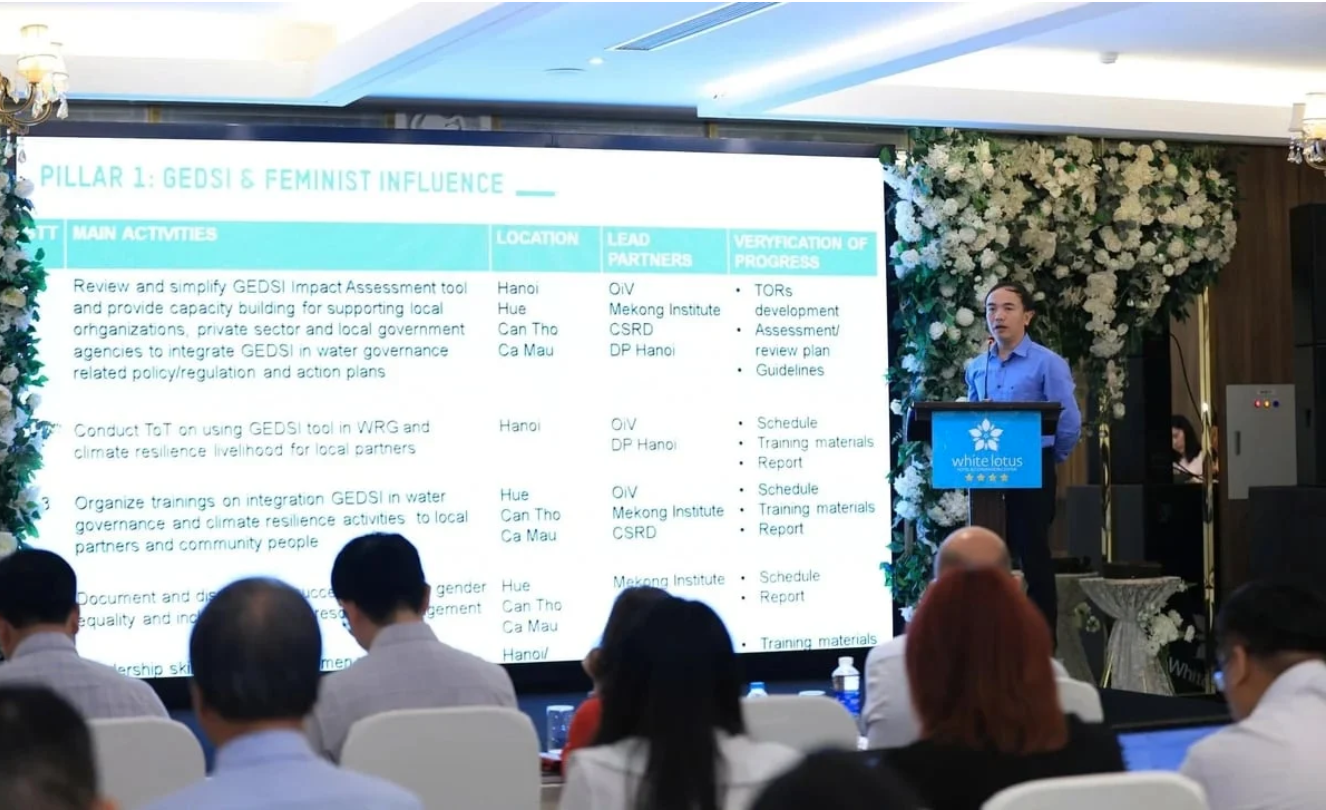 IP3 focuses on integrating water governance with climate resilience to create regional policy impacts, improving sustainable livelihoods and resilience of riverside communities in the Mekong sub-region. Photo: V.D.
The three component projects of IP3 in Vietnam include: "Enhancing climate change resilience and water resource governance capacity for riverside communities in the A Sap River basin, Hue City - Vietnam through aquatic biodiversity protection and development of climate-adaptive sustainable livelihood models" (implemented by CSRD); "Enhancing the inclusion of people with disabilities in water resource governance and climate change adaptation in Vietnam" (implemented by DP Hanoi); and "Water resource governance and climate-adaptive livelihoods in the Mekong Delta, Vietnam" (implemented by the Mekong Institute).