HCMC is accelerating the transition to circular industry by transforming industrial parks into eco-industrial zones, fostering industrial symbiosis, and expanding international partnerships for green manufacturing.
According to Sai Gon Giai Phong newspaper, HCMC has established 67 export processing zones (EPZs) and industrial parks (IPs), of which 58 are currently in operation with an occupancy rate of around 80%. The city is now transforming conventional industrial parks into eco-industrial and circular industrial parks to optimize resource use, promote industrial symbiosis, and reduce greenhouse gas emissions.
Tran Viet Ha, Deputy Head of the HCMC Export Processing and Industrial Zones Authority (HEPZA), said the transition will not only reduce the amount of waste sent to landfills but also encourage the adoption of environmentally friendly technologies and strengthen carbon emissions monitoring and accounting.
A key driver of this transformation is the "Implementation of Eco-Industrial Parks in Viet Nam under the Global Eco-Industrial Parks Programme (GEIPP)", launched in 2020. The project is jointly implemented by the United Nations Industrial Development Organization (UNIDO) and Viet Nam's Ministry of Finance (formerly the Ministry of Planning and Investment), with funding from the Swiss State Secretariat for Economic Affairs (SECO).
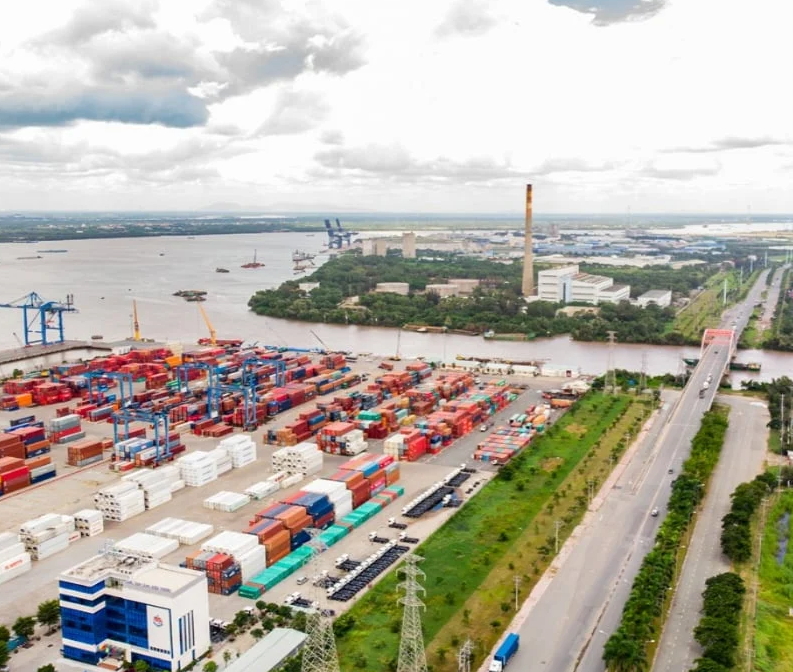 Hiep Phuoc Industrial Park is a pioneer in industrial symbiosis, advancing circular manufacturing and low-emission production. Photo: Hiep Phuoc Industrial Park.
Hiep Phuoc Industrial Park is among the pioneers in developing industrial symbiosis to support circular production and low-emission manufacturing. Through the project, businesses have gradually adopted resource-sharing practices, allowing them to exchange and reuse raw materials, energy, water, by-products, and waste. The initiative has improved environmental performance, raised awareness of green manufacturing, and identified more than 100 industrial symbiosis opportunities among enterprises operating in the park.
Phu My 3 Specialized Industrial Park is also advancing as an eco-industrial park based on circular economy principles. Covering nearly 1,000 hectares, it has completed the application process to become Viet Nam's first officially recognized eco-industrial park. The park is integrating smart management technologies to improve resource efficiency while working toward the country's net-zero emissions target by 2050.
Alongside expanding domestic models, HCMC is strengthening international cooperation to accelerate its transition to a circular industrial economy.
Speaking at the German-Vietnamese Business Forum on Circular Economy in Manufacturing, Andrea Sühl, Consul General of Germany in HCMC, said businesses need to redesign products and production processes to extend material life cycles and achieve sustainable development. Germany is ready to support Viet Nam through technology transfer, knowledge sharing, and long-term investment.
From a business perspective, Bosch Vietnam highlighted data, artificial intelligence (AI), and smart factory technologies as key enablers to improve energy efficiency, reduce emissions, and advance circular manufacturing.
Meanwhile, Poland's GreenEvo programme introduced a range of technologies for carbon emissions reduction, waste recovery, recycling, and resource circularity. These partnerships are expected to help Vietnamese enterprises gain access to advanced technologies, accelerate the transition to circular industry, and strengthen their competitiveness in global green supply chains.