Following the merger, Thai Nguyen province’s planned forestry land by 2030 exceeds 577,000 hectares (ha), including 64,520 ha of special-use forests, 116,760 ha of protection forests and 396,000 ha of production forests.
In the 2021-2025 period, the forestry production value increased by an average of 6.5%. Concentrated afforestation reached 39,700 ha; the forest area granted Forest Stewardship Council (FSC) sustainable forest management certificates totaled 37,532 ha; and the entire province boasts 42,060 ha of large timber plantations.
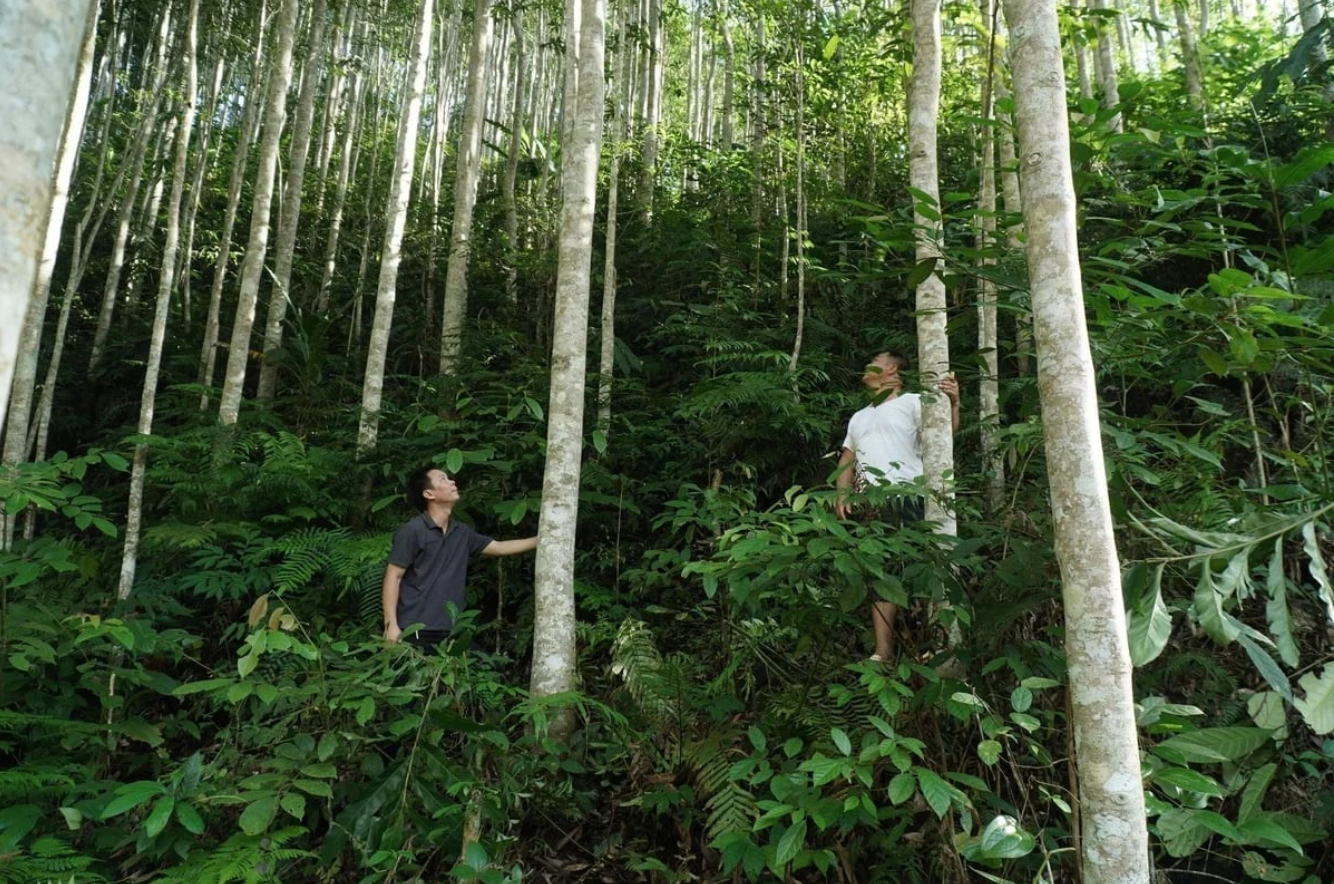 Growing large timber forests in Nghia Ta commune, Thai Nguyen province. Photo: Ngoc Tu.
Thai Nguyen’s forestry sector has undergone significant transformation in recent years, with an increasing number of key crop planting zones of high economic value, typically cinnamon (over 11,600 ha) and star anise (3,407 ha). In addition to afforestation, the province's wood-processing industry has grown rapidly in both quantity and quality. The locality currently houses 746 forest product processing and trading establishments.
Several major companies have invested in deep processing, such as Dongwha Vietnam JSC investing in MDF board production with a capacity of 300,000 m3/year; Hoang Van Thu Paper JSC producing 100,000 tons of products/year; Viet Bac Plywood Company producing 30,000 tons of products/year; Lechenwood Vietnam Co., Ltd., Govina Investment JSC, and more. The province's forest products have been exported to the US, EU, Japan, South Korea, Malaysia and China.
For the 2026-2030 period, Thai Nguyen aims to restructure the agricultural sector by increasing the proportion of forestry. By 2030, this sector will account for 8.5 - 9% of the total intra-sectoral structure, maintain an average growth rate of over 5.5%/year and stabilize forest coverage above 60%.
To increase the value of plantation timber, Thai Nguyen focuses on developing large timber forests and issuing sustainable forest management certificates. By 2030, the area of large timber forests and FSC-certified forests will reach 20% of the total production plantation area.
The province will complete land and forest allocation and forest leasing linked to issuing forestry land use right certificates, ensuring all planned forestry land and forests are allocated or leased to forest owners. The annual afforestation area will reach 6,000 ha, with an average timber harvest output of 700,000 m3/year.
Value will gradually increase by raising the utilization rate of local raw timber, encouraging the use of plantation timber (meeting FSC standards) and gradually reducing the proportion of imported raw timber.
The province continues to implement projects investigating forest reserves and forest carbon stocks; develop forecast scenarios for forest carbon development potential; and focus on propagating, disseminating, guiding and enhancing capacity and information for stakeholders regarding forest carbon services.
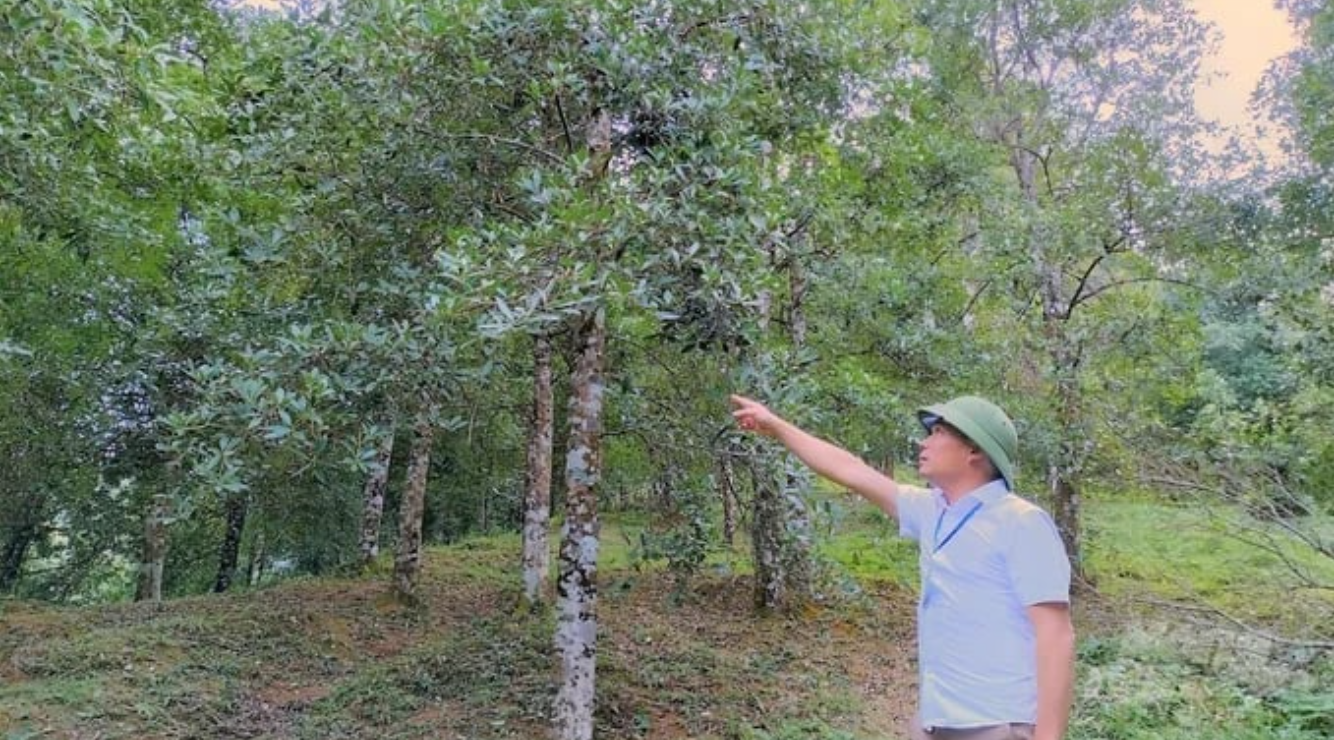 Star anise brings high economic value, its purchasing price has been quite stable in recent years. Photo: Ngoc Tu.
Regarding key forestry crops, Thai Nguyen focuses on forming and developing concentrated cinnamon growing areas oriented towards commodity production, enhancing added value and building the "Thai Nguyen cinnamon" brand. By 2030, the area under cinnamon cultivation will reach 18,000 ha.
Thai Nguyen will also allocate resources to develop concentrated star anise growing areas for commodity production. By 2030, the star anise area will reach 4,000 ha, concentrated in the communes of Na Ri, Cho Moi, and Bach Thong.
Parallel to developing planting zones, Thai Nguyen aims to attract enterprises with strong potential and high technology to participate in the deep processing of cinnamon and star anise products, ensuring that certain processed products qualify for export.