According to Dr. Vinod Ahuja, transforming food systems requires focusing on interconnections, balancing trade-offs and co-benefits, and enhancing coordination among stakeholders.
On August 18, the Ministry of Agriculture and Environment, in collaboration with the Food and Agriculture Organization of the United Nations (FAO), organized a National Training on Food Systems Transformation to strengthen the capacity of government agencies and promote cross-sectoral coordination in implementation.
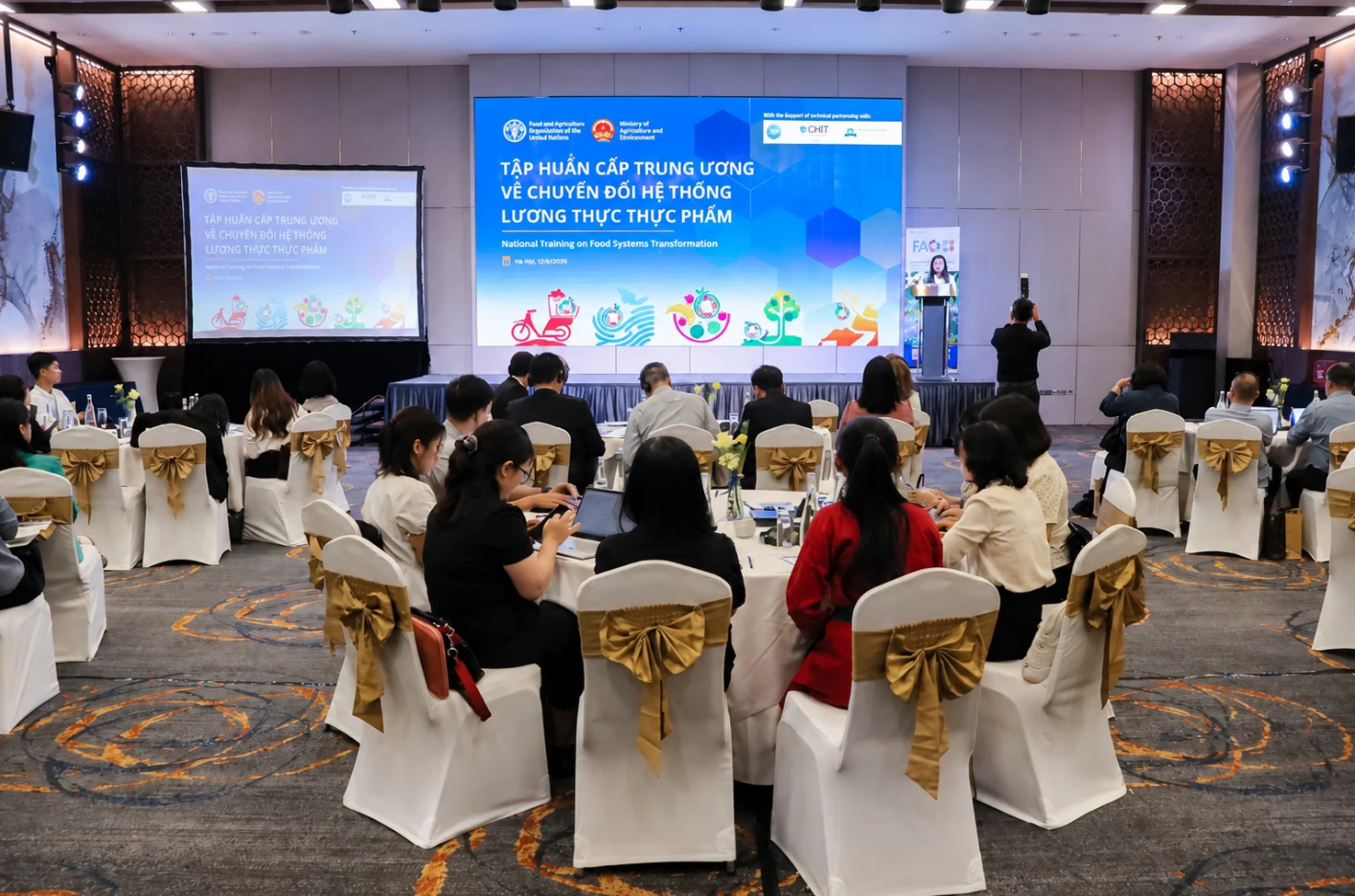 Overview of the National Training on Food Systems Transformation. Photo: Phuong Linh.
The challenge of shifting toward systems thinking
According to Dr. Vinod Ahuja, FAO Representative in Viet Nam, food systems are complex and closely interconnected, with agriculture, health, trade, the environment and social welfare all influencing one another. A policy designed to address an issue in one sector can sometimes create impacts in another.
As challenges related to food, nutrition, climate and natural resources become increasingly intertwined, solutions must also be designed from a holistic perspective. Drawing on FAO’s experience working with the Ministry of Agriculture and Environment and other partners, the FAO Representative in Viet Nam highlighted three aspects that require particular attention in the transformation process.
First is identifying linkages within the system. For example, decisions on rice varieties can affect water demand, influence salinity dynamics in the Mekong Delta, and shape the production capacity, income and nutrition of farming households.
Second is balancing trade-offs and maximizing shared benefits. A positive outcome in one area does not necessarily translate into benefits for another. Higher-yield production can put pressure on biodiversity, while efforts to enhance export competitiveness, without appropriate guidance, may affect the resilience of smallholder farmers.
“However, these trade-offs can be transformed into shared benefits if the system is designed appropriately. Identifying areas where synergies can be created among economic, social and environmental objectives will therefore be an important task in the transformation process,” Vinod explained.
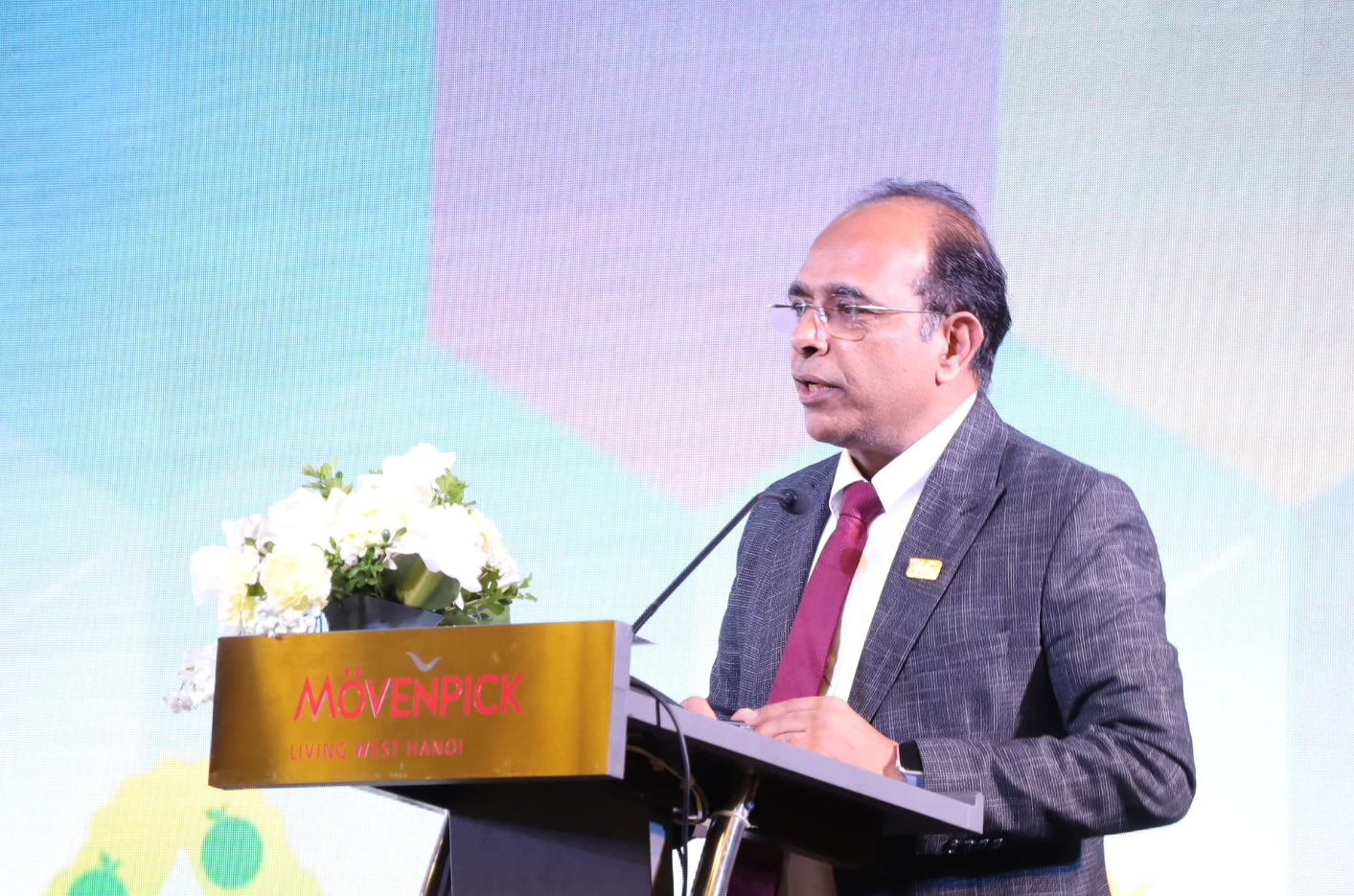 Dr. Vinod Ahuja said solutions for food systems transformation should be designed from a holistic, cross-sectoral perspective. Photo: Phuong Linh.
At the same time, the transformation process should prioritize coordination among ministries and sectors, as well as between central and local authorities, while integrating food systems priorities into sectoral policies and investment plans. It is also necessary to improve coordination in the use of public resources, ensure meaningful stakeholder participation, and strengthen monitoring, evaluation and knowledge sharing.
“Food systems transformation is not merely a technical issue but also a challenge of policy coordination, directly affecting farmers’ production decisions, consumers’ food choices, and cooperatives’ and businesses’ access to markets. A coherent policy system will help support these decisions rather than create barriers for people and stakeholders across the food system,” the FAO Representative in Viet Nam emphasized.
Applying a systems approach to policy and practice
Viet Nam has made significant achievements in ensuring food security and nutrition and developing its agricultural sector. However, the sector is facing increasingly interconnected challenges, ranging from climate change, natural disasters and resource depletion to the double burden of malnutrition.
According to Nguyen Do Anh Tuan, Director General of the International Cooperation Department, these challenges require a shift from a focus on increasing production to creating greater value through quality, diversity and food safety. With Decision No. 300/QD-TTg dated March 28, 2023 (NAP-300), Viet Nam has established a foundation for mobilizing participation and strengthening coordination among ministries, sectors, local authorities, and domestic and international partners.
 According to Director General Nguyen Do Anh Tuan, Decision No. 300/QD-TTg has provided a foundation for Vietnam to mobilize participation and strengthen coordination among ministries, sectors, local authorities and partners. Photo: Phuong Linh.
After 3 years of implementation, the Viet Nam Food Systems Transformation Partnership has brought together more than 50 partners, focusing on five technical areas: agroecology; nutrition and diversification of food supplies; reducing food loss and waste; responsible distribution and consumption; and policies and institutions. A monitoring and evaluation framework for implementing the National Action Plan has also been developed and piloted in production areas.
Notably, a review of 53 organizations found that more than 260 activities related to food systems transformation were implemented through various programs and projects during 2023-2026. This provides a basis for Viet Nam to further expand and deepen the transformation process in the coming years.
Looking ahead, Viet Nam will organize a review conference on the implementation of the NAP-300. It will also develop the Partnership for Climate-Resilient and Responsible Agri-Food Value Chains (P-CRAFT), which is expected to be launched at COP30. The initiative aims to share Viet Nam’s experience internationally and promote the development of sustainable agricultural and food value chains.
“Against the backdrop of organizational restructuring, strengthening the capacity of officials and experts at the central level is crucial, particularly in policy formulation, planning, strategy development and investment programs. Today’s training will equip participants with the knowledge and skills to apply a systems approach to policymaking, planning and investment projects. This will help strengthen cross-sectoral coordination and promote a more integrated, balanced and resilient transformation of Vietnam’s food systems,” he emphasized.
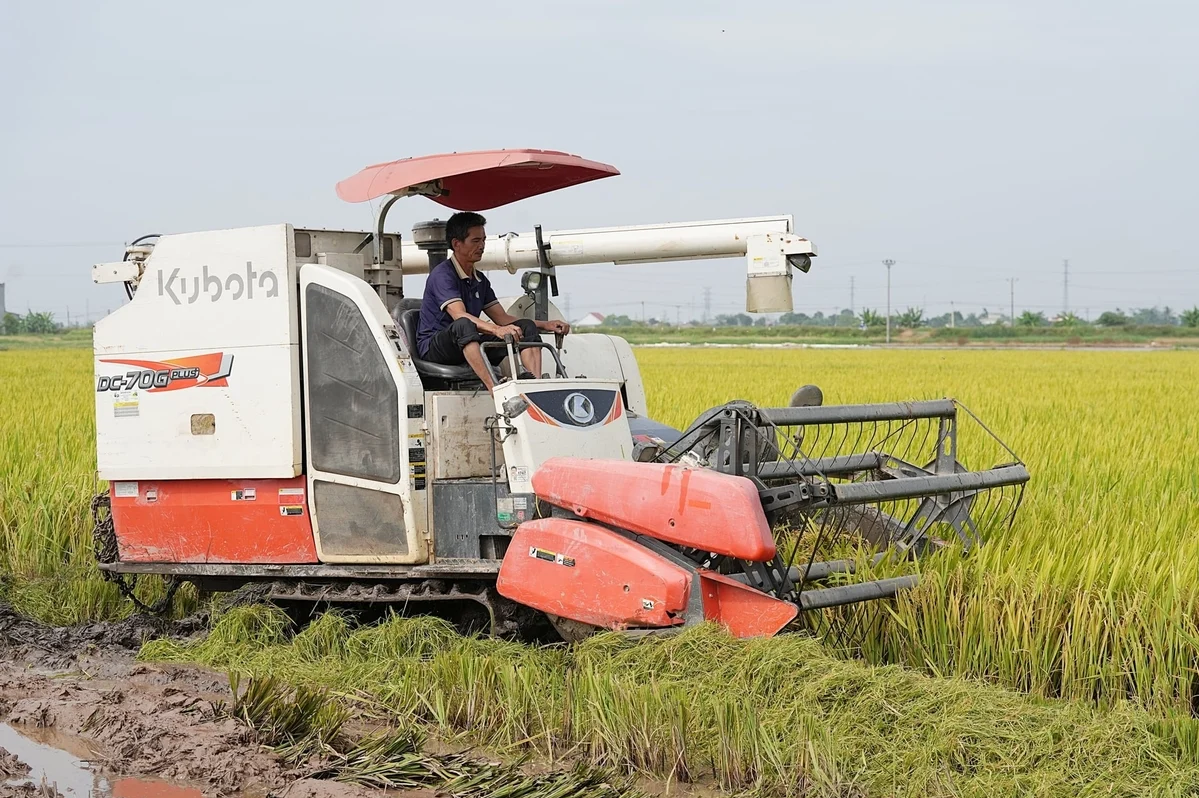 Viet Nam is shifting from a focus on increasing production to creating greater value through quality, diversity and food safety. Photo: Bao Thang.
Introducing the training program, Mark Mason Lundy, Global Research Director of the Food Systems and Consumer Behavior Group at the Alliance of Bioversity International and CIAT, said the major challenge today lies not in recognizing the need for transformation, but in translating the systems approach into practice.
Accordingly, the training course aims to address three key issues: integrating a food systems approach into planning, policymaking and investment; balancing trade-offs while maximizing synergies; and ensuring that national priorities are translated into tangible outcomes for farmers and consumers.
The program combines international tools and methodologies with practical experience at the national and local levels, along with hands-on exercises. This approach is designed to build a shared understanding and strengthen the capacity of policymakers, government officials and practitioners directly involved in implementation.