The course on sustainable coffee production and compliance with the EUDR has concluded in Pleiku Ward.
The training-of-trainers course mentioned above was organized by the Gia Lai Provincial Agricultural Extension Center in coordination with the SAFE Vietnam Project Management Board. The training aimed to develop master trainers in sustainable coffee production and compliance with the European Union Deforestation Regulation (EUDR).
Participants in the training included the Chairpersons of Farmers’ Associations from 30 communes and wards engaged in coffee production.
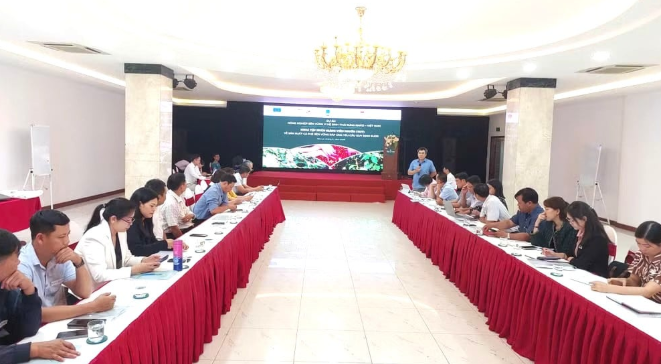 Training-of-trainers course on sustainable coffee production in Pleiku Ward (Gia Lai Province). Photo: DL.
The objective of this training course is to equip farmers with greater awareness of the EUDR, strengthen their understanding of land use in coffee production, and highlight risks related to unclear land tenure and land disputes.
In addition, the course also provides knowledge on ensuring strict compliance with EUDR, including traceability, legality, and risk mitigation in the coffee supply chain; as well as sustainable coffee production practices, soil health management, and Robusta coffee cultivation techniques.
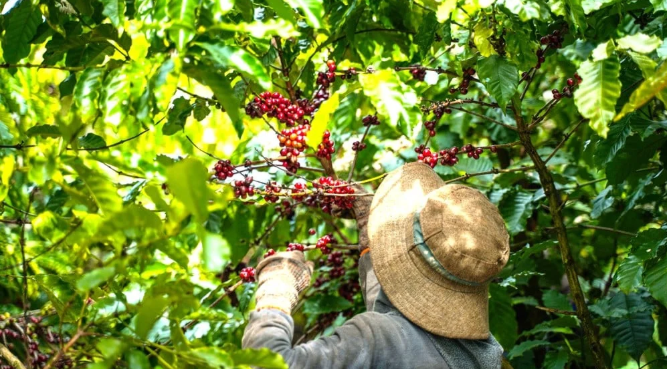 Coffee production in Gia Lai is moving toward compliance with EUDR regulations. Photo: DL.
Another important component highlighted in this training course is the promotion of occupational health and safety, as well as strengthening the capacity of master trainers at the local level so that they can serve as key communicators and instructors, guiding coffee farmers in producing according to export standards.
The “Sustainable Agriculture for Forest Ecosystems - Vietnam component” (SAFE Vietnam) project aims to drive a comprehensive transformation of the coffee supply chain toward legality, sustainability, and deforestation-free production. This, in turn, enhances the competitiveness of Vietnamese coffee in the EU market.
While the EUDR is a critical step toward sustainable supply chains, it poses a significant risk to smallholder farmers, potentially leading to exclusion from supply chains linked to EU market actors and resulting in significant economic and social consequences. Specifically, fragmented and scattered coffee plantations may hinder farmers’ ability to comply with EUDR.