40,000 people received training and close to 70,000 benefited from sustainable livelihood initiatives under the VFBC project.
The Viet Nam Sustainable Forest Management and Biodiversity Conservation Project (VFBC) is a collaborative initiative between the Government of Viet Nam and USAID, implemented during the 2021 - 2025 period. The project aims to promote sustainable forest management, conserve biodiversity, and improve the livelihoods of forest-dependent communities.
Recently, the implementing partners conducted the final acceptance and evaluation of the project's outcomes. VFBC was implemented in 11 former provinces: Lao Cai, Son La, Hoa Binh, Thanh Hoa, Nghe An, Ha Tinh (Vu Quang National Park), Quang Binh, Quang Tri, Thua Thien Hue, Quang Nam, and Lam Dong (Bidoup - Nui Ba National Park), as well as three national parks under the former Viet Nam Administration of Forestry (now under the Department of Forestry and Forest Protection): Cuc Phuong, Bach Ma, and Cat Tien. The project also included activities at the national level.
The overall objective of VFBC is to reduce greenhouse gas emissions and enhance carbon sequestration in Viet Nam's natural production forests and plantation forests, while conserving biodiversity in forest landscapes of nationally significant biodiversity value.
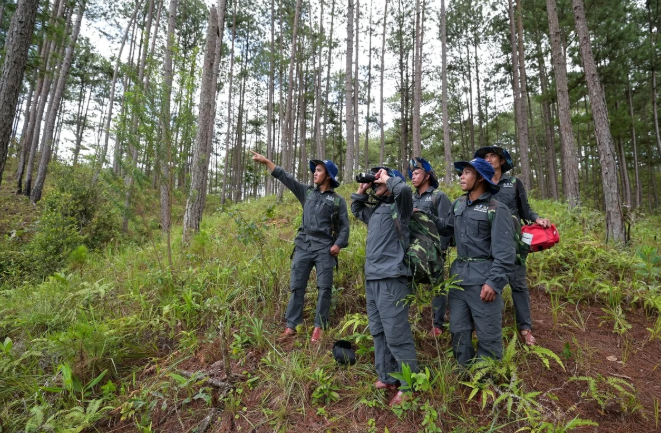 Members of a VFBC-supported forest patrol team carry out patrol duties in Lam Dong Province. Photo: Tung Dinh.
Many targets surpassed expectations
As of March 31, 2025, VFBC had completed more than 80% of the activities outlined in the Project Document, delivering significant achievements in forest resource management, biodiversity conservation, and sustainable livelihood development.
Of the project's 51 key performance indicators, 45 met the required targets. Among these, 35 exceeded their original goals, while the remaining 10 achieved between 20% and 80% of their targets and were successfully accepted through technical evaluation.
In the area of sustainable forest management, the project supported the effective management of 960,000 hectares of forest, fully achieving its target. Capacity-building activities also delivered outstanding results, with nearly 39,400 people receiving training well above the original target of 28,388 and 177 organizations strengthening their institutional capacity, more than double the planned number.
The project also supported the development and improvement of 65 policies related to forest management and biodiversity conservation, nearly twice the initial target.
Livelihood development and value chain initiatives generated substantial benefits for local communities. Nearly 67,900 people benefited from sustainable livelihood models, significantly exceeding the target of 40,900 beneficiaries.
All 35 planned enterprises received project support, while 100% of the targeted communities including 40 communities producing agricultural and non-timber forest products and nine community-based tourism groups, were successfully linked with businesses through value chains. These partnerships expanded market access for local products and helped increase household incomes.
The project also achieved its target of 50,000 forest patrol days, strengthening forest protection efforts and improving the monitoring of forest resources.
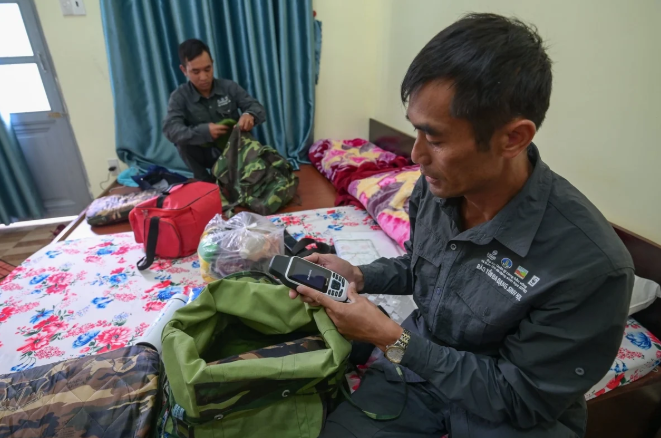 A member of the forest patrol team prepares a GPS device before heading out on patrol. Photo: Tung Dinh.
Some performance indicators fell short of their targets because the project was required to conclude earlier than originally planned. Specifically, only six of the planned 15 protected areas and protection forests completed sustainable management plans and established advisory committees. Conservation activities were implemented for two of the four targeted endemic species, while one species was successfully reintroduced into the wild.
The primary reason was the suspension of Official Development Assistance (ODA) funding by the U.S. Agency for International Development (USAID) beginning in January 2025. As a result, the project lost more than US$10.79 million in funding, representing approximately 43% of its total budget.
The funding cut prevented the implementation of all activities scheduled for the 2025-2026 period and left six performance indicators without sufficient data for assessment.
Despite ending two years ahead of schedule, the project completed all required acceptance, handover, and close-out procedures, ensuring the sustainability of its key outputs.
To date, 14 handover agreements covering project results have been signed between central and provincial authorities. Recipient institutions including the Department of Forestry, provincial Forest Protection Departments, forest management boards, and beneficiary communities have completed the acceptance process and integrated the project's outputs into their ongoing operations.
On June 6, 2025, USAID formally notified the Ministry of Agriculture and Environment that it acknowledged the implementation results of the VFBC Project and recognized the achievements accomplished during its implementation in Viet Nam.