The project will help Viet Nam strengthen policies, technical standards and low-carbon transport development, contributing to the implementation of its Nationally Determined Contribution (NDC).
On July 10, the Academy of Construction Strategy and Training (ACST) under the Ministry of Construction, in collaboration with the German Agency for International Cooperation (GIZ), officially launched the project "Support the Ministry of Construction to implement Viet Nam's Nationally Determined Contribution (NDC) under the framework of the project NDC Transport Initiative for Asia II (NDC-TIA II)".
The project aims to strengthen the capacity and provide technical assistance to the transport sector as it transitions toward a low-carbon development model. It will promote electric mobility and the use of green energy while supporting Viet Nam's efforts to reduce greenhouse gas emissions in line with its NDC commitments.
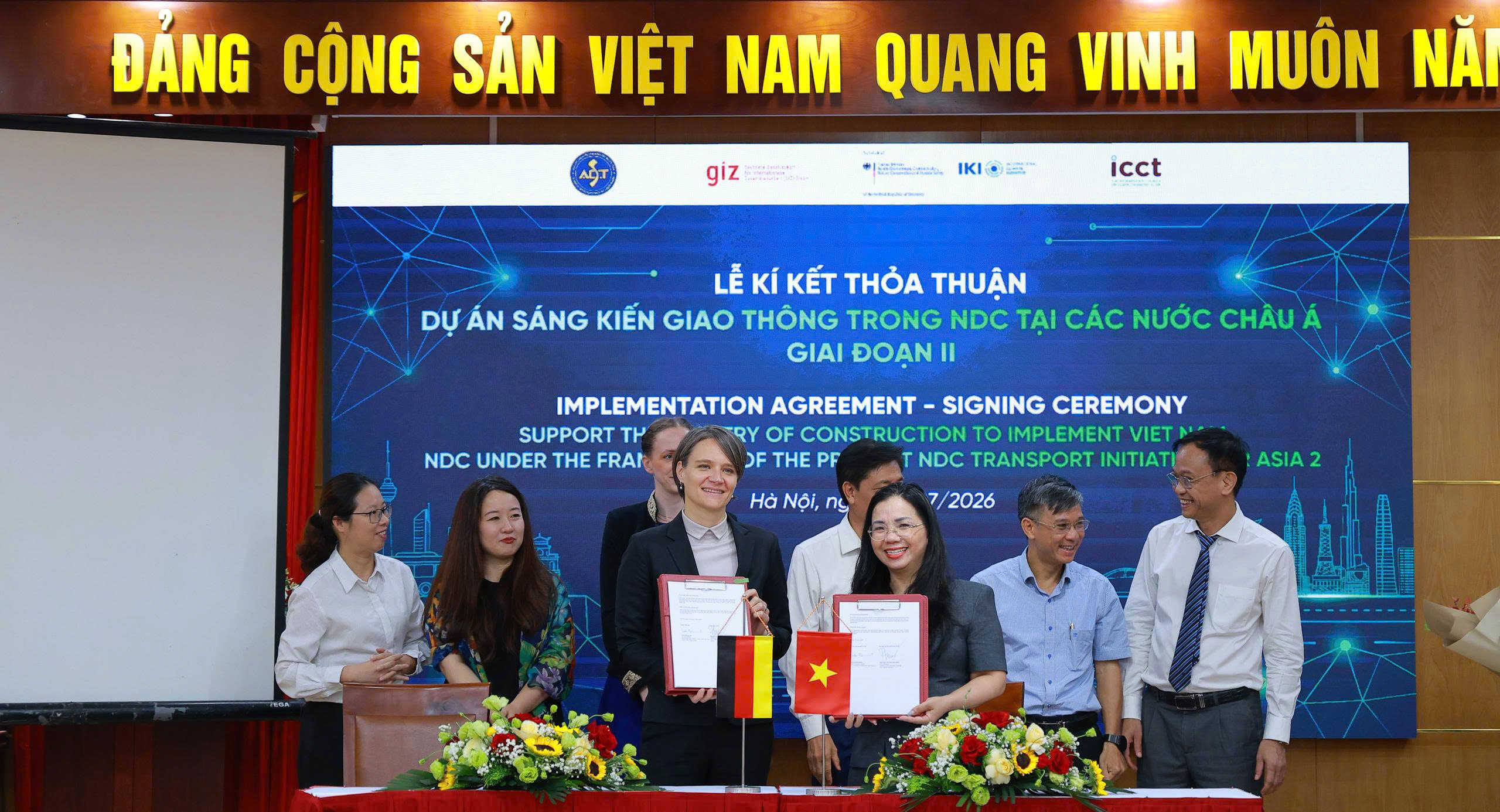 Delegates sign the project agreement. Photo: GIZ.
According to the organizers, NDC-TIA II focuses on three key components: improving regulations and technical standards for electric vehicles; promoting policy dialogue and the electrification of commercial vehicles while integrating gender equality into the transport and logistics sector; and supporting the deployment of commercial electric vehicles in urban areas.
The project will also assess charging infrastructure needs, develop technical standards for electric trucks, propose solutions to better integrate electric vehicles with public transport and urban rail systems, and share financing mechanisms to foster the growth of Viet Nam's electric mobility ecosystem.
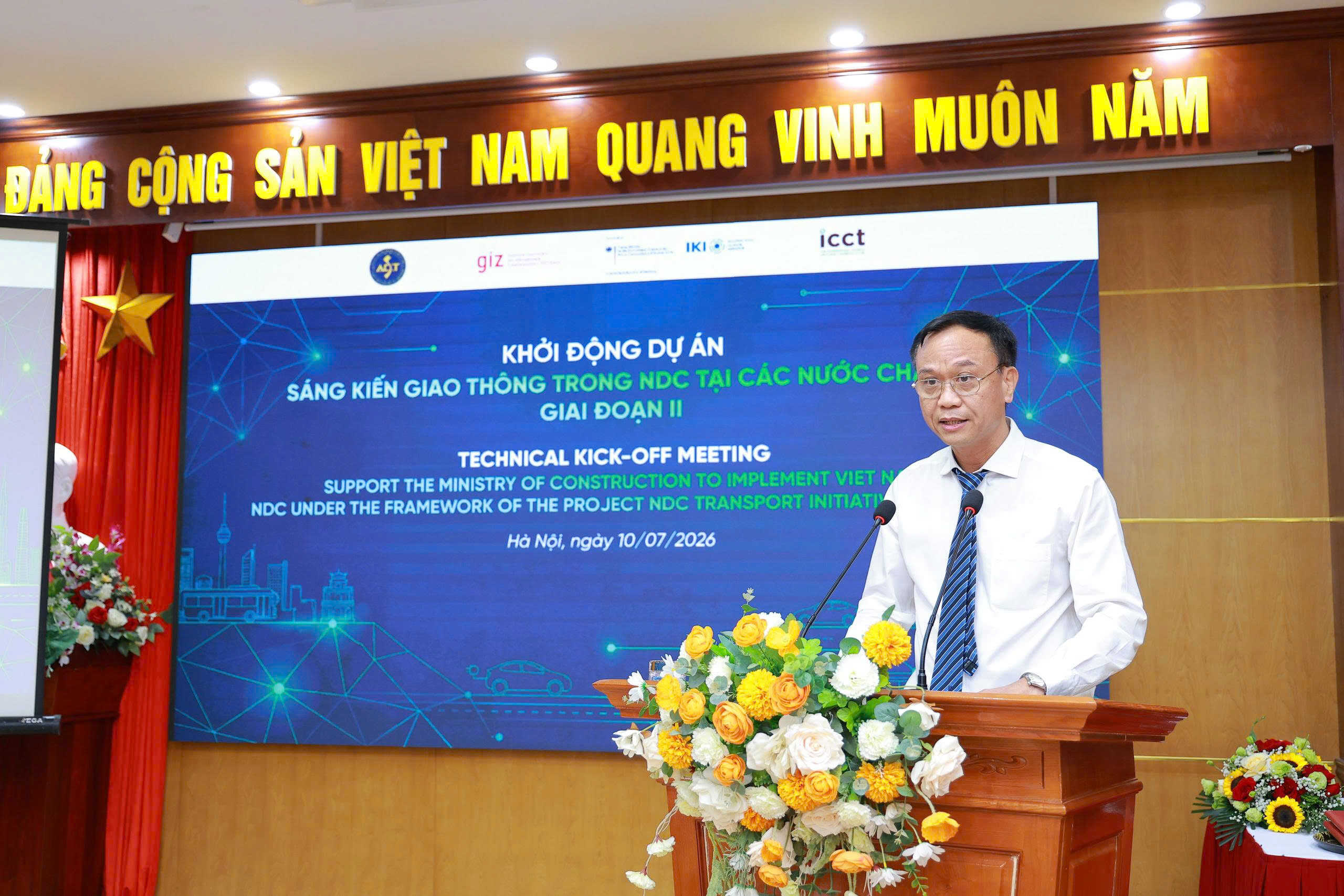 Mr. Ngo Anh Tuan, Director of the Academy of Construction Strategy and Training, delivers the opening remarks at the launch ceremony. Photo: GIZ.
Speaking at the launch ceremony, Mr. Ngo Anh Tuan, Director of the Academy of Construction Strategy and Training, noted that Viet Nam pledged to achieve net-zero emissions by 2050 at the COP26 Climate Conference. To turn this commitment into reality in the transport sector, the Prime Minister issued Decision No. 876/QD-TTg on the Action Programme for Green Energy Transition and the Reduction of Carbon and Methane Emissions in the transport sector.
Mr. Tuan said Decision 876 sets out priorities for improving the legal framework and technical standards, expanding electric vehicles and charging infrastructure, and strengthening international cooperation. In this context, the NDC-TIA II project will provide important technical support to help the Ministry of Construction and ACST enhance their capacity for research and policy development on green transport, energy transition and greenhouse gas emission reduction.
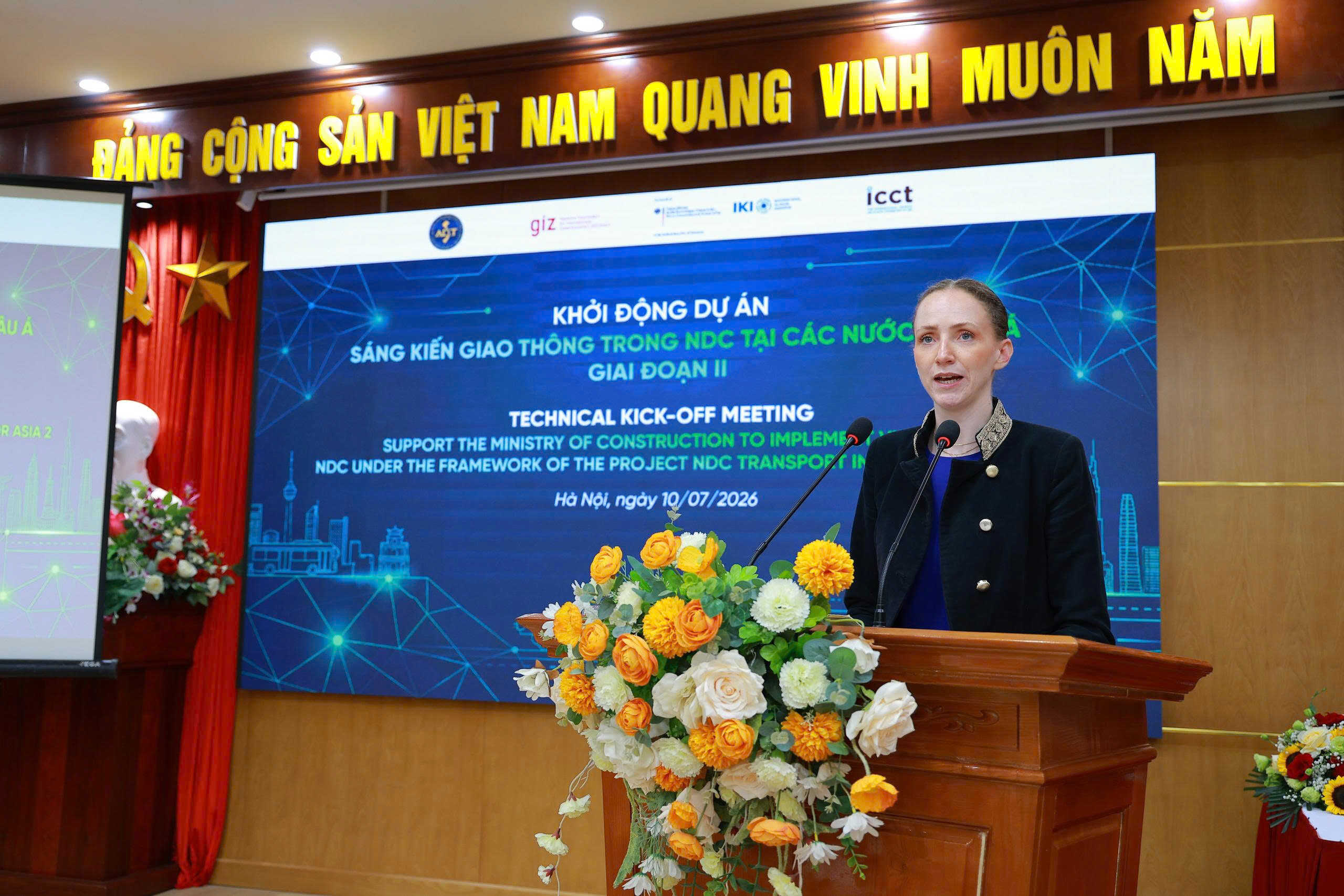 Ms. Alexandra Westwood, Attaché for Economic Affairs and Development Cooperation at the German Embassy in Viet Nam, delivers remarks at the launch ceremony. Photo: GIZ.
Representing the German Embassy in Viet Nam, Ms. Alexandra Westwood, Attaché for Economic Affairs and Development Cooperation, said climate change has become an urgent global challenge that requires decisive action from all countries. She acknowledged Viet Nam's encouraging progress in promoting electric vehicles and developing electrified railway systems, while noting that significant opportunities remain to accelerate the green transition in the transport sector, particularly in commercial transport.
According to Ms. Westwood, NDC-TIA II will focus on supporting the green transition of commercial road transport across both national and urban transport networks, thereby contributing to more effective emission reductions. She also reaffirmed that the second phase of the project reflects the German Government's long-term commitment to supporting Viet Nam in achieving its sustainable development and climate goals.
The NDC-TIA II project will be implemented from 2026 to 2028. The Academy of Construction Strategy and Training (ACST), under the Ministry of Construction, serves as the project owner, while GIZ is the implementing agency in cooperation with the International Council on Clean Transportation (ICCT) and the World Resources Institute (WRI).