Can Tho is stepping up international cooperation to gain access to knowledge, advanced technologies, and sustainable livelihood models as it strengthens its resilience against growing climate risks.
Mounting climate pressures on the capital of the Mekong Delta
As the economic centre and strategic hub of the Mekong Delta, Can Tho City is far from immune to the severe impacts of global climate change. In recent years, weather patterns have become increasingly unpredictable, extreme, and difficult to forecast.
Residents are facing a growing number of climate-related hazards, including increasingly frequent extreme weather events, land subsidence, severe riverbank erosion, urban flooding during high tides, prolonged droughts, and saltwater intrusion reaching further inland.
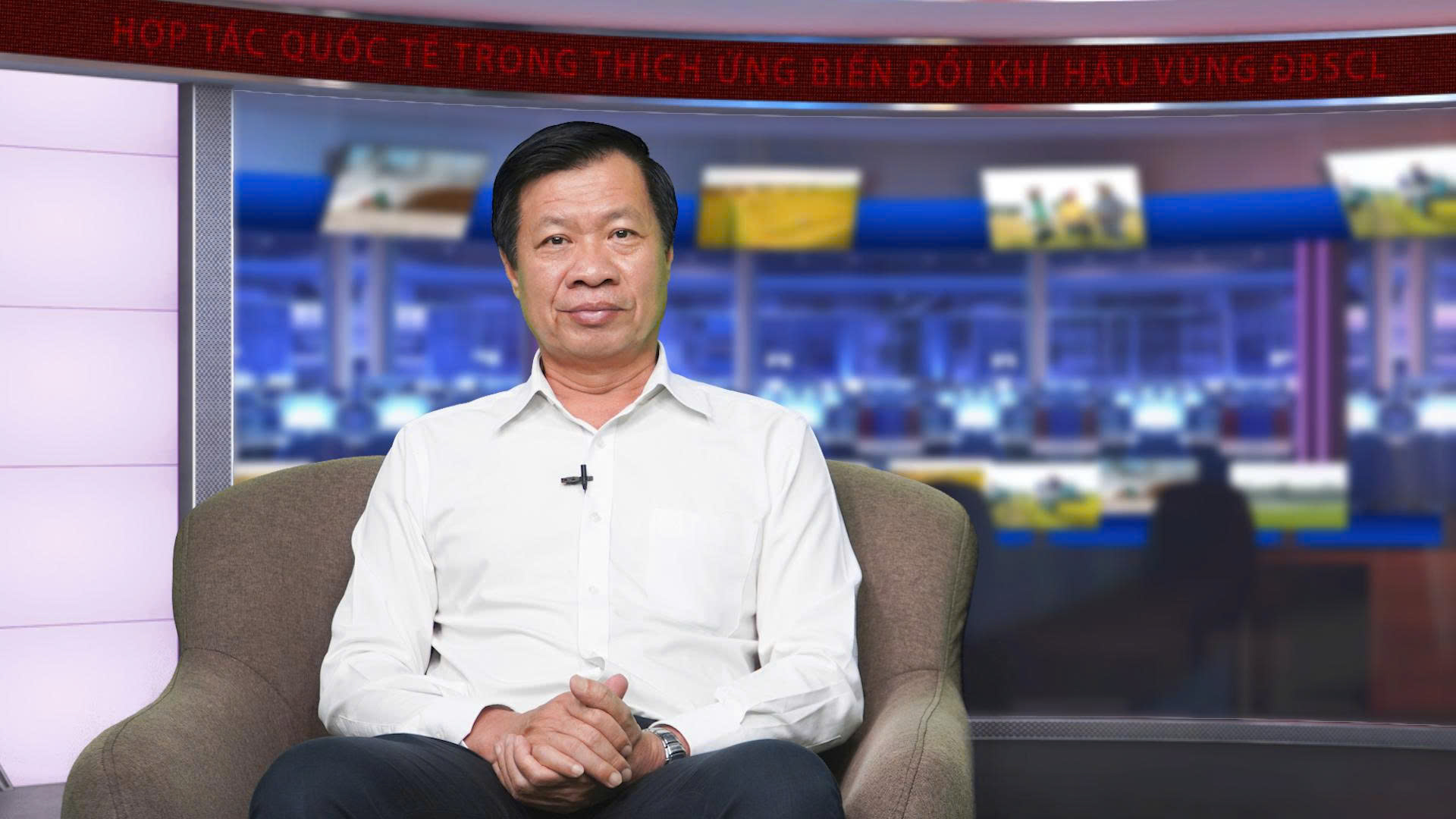 Mr. Nguyen Tan Nhon, Deputy Director of the Can Tho Department of Agriculture and Environment, discusses the climate change challenges facing the city. Photo: Kim Anh.
Together, these risks are creating major obstacles to agricultural production while seriously disrupting people's daily lives. The harsh reality means that Can Tho can no longer rely on reactive, short-term measures. Instead, the city must take a proactive approach by seeking long-term, strategic solutions to safeguard its socio-economic development.
In its search for effective solutions, partnering with international organisations has emerged as a practical and strategic pathway. Mr. Nguyen Tan Nhon, Deputy Director of the Can Tho Department of Agriculture and Environment, said that the value of international cooperation extends far beyond financial assistance. More importantly, it enables the city to access global knowledge, practical experience, and proven development models from countries with strong expertise in natural resource management and climate adaptation, such as the Netherlands and Japan.
Through learning and exchanging experiences with international partners, Can Tho has gradually improved its policy framework, developed long-term strategies, and established agricultural production zones that are better adapted to increasingly challenging environmental conditions. International funding and technical support have also helped restore degraded mangrove forests damaged by climate-related impacts, while enabling the successful implementation of sustainable livelihood models beneath forest canopies that both conserve biodiversity and generate stable incomes for local communities.
_87e63f872d.JPG) A nature-based rice-shrimp farming model that has been successfully implemented in Can Tho City. Photo: Kim Anh.
A nature-based rice-shrimp farming model that has been successfully implemented in Can Tho City. Photo: Kim Anh.Transforming farmers' mindsets and strengthening regional cooperation
According to Mr. Nguyen Tan Nhon, although international cooperation projects offer significant opportunities, translating them into practical local outcomes is not without challenges. One of the greatest obstacles, he noted, is changing farming practices and production habits that have been deeply rooted for generations.
Transitioning from conventional farming to nature-based approaches and adopting new technologies requires sustained communication, community engagement, and initial financial support to encourage farmers to embrace change. Only when people experience tangible benefits for themselves - such as lower production risks, reduced costs, and higher incomes - will they actively adopt these new models.
Mr. Nguyen Tan Nhon also pointed out that while funding from international organisations is valuable, it remains insufficient to meet the city's enormous investment needs. Nevertheless, these projects continue to play a vital role by allowing Can Tho to leapfrog lengthy trial-and-error processes through direct access to advanced technologies for water resource management and disaster forecasting.
_83832c4af9.JPG) Knowledge gained through international cooperation programmes has enabled farmers in Can Tho to develop effective solutions for adapting to drought and saltwater intrusion. Photo: Kim Anh.
Knowledge gained through international cooperation programmes has enabled farmers in Can Tho to develop effective solutions for adapting to drought and saltwater intrusion. Photo: Kim Anh.To maximise the effectiveness of international support in the years ahead, Can Tho is proactively laying the groundwork for future cooperation. The city has committed to providing flexible counterpart funding so that it can move quickly whenever new partnership opportunities arise. At the same time, the city's agricultural sector is conducting in-depth research to integrate international cooperation projects into a comprehensive long-term development strategy.
After all, climate adaptation is inherently a regional challenge. No single locality can effectively protect itself if neighbouring areas remain vulnerable. Can Tho's proactive efforts to coordinate with surrounding provinces on infrastructure planning and to develop large-scale, interconnected projects that deliver shared benefits across the Mekong Delta provide the strongest foundation for continued international cooperation.
Such collaboration will not only strengthen climate resilience across the region but also contribute to reducing greenhouse gas emissions and ensuring the long-term prosperity of the Mekong Delta.