Despite fluctuations in export markets, many wood enterprises have already secured orders through the end of March 2027.
This was shared by Dang Quoc Hung, General Director of VIFA Alliance Exhibition Joint Stock Company, on the sidelines of a press conference introducing the Viet Nam Asean International Furniture & Home Accessories Fair (VIFA ASEAN 2026).
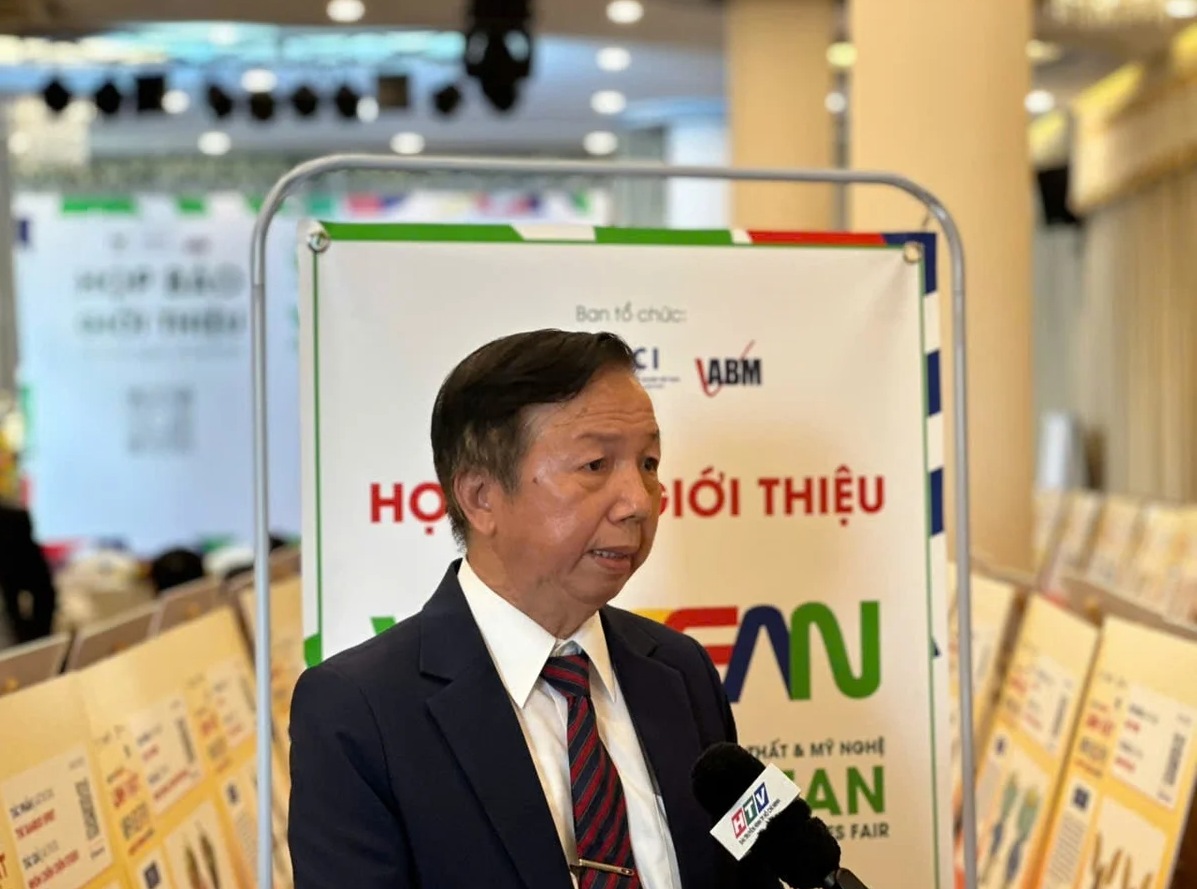 Dang Quoc Hung said many wood businesses have already secured orders through the end of March 2027, despite continued market pressures. Photo: Ha Duyen.
According to Dang Quoc Hung, Viet Nam’s wood export turnover reached approximately US$10 billion in the first seven months of this year. This is a positive result amid continued volatility in the global economy. Notably, many businesses in the sector have secured production orders for the next six months, with some already having orders through March 2027.
Maintaining a steady volume of orders shows that importers continue to value the production capacity, quality and responsiveness of Vietnamese businesses. This also provides a foundation for companies to maintain operations, retain workers and proactively plan production in the coming period. However, this does not mean the wood industry has overcome its difficulties. Therefore, orders during this period will serve as an important “buffer” for the industry to restructure and improve its competitiveness as traditional advantages gradually diminish.
Elaborating on the issue, Hung said wood businesses are currently facing not only pressure from consumer demand and fluctuations in key export markets, but also increasingly stringent trade policies. In the US market alone, tariffs of around 10% imposed on various wood products have increased competitive pressure on Vietnamese businesses in the global market.
“To cope with this, businesses are forced to share the cost burden with customers or accept lower profits to retain orders. Companies that rely solely on contract manufacturing face even greater pressure, as their profit margins are already very low,” Hung emphasized.
In addition to tariff pressures, Viet Nam’s labor cost advantage is also gradually diminishing. According to Hung, if businesses continue to compete primarily on price and contract manufacturing, it will be difficult to maintain efficiency in the long term. Therefore, they need to take advantage of this period to transform their development models.
“The inevitable direction is to move from contract manufacturing to designing products independently, building brands and increasing added value. Only by owning their own products and brands can businesses compete on quality and value rather than simply on selling prices,” Hung said.
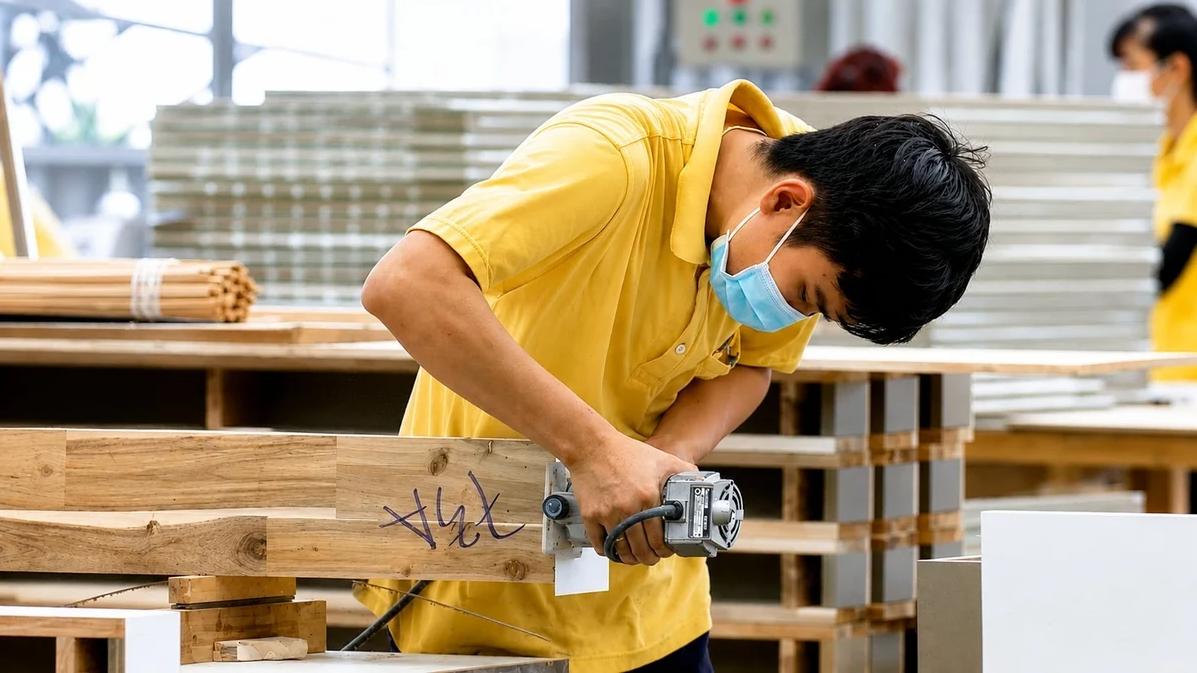 Many wood businesses are shifting from contract manufacturing toward in-house product design, product development and building their own brands to adapt to market fluctuations. Photo: Ha Duyen.
Alongside strengthening internal capabilities, the wood industry is gradually diversifying its export markets. The share of exports to the United States has fallen from around 56% to 49%, while markets such as China, Japan, Europe, South Korea, India and the Middle East are expanding. Reducing reliance on a single market will help the wood industry strengthen its resilience to future trade fluctuations.
In addition to market pressures, wood businesses are also facing logistics challenges. At present, the biggest difficulty is no longer container freight rates but a shortage of truck drivers. Many businesses are willing to offer salaries of around VND 50 million/month but still struggle to recruit workers, as labor is shifting to the construction sector, pushing transportation costs higher.
Despite the challenges, Tran Ngoc Liem, Director of the Vietnam Chamber of Commerce and Industry (VCCI) Ho Chi Minh City, said the Government, industry associations and businesses are actively engaging in dialogue with US counterparts while coordinating with supply chain partners to mitigate the impact of tariff policies. He also noted that many Vietnamese wood products are essential goods for US consumers, meaning demand is unlikely to decline completely in the long term.